





















“It’s certainly well-meant, but its limitations are frustrating”
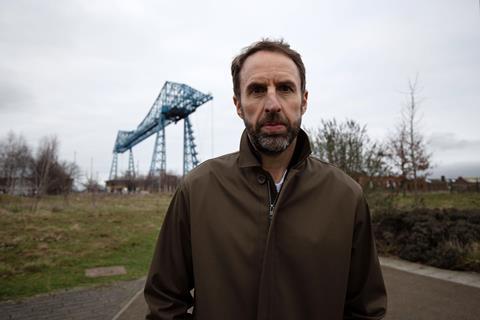
“Early on in his documentary, Changing the Game for Young Men, in that relaxed introductory section where the famous host is at home, fondling mementoes and chatting about their life, Gareth Southgate reveals he was unsure what to do next when he stopped being England football manager. Many of his admirers wish he would enter politics: they dream of him being a witty, kind presence in Westminster, a compassionate antidote to liars and clowns. Southgate has so far demurred, and here we glimpse what he may do instead. Changing the Game, an assessment of how Britain is failing a generation of demotivated young males, is politics with a politely lower-case “p”. Every problem it identifies is the result of a big political choice, which Southgate ignores before offering a small-scale solution. It’s certainly well-meant, but its limitations are frustrating.”
Jack Seale, The Guardian
“Given Southgate’s track record in encouraging young males and, as was dramatised in Dear England, getting them to open up about their feelings, he is the ideal person to be tackling this subject. It was lovely that he was helping to recruit adult men as volunteers to help mentor such boys, which is a good move, but much of what we heard in this film has been said before and it feels like the problem is bigger than this. But Southgate’s heart is, as usual, in the right place.”
Carol Midgley, The Times
“The issue of young men having bad role models, as well as absent ones, is given no coverage. Indeed, the focus is so much on intergenerational relationships (parents, teachers, mentors) that no analysis is offered on the impact of boys’ peer groups or the debilitating relationships so many have with social media. This is a recurring problem with the BBC’s celebrity-led social issues documentaries – such as Idris Elba’s programme on knife crime or Roman Kemp’s look at male mental health – which take vast, multifaceted problems that have vexed policymakers and frontline workers for years, and try to distil them into a one-hour format (and the celeb’s busy schedule). Gareth Southgate: Changing the Game for Young Men is another facile addition to this canon. If there is a problem to be solved – and the programme itself seems conflicted on this idea – it will require a more nuanced and decisive intervention.”
Nick Hilton, The Independent
“Serious documentary maker Norma Percy has produced an account of the Brexit referendum – Brexit: A Very British Civil War (BBC Two) – and what strikes you is just how un-seriously some of the main players were taking it. The only person who emerges from this two-part series as a politician who knew what he was doing is Nigel Farage. The Conservative Party was all dinner-party dramas and schoolboy rivalries. The result is less documentary, more docu-soap, albeit an eye-opening look at how the country was being run at the time.”
Anita Singh, Telegraph
“Brexit: A Very British Civil War mostly feels like a hilarious nightmare: a purple bus, a red bus, Bob Geldof arguing with a furious fisher on a boat, an elderly woman jumping at the chance to lick Boris’s ice-cream on the campaign trail. Interview-wise, it’s a circus of caricature and hyperbole. Johnson, clown-like as ever, seems determined to amuse. The then Labour leader is unintentionally funnier: “there’s no I in Corbyn” is his justification for refusing to personally endorse remain. Meanwhile, Farage is compared to Voldemort, the messiah and a vaudeville act. With reason; his increasingly camp drawl has never been more panto (dame not villain).”
Rachel Aroesti, The Guardian






No comments yet