


Diversity has suffered for years as sector has rested on its liberal laurels, says David Olusoga
Thinking about my decision in the 1990s to borrow money to study journalism, in the hope of breaking into TV, I have to conclude that what led me into the industry was naivety.
Had I known then how much the odds were stacked against people like me – from a council estate, state school educated, with no contacts and no financial support – I suspect I would never have attempted it.
For kids from backgrounds like mine who are making that journey today, the odds are even more daunting. Add race into the mix and I am even more impressed that so many people from ‘unconventional backgrounds’ (a telling and troubling phrase) battle to find a place for themselves in TV.
Our culture of unpaid internships and informal ‘who you know’ recruitment practices has rightly been identified as part of the problem, but not enough has been done to address it.
It was in part our mutual determination to act on these issues that led me and former BBC Studios exec Mike Smith to set up Uplands TV in 2017. We saw an opportunity and both plunged into the indie world.
For me, that move was also about continuing to work in production. I love presenting, and it is obviously what most people know me for. But I also love the creativity of producing and working with other presenters, and I love development.
My favourite part of my 2016 series Black And British: A Forgotten History was not presenting it, but sitting at my kitchen table late one night with a glass of wine and coming up with the format of using heritage plaques to stamp black history onto the landscape. Once a producer always a producer, I suppose.
The challenges of keeping a small indie going are well known, but one of the upsides is the chance to give people their first opportunity in TV, both on screen and off.
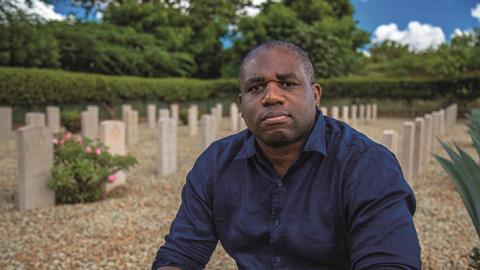
So far, we’ve made films with several first-time presenters, including iPlayer shorts and bigger projects – such as putting Afua Hirsch on Channel 4 and the upcoming David Lammy doc The Unremembered for the broadcaster, in which the Labour MP uncovers an unknown scandal of World War I.
Given the programmes I make and the books I write, no one would be surprised to learn that diversity is also a top priority for Uplands. When I look at the team photographs of our first productions, I’m proud of what we’ve managed so far.
As long as I have been in TV, I’ve heard people blame the lack of on- and off-screen diversity on the lack of trained and talented people. Those arguments aren’t sustainable any more (they probably never were) and sound more and more like excuses for not trying.
“We presumed that working in a nice liberal industry would somehow automatically lead to inclusion and diversity. That clearly didn’t happen”
When I speak at law firms or city banks, I am struck by the diversity of the staff and the influence HR teams and inclusivity officers have had. Those sectors, rather than the creative industries, are making the running in inclusivity, outreach and diversity.
I suspect one reason is that the TV industry – like publishing, higher education, theatre and the world of art galleries and museums – gave itself a free pass.
We presumed that having nice liberal people, working in a nice liberal industry, would somehow automatically lead to inclusion and diversity. That clearly didn’t happen, and the scale of the challenge ahead is a consequence of those lost years.
But it’s too easy to be inward-looking, when of course TV is really about audiences. I was reminded of that last month when The Unwanted: The Secret Windrush Files was broadcast on BBC2.
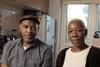
That film was only possible because assistant producer Harriet Thomas had the contacts within the community and the sensibility to assemble an amazing cast of people affected by the scandal, and veterans of the early waves of migration.
The authenticity of those voices was reflected back in the level of community engagement and discussion the film has achieved since TX.
I’ve published books on this history but I don’t have the contacts with the people that the film required. It took someone like Harriet to bring that community into the film and we need more of that – urgently.
- David Olusoga is a historian and broadcaster and the co-founder of Uplands TV

1 Readers' comment