


Scripted budget squeezes, true crime’s stranglehold and partnering on financing took centre stage at German event
Ongoing turbulence across the media landscape in Europe means getting shows off the ground is a constant battle for producers, as evidenced by conversations at Seriesly Berlin last week.
Streamers are stemming some of the spending squeeze from broadcasters but there is little doubt that securing a greenlight is now increasingly calling for multiple partners.
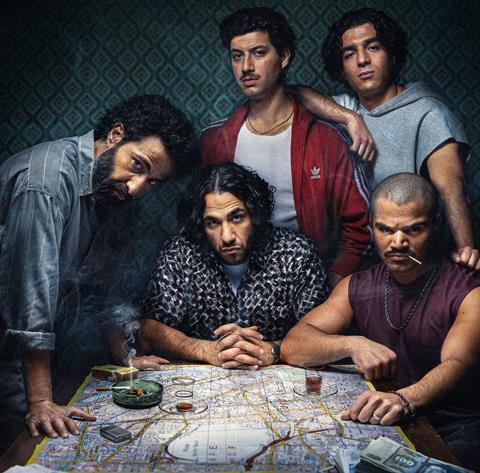
Problems under the bonnet of Europe’s powerhouse
Expensive and glossy German originals such as Disney’s City of Blood and HBO Max’s 4 Blocks Zero might give the impression that the European powerhouse is currently firing on all cylinders. However, during the third edition of Seriesly Berlin that took place last week, it became apparent that beneath the bonnet there is much in need of attention.
“City of Blood is a true Berlin story yet was not shot in Germany,” pointed out Irina Ignatiew-Lemke, MD of marketing body European Film Promotion of the highly anticipated series that premiered at the event. Lower production costs and soft money abroad are just two of the challenges the local industry has to bear.
As part of a swathe of government cuts, the German Film Fund (DFFF) and the German Motion Picture Fund (GMPF) have combined been rolled back from €250m to €200m. A cautious environment outside of Germany means further problems: Odeon Fiction is prolific in the co-pro space (The Seed for NRK and ARD, Django for Sky Atlantic and Canal +) yet much of its recent slate is made up of English-language projects. “It’s harder to gain early stage finance for projects that are from Germany, Austria or Switzerland (where German is also spoken) unless there’s big IP involved,” said Britta Meyermann MD and EP at Odeon Fiction.
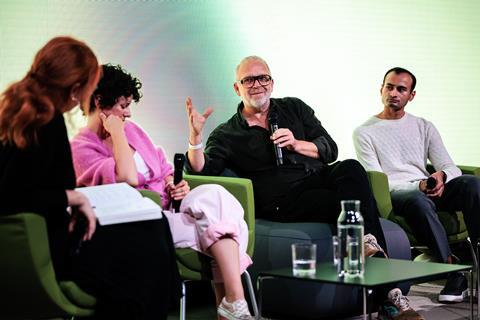
True crime’s stranglehold on docuseries
Data’s role in commissioning is only growing, with the relationship between what’s being watched and what’s being greenlit affecting output. Christian Beetz, chief exec of Beetz Brothers, outlined the reality: “The market is all about numbers, numbers, numbers. If something doesn’t hit a certain amount of clicks this is a big problem not just for streamers but for the PSB’s now too.”
True crime is simply more likely to get commissioned because it is the genre that has proven to be most successful, but in order to push creative boundaries, producers must “innovate within the restrictions of the market,” he continued. Clangold, HBO Max’s first non-fiction German original that Beetz Brothers produced, premiered at the festival. The show explores a criminal gang who steal a 100-kilogram gold coin from Berlin’s Bode Museum. In order to avoid stereotyping the communities from which the gang members originate (with the rise of the far-right AFD party being highly controversial in Germany), the actors who represented the criminals in the re-enacted sequences break the fourth wall and talk directly to the audience about their real biographies, discussing how they got into acting and their personal feelings for Germany. The fact that HBO Max are looking for this kind of “complex storytelling” enabled Beetz to push creative boundaries whilst staying true to the tropes of true crime.
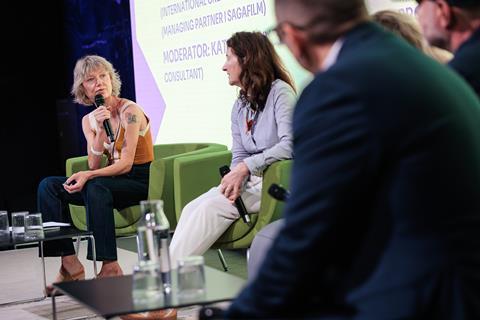
Multi-partner financing takes centre stage
As ever, the international context was at the heart of Seriesly Berlin, an event that grew by almost a quarter to over 500 attendees this year. In a panel exploring the challenges for co-productions between Central and Eastern Europe and their wealthier Western neighbours, Jevgeni Supin, founder of Estonia’s Zolba Productions, explained how he achieved this with Von Fock (2025) in which public broadcasters from Estonia, Latvia and Lithuania came together before Italian partners came onboard. His next project, light family crime drama Let it Snow, has Estonian and Finnish partners, as well as the Baltic streamer Go3 attached. “When we reach a critical mass in our financing plan we can show future partners that it’s not only the story that they should be interested in,” he said, adding that he is optimistic that a German partner will be found.
Independent producer and consultant Kateryna Vyshnevska, who hosted the panel, pointed out that “approaching the correct partner may tap into commissioning money, production rebates and co-production support not from just one country but it can potentially unlock funding in the other Baltic or Balkan countries who are quietly working together.” Leveraging this network to achieve ambitious goals - rather than looking only to broadcasters, streamers or distributors to get a series to screen - was a recurring theme.
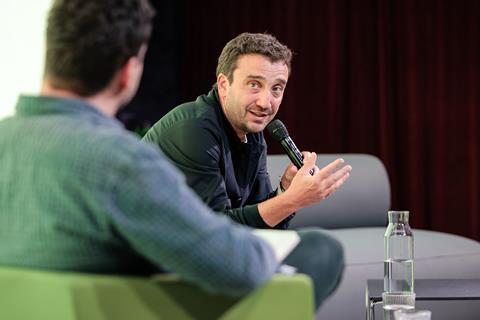
Western players leverage interconnected market
This approach is being mirrored by the big players, too. In a fireside chat, Matthieu Thollin, chief operating officer at Mediawan International, explained: “Today’s market is so difficult that it has made everyone humble.” He believes Mediawan’s network of over 100 production companies (which includes Beetz Brothers and Odeon Fiction) enables deeper cooperation. “Ideas and IP they wouldn’t have been able to afford alone are now possible,” he said.
Thollin also highlighted how the global market has reached an unprecedented level of interconnectedness. “France Television was responsible for Call My Agent but it wouldn’t be where it is today without Netflix. North America no longer sees Europe as the soft money option but as a source of talent and creativity,” he said.
Feel the fear and do it anyway
While most genres are facing budgetary pressures, those working on period dramas probably face more of a squeeze than most. However, Fleur Winters, founder of Amsterdam’s Big Blue and creator of the upcoming Grand Hotel By The Sea (ZDF Studios), has chosen to do just this. Though funds were a far cry from the likes of The Crown or Bridgerton, this does not lessen her ambition. Taking the role of showrunner herself allowed her to be “very clear with where we put money,” she said. Costly location shoots on the beach and lavish costumes for high-society characters were used when essential, leaving finance for “set pieces and big moments”. If she pulls it off, executives are likely to be keen to recommission further seasons knowing such a popular genre can be delivered without a jaw dropping budget.





No comments yet