
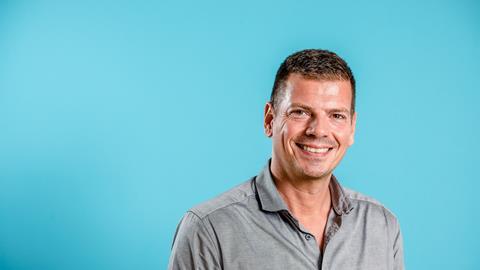
Cineflix Rights chief Tim Mutimer on secondary window pressure and ‘inevitable’ consolidation
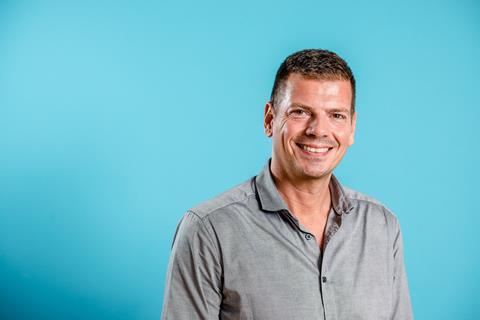
As buyers descend on the UK capital for Showcase, London TV Screenings and Mip London this week, Broadcast International speaks to Tim Mutimer, chief exec at Cineflix Rights, about the key trends and challenges facing the business.
What was the single biggest challenge for your business in 2025?
The ongoing shift in the business model for broadcasters and distributors, driven by changes to where advertisers invest their spend, is having a huge impact on the way we do business. Linear broadcasters are prioritising growth from their BVOD services, while competing for advertising dollars with SVOD and VOD, social media and gaming platforms. As revenue is spread across more platforms, our traditional clients are consolidating and cutting overhead, and our challenge is to work with them to fulfil their requirements whilst growing our digital activity to make sure that our content reaches audiences and advertisers in as many ways as possible
What are your top three growth priorities for 2026?
1. Growing our digital distribution business forms a key part of our commercial strategy. We have seen double-digit revenue growth from this activity over the past year and see further potential through directly targeting consumers with our biggest brands, such as Property Brothers, Mayday: Air Disaster, and Château DIY and rolling out further YouTube and FAST channels globally in English, Spanish, French, Italian and German.
2. Creating and distributing original digital first content. We will be stepping up our work with our in-house and third-party producer partners to fund, develop and produce digital-first content around key brands. We also plan to move into the podcast and creator space, to reach fans of our shows on whatever platforms or formats they want to consume our content in.
3. In a world where broadcasters and streamers are de-risking, brand spin offs offer the opportunity to buy shows that already have audience recognition, so need less marketing dollars, but arrive with a new twist to keep viewer’s loyalty. We’re harnessing this with new shows, for example Château DIY: Win The Dream and The Great B&B Challenge.
Streamers have struck some eye-catching deals directly with YouTube creators over the past year. What do you make of this trend and do you see it impacting your business?
Streamers, broadcasters, producers and distributors like us are always on the lookout for fresh talent, there’s nothing new there in many ways. YouTube is another way of widening that search out much further, reaching non-traditional content creators, and potentially bringing a ready-made fan base to a commission. Our job is to work with producers to identify talent and ideas and help get shows into production for buyers across multiple different platforms.
YouTube is an important platform for Cineflix Rights content. Alongside syndicating our library, we are also looking at creating original content for the platform and, we’re actively working along with the Cineflix development teams and our third-party producer partners to identify new talent that we can work with on YouTube as well as more traditional broadcast partners.
Broadcaster-streamer IP pacts have also become popular across Europe, in particular the TF1/Netflix deal starting this summer. How will such arrangements affect your business; will we see a similar deal in the UK; and, what do they mean for the future of second windows?
It’s understandable that broadcasters want to reach an increasingly fragmented audience wherever they view content and we are open to working with our broadcaster partners as long as we can share the benefit of reaching that additional audience. Secondary rights in the commissioning territory are hugely valuable and underpin our investment into content, so diluting a distributor’s ability to monetise them has an impact beyond our primary business. There is less focus on exclusivity these days, so there should be a pathway to negotiate a number of non-exclusive windows in territories after a premiere holdback to the benefit of all.
What impact will the WBD-Netflix deal have on your business and the wider industry, if it goes ahead?
We do a lot of business with both Discovery and Netflix. Together they will be a huge force in need of premium content. If the cable channels are spun off, we see opportunity just as we have with Versant where we have partnered with them to distribute new USA Network drama Anna Pigeon, which is a key launch for us at The London Screenings.
With big players like WBD-Netflix and Disney leading the market, other streamers will be under pressure to come together to deliver scale and synergies. The Banijay – All3Media merger shows that producers and distributors recognise the benefit of scale in their business too. Consolidation is inevitable and we will see more of it across the coming year. Alongside the mega studios, mid-sized producer/distributors such as Cineflix will be able to take advantage of our ability to move quickly and super-serve our producer partners and clients.
How will Channel 4’s nascent in-house production (and IP ownership) strategy affect your business and the broader distribution sector?
At the moment, Channel 4’s in-house production is expected to be small scale, so we don’t expect it to have a significant impact on the indie sector. We do a lot of business with UK Producers commissioned by Channel 4, and ultimately, we need a strong Channel 4 to continue investing in the talented UK indie landscape which will be good for everyone concerned.
If we gave you £2m to invest in a show of your choice with a view to getting the biggest returns within five years, what kind of show would it be?
Mayday: Air Disaster, is one of our biggest brands – on air in virtually every territory around the world, and now in its 27th Season. It consistently delivers audiences because it answers the questions we all want to know to explain why an aircraft got into difficulty through a mix of investigation, reconstruction and expert analysis, using a fast-paced and compelling story-telling technique. Investing in a spin off to the brand which delivers something new while retaining its appeal to global audiences is something on my wish list.
Tell us about your key title for LTVS and what makes it stand out?
Anna Pigeon (10 x 60 minutes, Cineflix, December Films and SEVEN24 Films for USA Network in association with Bell Media). Based on the best-selling novels by Nevada Barr, and starring Tracy Spiridakos (Chicago PD), the series follows the former city slicker who becomes a park ranger after a devastating loss changes the trajectory of her life forever. While Anna tries to outrun her demons, her focus turns to solving crimes that have taken place within national park grounds, no matter who or what gets in her way.
Anna Pigeon is a gripping crime procedural drama with a fresh engine, a singular heroine, and a scale that’s rarely attempted in television. What makes Anna Pigeon distinctive is the world. We’re not in city streets or interrogation rooms. We’re in a vast wilderness that becomes a character in its own right. The setting isn’t just atmospheric, it actively shapes the crimes, the suspects, and the storytelling. Visually, it’s cinematic. Tonally, it’s tense, grounded, and emotionally rich. It’s a procedural you can drop into at any point — but once you’re in, you have to keep watching.




No comments yet