


Viaplay’s Vanda Rapti on aligning ambition with realism and competing on curation
As buyers descend on the UK capital for Showcase, London TV Screenings and Mip London this week, Broadcast International speaks to Viaplay’s exec vice president of Viaplay Select and content distribution, Vanda Rapti, about the key trends and challenges facing the business.
What was the single biggest challenge for your business in 2025?
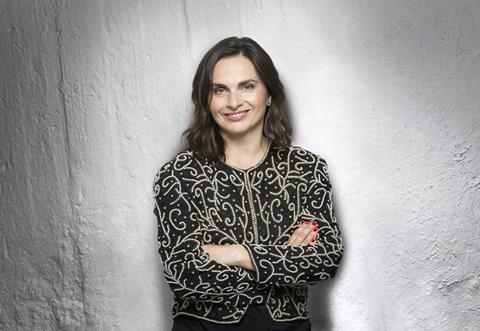
The biggest challenge was aligning ambition with realism. The market didn’t collapse, but it recalibrated. Decisions took longer, risk appetite tightened, and financing became more layered. From a distribution perspective, that meant being sharper about where we place our energy and which partnerships truly add value. It forced discipline, and that’s not necessarily a bad thing.
What are your top three growth priorities for 2026?
In 2026, we’re focused on three things: strengthening our international content sales; expanding Viaplay Select through the right platform partnerships; and continuing to grow our SVOD footprint with distinctive Nordic and European titles. Across all three, we’re prioritising disciplined, partnership-led growth rather than scale for scale’s sake focusing on key tentpole titles that can support and travel across all our distribution models.
Streamers have struck some eye-catching deals directly with YouTube creators over the past year. What do you make of this trend and do you see it impacting your business?
It’s an exciting trend because it shows how platforms are tapping into creator‑led IP with built‑in audiences. For Viaplay’s international business, where we operate a B2B distribution model alongside niche SVOD services focused on premium Nordic storytelling, this trend is interesting from an industry‑evolution standpoint. It is more relevant for our core Nordic streaming operations, where we commission and licence a broader range of non-scripted content. However, it’s not something that materially impacts how we partner internationally or what we offer across our global distribution business.
Broadcaster-streamer IP pacts have also become popular across Europe, in particular the TF1/Netflix deal starting this summer. How will such arrangements affect your business; will we see a similar deal in the UK; and, what do they mean for the future of second windows?
These deals are a sign that the industry is becoming more pragmatic. From our perspective as a distributor, clarity around rights and windowing is becoming even more important.
What impact will the WBD-Netflix deal have on your business and the wider industry, if it goes ahead?
Large platform alliances are part of a wider consolidation trend. For global distributors, it reinforces the importance of being clear about who you are and what you bring. We’re not competing at the scale of global streamers - we compete on curation, distinctiveness and strong regional IP with international relevance. There is still space for that, and arguably more need for it as platforms consolidate.
How will Channel 4’s nascent in-house production (and IP ownership) strategy affect your business and the broader distribution sector?
Broadcasters seeking greater IP ownership isn’t unique to the UK, we’re seeing variations of that strategy across multiple markets. For distributors, it means earlier involvement and smarter structuring. Owning IP is one thing; maximising its international life is another. Our role increasingly sits at that intersection, ensuring projects are structured for international value from day one.
If we gave you £2m to invest in a show of your choice with a view to getting the biggest returns within five years, what kind of show would it be?
With £2m, I wouldn’t try to make a traditional premium drama, the economics wouldn’t support it. I’d look at a returnable factual or format-driven concept with strong repeatability and international adaptability. Something that can be produced efficiently, travel across markets, and generate value through multiple local versions. For scripted, I might consider backing a YouTube creator transitioning into scripted storytelling, for example a cost-efficient, true life inspired project that leverages an existing audience base.
Tell us about your key title for LTVS and what makes it stand out?
One of our key titles for this year’s showcase is Golden Boys - a premium four-part heist drama inspired by a notorious real-life financial scandal from the late 1990s. Set in Stockholm, the series follows two cousins whose ambition and appetite for excess drive them into an audacious takeover scheme that spirals out of control.
Blending financial intrigue with humour and character-driven intensity, the series has a distinctive tone within the European crime space. It also features Nigel Havers as the real-life British aristocrat Lord Moyne, adding international recognition to a uniquely Nordic story. At four tightly paced episodes, Golden Boys delivers premium scale with strong global binge appeal.






No comments yet