

Shifting buyer demands are pushing America’s major TV sales event in a new direction
Hollywood’s lure is strong, that much is clear. International buyers might be battling budget cuts, audience fragmentation, reduced T&E spending and advertising declines, yet hundreds of international buyers have still descended on California and are currently midway through another packed LA Screenings.
But for how much longer?
LA Screenings has been in flux for years, adapting to the shifting shape of the market and the changing demands of buyers. Yet a confluence of factors is nudging the annual May get-together in a new direction.
Those factors are not necessarily new. Consolidation, represented this year by Paramount and Warner Bros Discovery, means 2027 will likely result in one less vendor, while the handful of global streamers operated by the studios means first window rights for some of the hottest properties can be hard to come by.
That’s a problem if you’re a European or Australian commercial broadcaster that also needs first window streaming rights, for example.
Combine this with a more conservative US commissioning environment, and it’s little surprise that most buyers paint a picture of fewer shows being available as a result.
Resurgent demand from audiences for locally produced shows for their respective markets also means that pricy US imports are not always the must-haves for cost-conscious buyers that they once were. And then there’s timing – buyers are now more than ever looking to get onboard projects as early as possible, rather than joining a bidding war following a glitzy Hollywood screening.
Yet US shows continue to cut through with global audiences and while tallying up the number of buyers in LA is never straightforward, a rough estimate puts it at north of 600 this year.
With London [Screenings] and MIPCOM becoming larger focal points for many international buyers, LAS has taken on a more specialised role
Prentiss Fraser
Sony Pictures Television has arguably found itself best-placed to capitalise on the shifting market, free from an in-house global streamer and able to strike nuanced deals. For Mike Wald and Jason Spivak, co-presidents, distribution & networks, LAS continues to pull in “global representation… from all major territories” the duo tell Broadcast International, with attendance at its screening on Sunday pacing at last year’s levels.
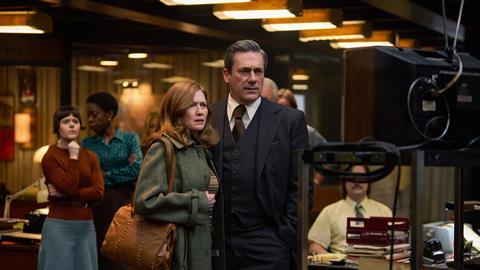
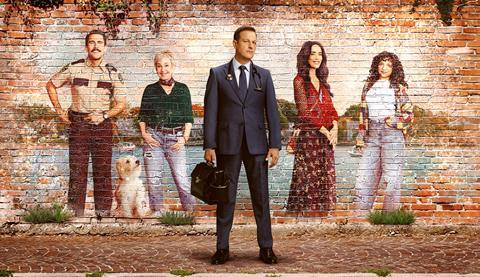
SPT unveiled big hitters such as American Hostage and Up To No Good, alongside shows evidencing the trend of buyers placing their bets early with the recently revealed Cadbury-inspired Chocolate Wars – a coproduction with UKTV and BritBox – and I’m Not Here to Hurt You, which marks SPT’s first co-commission with Canada’s Bell Media. Created by The Good Doctor duo David Shore and Freddie Highmore, the latter joined American Hostage’s star Jon Hamm and Up To No Good’s Glenn Close on the lot to press the flesh with potential buyers and add some star power to proceedings.

Wald and Spivak admit that “more touchpoints throughout the year” means buyers and sellers are connecting more frequently than they might have in the past, but both point to LAS as being “an incredibly important moment” on the industry calendar.
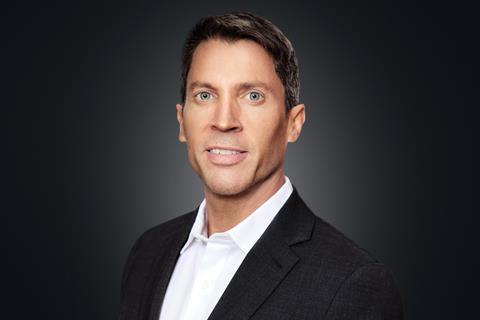
Prentiss Fraser, president of Fox Entertainment Global, suggests the event’s role has changed, however.
“With London [Screenings] and MIPCOM becoming larger focal points for many international buyers, LAS has taken on a more specialised role,” she tells Broadcast International. “It continues to offer real value as a focused, relationship-driven environment where buyers can engage directly with content, talent, and distributors in a curated setting.”
Michael Bonner, president of NBCUniversal Global TV Distribution, reports a similar scenario. “While we’re seeing a rise in attendance at more international sales markets and local screenings, LA Screenings is still our largest and most important sales market in the US,” he says, pointing to the importance of being able to “discuss longer-term business opportunities”.
NBCU’s Saturday event was led by shows such as Line of Fire, The Rockford Files, Possession and Amy Poehler’s comedy Dig, but Bonner’s comments underline a concentration on windowing strategies rather than simply the product on screen.
“Rights conversations have become far more nuanced, with partners putting an increased focus on customised windowing and multi-platform strategies,” he adds. “We’re also seeing continued interest and growth in FAST and AVOD opportunities, particularly around library and secondary-window content.”
“Buyers are coming to markets highly focused, with very targeted priorities and acquisition strategies which leads to more productive and strategic conversations,” add Wald and Spivak.
Fraser, whose slate includes returning comedy Animal Control and 5 drama Power: The Downfall of Huw Edwards, agrees. Conversations are increasingly “tailored by platform, territory, and window, with buyers seeking models that let them maximise audience reach while still protecting value.”
“What has changed most is that buyers are programming for more than one outlet. They’re now thinking across entire content ecosystems spanning linear, streaming, AVOD, and FAST, which has made conversations at LA Screenings more strategic and long-term than they were a decade ago,” she says, echoing Bonner’s outlook.
What’s in demand?
While complex, niche windowing strategies might now be flavour of them month, broad appeal programming is widely seen as top of list for many buyers.
Buyers headed to Paramount’s lot on Saturday with such a slate on offer, with shows such as police drama Einstein and procedural NCIS: New York, as well as Robert and Michelle King’s legal drama Cupertino. Australian show The F Ward, which has local streamer Stan already onboard, provides a contrasting option.
“Demand remains strong for broad procedurals like Best Medicine, premium character-driven dramas, true crime, and thrillers that deliver both emotional engagement and bingeability,” Fox’s Fraser says.
Feel-good, escapist series are also working, she adds, while Bonner points to suspense-driven dramas and serialised thrillers, “particularly those anchored by recognisable talent or compelling source material.”
He also points to comedy, as does Fraser, while SPT’s Wald and Spivak are seeing demand in franchise-driven shows and “high-concept series with broad international appeal.” Crime, action, and thriller continue to thrive, they add, with recognisable IP and shows offering “built-in audience awareness” providing quick marketing solutions I a competitive environment.
Buyers next head to Disney and Warner Bros Discovery, whose events starts on Monday, with the latter rolling out big guns such as Lanterns and The Big Bang Theory spin-off Stuart Fails to Save the Universe. And while shows on screen might be the reason buyers are in town, opportunities to talk shop – and gather intel more broadly - are gobbled up.
“Consolidation and industry transformation” are obvious topics, Bonner admits, along with flexibility around rights and windowing strategies. Wald and Spivak point to the “continued evolution of buyer economics” and how investment decisions are being made in “a more disciplined market”, as well as “the growing importance of international co-productions and strategic partnerships”.
Fraser, meanwhile, says vertical video will be a “major” discussion point, as buyers look at how audience behavior is shifting across platforms and how content can be adapted for mobile-first consumption.
“More broadly,” she adds, “conversations will likely center on discoverability, flexible windowing, and how to create content that can travel across both traditional and digital ecosystems.” And while lining up your next hit might still be the headline reason for heading to LA each May, finding answers to such questions seems to be an increasingly motivating factor for making the trip.





No comments yet