

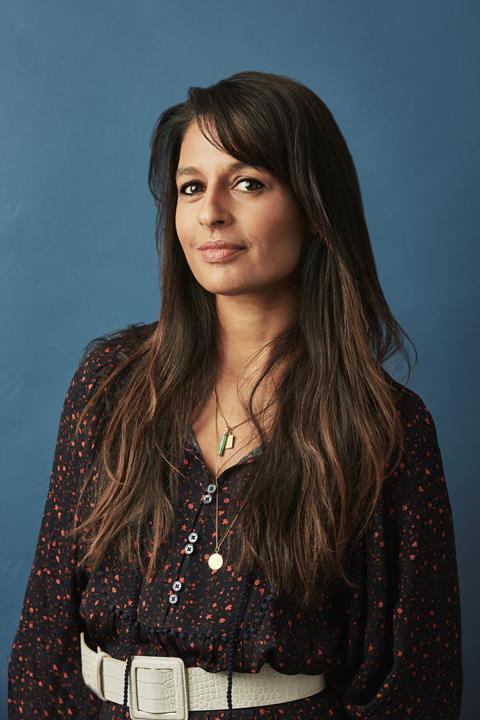
Sumi Connock on landing paper format greenlights, the power of creative networking and why the Nordics rock
Paper formats have had a rough time of it over recent years, as buyers lean towards remaking tried, trusted and very often decade-old shows in a bid to mitigate risk.
But is the tide turning?
A quick look at the formats that BBC Studios is headlining at Mipcom later this month suggests it might just be.
While veteran stalwarts continue to perform - BBCS’s Dancing With The Stars S35 debuted on Disney+ in the US on Wednesday and performed well above most expectations, with Nielsen noting a 24% rise in viewing that will only build in the coming days - a new wave of formats are now making their way onto screens across Europe.

For BBCS, these are predominantly fresh ideas that are emerging via relationships in both the UK and abroad, driven by Sumi Connock, exec vice president of global creative network and formats.
Her network straddles multiple continents and companies, including UK firms such as Voltage TV, which BBCS owns, and Sarah Tyekiff’s Mettlemouse Entertainment, which last month secured a Netflix commission for Playing With Matches and in which BBCS holds a 25% stake.
Over in mainland Europe, entertainment veteran Nina Etspuler joined BBCS last year to launch a comedy and reality-focused label in Germany, while companies such as Brutal Media in Spain sit alongside BBCS’s production units that stretch from Australia and the US, to France and the Nordics.
For Connock, the value of this network lies in the variety of people and cultures. “Personal creative relationships are really important, it’s not just about identifying future formats,” she says. “It’s basically about gaining trust with those producers and creators.
“I came from production, I’ve worked in commissioning, and then I went into international, so for me it’s really important that creatives know that if they’re going to bring an idea to BBC Studios, it’s going to be well looked after, that we’re going to understand the show, support their show, and be as passionate about it as they are.”
When you’ve got creatives from the UK meeting creatives from Japan, you don’t come out with the same ideas as if they’d been worked up in isolation
Connock’s travel itinerary over recent months underlines the growing importance in building out this network further. “It has been a very busy summer, I did Japan, Korea and Australia, and then we were in Denmark for the Copenhagen TV Festival,” she says of the past couple of months.
BBCS has been increasingly active in Asia over recent years, striking co-development deals with companies such as Nippon TV in Japan with the express intent of expanding its partnerships to secure new ideas. “Obviously we want to grow our own IP but we’ve got to look outside of the UK as well for other opportunities, and it’s really interesting working creatively with Japan and Korea,” she says.
“When you’ve got creatives from the UK meeting creatives from Japan, you don’t come out with the same ideas as if they’d have been worked up in isolation.”
Competition is fierce however, and commercial reality bites hard. Connock admits BBCS is “pretty selective” in terms of the shows that secure investment, with only six to eight backed. These need to sit alongside aforementioned giants such as Strictly Come Dancing and complement the wider catalogue, and that has meant a focus “on markets that we feel are going to push the boundaries creatively”.

The Nordics have emerged as a leader in this regard partly because its long-standing high broadband penetration has propelled the evolution to streaming more quickly than in many countries. Most viewers in the region now stream, including an ever-increasing number of older viewers.
For local creatives, adapting to this ecosystem has put them a step ahead of others, Connock suggests, and BBCS is tapping into that, with the fruits of their labour landing in Cannes in a couple of weeks. Out of Connock’s four flagship formats being launched at Mipcom, two - The Yacht and Silent Attraction - have come via relationships in the Nordics.
There is also a UK angle here: The Yacht was developed by Rebel Rebel, the former BBCS label founded by Simon Shalgosky and Daniel Brookes who now reside at Sony Pictures Television, while NRK in Norway took the punt, commissioning the show through BBC Studios Norway.
The Yacht is a great example of UK IP going into Norway, being created across the two territories before being produced in Norway and now heading to Mipcom
“We knew we wanted to do something with Norway because it’s got a great reputation for creation. We know they take risks, so we had a sort of co-development conversation with NRK and presented five or six paper ideas from across our creative network to them. The one they picked out was The Yacht.”
The show was developed over six months by BBCS, Rebel Rebel and the NRK team, before securing a greenlight and being produced this summer by BBCS’s Oslo-based team.
“It is a great example of a UK piece of IP going into Norway, being created across the two territories before being produced locally and now heading to Mipcom.”
The size of most Nordic country’s markets also means cost-efficiency is always a consideration, and Connock admits that “creating something in the region means you’re going to start at a budget level which is going to be affordable for a lot of territories.”
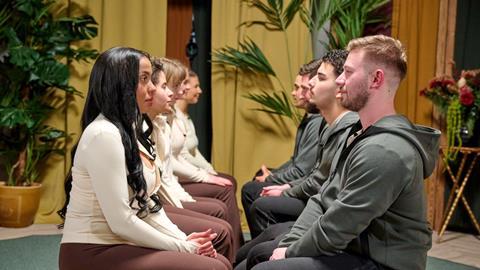
BBCS is also rolling out fellow Nordic dating show Silent Attraction, another paper format produced and developed by BBC Studios Sweden for public broadcaster SVT.
The commission was tied in with the Swedish elections that took place on Wednesday, Connock explains. “SVT wanted something that was going to promote debate amongst the younger population in Sweden, but which was totally different and didn’t feel like it was about politics.”
The result was a dating format that requires singles who appear to be matches on paper - aside from their political leanings - to meet but not talk to each other.
After spending time together in silence, their political views are divulged with the format exploring how couples relate even if their politics are vastly different. “It’s had some really interesting and also very positive outcomes,” Connock says, adding that the show debuted on SVT’s streaming platform before moving to linear.
Also on the slate is The Big Date - an AI-driven show following 100 singles looking for love - that emerged from Spanish firm Incís and was produced for regional broadcaster 3Cat, while at the other end of the scale is Dancing With The Stars: The Next Pro, a reality-skewed spin-off that attempts to find the next star for the Disney+ and Hulu series.
The quartet neatly highlight BBCS’s strategy, but also the shifting world of formats. Connock points to developments in live streaming as offering potential - she describes Netflix’s Beat Luke Littler darts show from Workerbee as a “genius move” - while admitting her surprise at the huge success in the US of veteran formats Strictly Come Dancing (aka Dancing With The Stars) and ITV Studios’ Love Island on Peacock.
“It’s really quite interesting because it’s going back to the way formats can connect with the audience - and that connection is more important than ever.” She likens it to the way YouTube creators drive fandom and is clear that building on that model via formats provides a growth path for those creating new IP.
“You know, we can go on creating formats but it’s basically the audience that are going to build that world of fandom and then continue telling those stories over social media. It shows that we have got to be smarter about connecting with the audience in terms of the way that they’re consuming the content.
“All the recent strong formats that have come through, they all create conversation by producing those really shareable, clickable moments. Creating that community is what will make your format fly.”





![BW_E101_MB_01764 edit2[2]](https://d11p0alxbet5ud.cloudfront.net/Pictures/100x67/6/0/9/1487609_bw_e101_mb_01764edit22_386968.jpg)
No comments yet