

Market dynamics are creating partnerships that are pushing Eastern European scripted product further afield
The Baltic region has gained a name for attracting big Hollywood productions over recent years. Much of Christopher Nolan’s Tenet was filmed in Estonia, Kristen Stewart’s The Chronology of Water used multiple Latvian locations, whilst Star City from Apple TV this year was primarily shot in Lithuania.
However, talk amongst execs and creatives at the TV Beats strand of last week’s Tallinn Black Nights Film Festival revolved around how to create a thriving domestic market that can produce hits that travel.
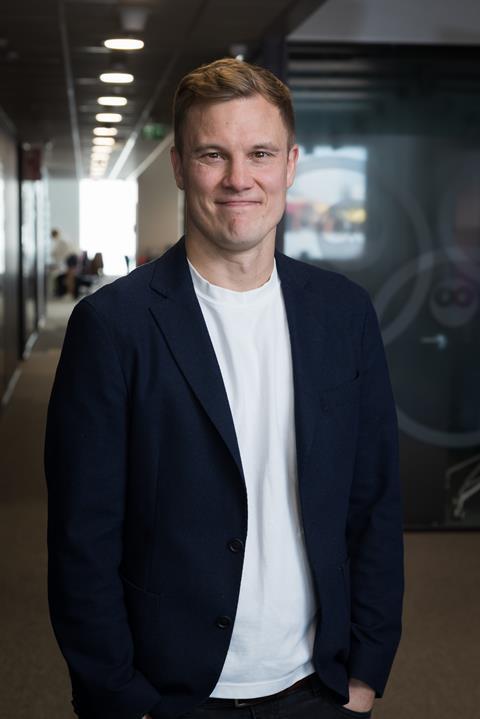
With small populations, this is far from an easy task. “How do you take a show to Europe and the rest of the world from a country of 1.3m people?” asks Toomas Luhats, chief exec of TV3 Group Estonia. “Firstly, you try really hard. But secondly there is not a chance you will do it alone.”
Bonds with like-minded partners have already formed. Just under three years ago, MTV Finland decided that the company was no longer able to finance original productions alone, explains Janne Vakio, commissions and content development manager for series and features.
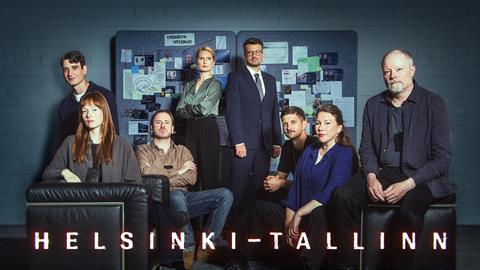
Suddenly, their flagship crime show Helsinki Crimes (available in the UK on Walter Presents/Channel 4) was facing the axe, so he reached out to Elisa Estonia. “It was kind of a no-brainer for us,” says Toomas Ili, head Of content at Elisa Estonia, referring to the similarities of language (some Estonians know Finish), cultural overlap and the obvious shared financial challenges of being a small country.
Estonia’s public service broadcaster, ERR, also came on board and Helsinki-Tallinn was born. A crime plot taking place between the two countries was conceived and Estonian characters were created to work alongside the original’s established cast. Due to drop in spring of next year, the partnership has saved a successful franchise and produced an unexpected bonus.
“The new version has helped sell the original series in a meaningful way,” says Lasse Koskinen, MD of Yellow Film & TV, the lead producer of both iterations of the show.
Innovation & cost efficiencies
Vakio is enthused by the market’s new challenges. “There are new, really innovative ways of doing this,” he says, adding that he is now developing an English-language series based on the same model whereby MTV Finland commits to around 20% of the budget.
“Putting B+ British actors alongside Finnish stars will go down really well with our audience whilst also helping us build inroads internationally,” he adds.
The challenges smaller European countries face are not helped by the straightened economies of their larger neighbours. The fifth and final season of ARD’s Babylon Berlin was screened at the festival and Achim von Borries accepted an Honorary Award on behalf of himself and fellow creators, Tom Tykwer and Henk Handloegten.
When an audience member asked him why there were so few shows that matched the scale and ambition of Babylon Berlin being made in Germany today, von Borries responded that he believes that the country’s industry is in a “negative cycle” and there are no obvious signs of it ending soon.
Another issue for the Baltics is the evidence of Russian hostility now spreading beyond Ukraine, which makes already cautious foreign partners even more nervous about investing millions of Euros there. However, because Ukrainian culture now generates so much interest as a result of the war, support for projects that do get made is considerable.
The Ukrainian, Bulgarian and Estonian co-production, A Girl from Tallinn (Tüdruk Tallinnast), started its journey six years ago. The tenacious production lost a producer to a traffic injury (they are now recovering) and a fortnight ago its distributor Viaplay announced it was closing that arm of its business.
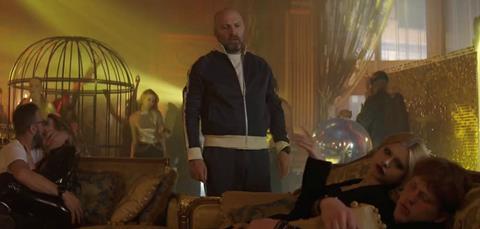
However, when Estonia upped its country’s cash rebate in April from 30% to 40%, the funding gap was closed sufficiently to give the greenlight, as Jevgeni Supin, founder of Estonia’s Zolba Productions, explained. The six-part thriller comes in at around €200,000 per episode and is being produced with Ukraine’s Film.UA and Bulgaria’s Agitprop - it is also now making considerable buzz on the festival circuit. Zolba’s next project, Let it Snow, is a partnership with Finland’s Take Two Studios and it is now 60% financed.
Efforts to build infrastructure in the region are also considerable. In Estonia alone, the IDA Hub Film Campus that comprises over 3000m² of studio space (including workshops, production offices and post-production facilities) recently opened its doors. In 2028, the Tallinnfilm Studios will add a further 3,500m² facility.
Other initiatives are also being embraced. The recently rebooted accelerator program run by the European Writers Club “can make even good writers better”, believes Luhats. MTV Finland is also part of the program that aims to encourage collaboration between creators, writers, producers and broadcasters. Vakio credits this program with helping get their projects ready for the international market.
None of this is to say that getting a Balkan scripted series away in international markets is straightforward. But perhaps counterintuitively, as more established countries continue to exercise extreme caution on commissions, the chances of an unexpected hit coming from this cost-effective region and one of its like-minded, entrepreneurial partners are actually increasing.






No comments yet