

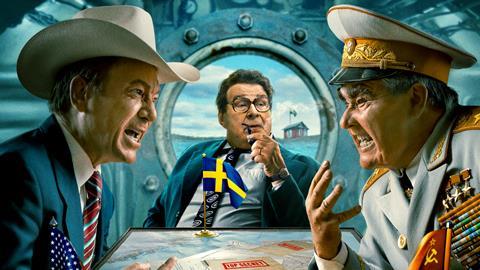
Content chiefs from SkyShowtime and SVT on the future of scripted collaborations
Broadcaster collaborations are not a new phenomenon, but the effects of a global pandemic and a struggling economy have prompted a rethink around partnerships.
And while co-productions are a well-known model for drama producers, more broadcasters and platforms around the world - particularly in Europe - are adopting this way of making shows as part of their permanent content strategy.
Partnerships have been one of the main pillars of SVT’s commissioning strategy for years, helping the Swedish state broadcaster’s ambitions to order nine dramas a year, which in recent years have included shows such as Whiskey on the Rocks, Blackwater and Blood Cruise.
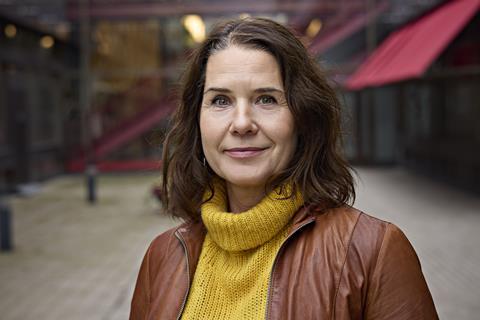
“For SVT, every series we do, we have to think that it can travel,” says head of drama and film Johanna Gårdare.
“We have to make sure everything can travel [and] to have international partners in everything, so you have to think about feasibility. You have to think about that from the very beginning and you have to start talk about the financing possibilities really early on.”
On the topic of flexibility, Gårdare states that the broadcaster is open to “being a minority producer” on some shows and highlights changes in the UK market’s approach to partnering up.
“I went to Durham [in September] for Content Without Borders. I noticed that the BBC and other streamers in the UK are now more open to collaborate than before,” she says, adding that the two countries ”have much in common” meaning working together can make sense.
Increasing engagement
The increase in UK collaborations is reflected in research, with GlobalData finding that the UK has co-produced with other markets on 99 series in 2024, a rise 73% increase onf the 53 shows in 2023.
Gårdare adds that “glocalness” - the incorporation of “both universal and local relevance” - is the best recipe for a successful co-production.
“You have to use the advantages you have as a country,” she explains.
“Every country has its gold and needs to use that - whether it’s amazing nature, coastline or very special mythology or whatever. It’s the shared DNA you have as a country. Then you can combine that with a more universal theme… and premise, which is recognisable and attractive for many people.”
Co-productions need to provide local authenticity, come with recognisable talent attached and deliver a great story engine with economics that make sense given the audience size
SkyShowtime’s Kai Finke
SVT’s preference is to be lead broadcaster and take a first window on shows, but Gårdare is open to being a minority producer as long as SVT and the other broadcaster or streamer are “sitting in the front seat together”.
She references SkyShowtime’s adaptation of The Trio (Trion), in which SVT is a co-producer alongside German state broadcaster ZDF.
“We are the second window and [SkyShowtime] has first window but we did it together. We made all the big decisions together and we are the ones giving the notes on the scripts. You can do it in many ways, but it worked really well there.”
The Trio isn’t the only co-production that SkyShowtime has under its belt. The Comcast and Paramount Skydance-owned European streaming service also recently co-produced Spanish series Road to Arcadia (Camino o Arcadia) with US-LatAm Hispanic streamer ViX.
“We’re definitely finding success with international co-production models,” says chief creative officer, Kai Finke.
“In a way, it’s an advantage that SkyShowtime doesn’t operate across a global footprint – it provides us with a lot of options to find partners outside of our markets.”
Flexible windowing strategies on a domestic basis is also opening up collaboration, allowing programmes to reach wider audiences by tapping into different viewerships on the various services.
SkyShowtime has adopted this strategy with SVT on their original series Where the Sun Always Shines (Där Solen Alltid Skiner), as well as on The Cop: A New Chapter (Glina.Nowy Rozdział) with Poland’s TVP, and The Tribute (El Homenaje) with Prime Video.
Finke believes co-productions will remain a part of SkyShowtime’s strategy and says he is open to partnerships from different markets.
“We are happy to explore co-productions with potential partners from Europe as well as from both North America and Latin America - provided the projects we are looking at are projected to do well in SkyShowtime markets.”
Co-pro demands
So, what does SkyShowtime look for on a co-production?
“They still need to provide local authenticity, come with recognisable talent attached and deliver a great story engine with economics that make sense given the audience size,” says Finke.
“And our audience is broad, so the titles we are looking to commission or partner on for co-productions need to reflect that.”

And what about SVT?
“We are reflecting the contemporary times. Conflicts, dilemmas and topics in stories where everyone can reflect and recognise themselves. Everyone should be able to identify with our content in some way,” says Gårdare.
She is interested in dramas with originality and is looking to take bets on new perspectives and strong voices.
Gårdare encourages writers and producers to “work a bit like journalists” by finding “new angles, new perspectives, new voices through research” to help refine the story and overall production.
Currently, Gårdare is looking to prioritise dramas that target 20- to 30-year-olds, a demographic that had been challenging for SVT to connect with until Whiskey on the Rocks was released. The commissioner urges producers and writers to consider relevant topics and themes.
Although SVT typically commissions dramas spoken in Swedish, Swedish millennials and Generation Z tend to watch content in English with Swedish subtitles. This, Gårdare says, is due to these generations being more accustomed to English and placing value on well-produced English-language series.
This also means SVT is open to English-language co-productions as it is “easier to reach [the younger demographics] with the English language”.
Despite this, Gårdare says stories need to have “some Swedish relevance” that will appeal to local audiences.
“We need more than ‘OK, let’s do one character and let’s put a Swedish actor in it’. It’s not like that. It has to be connected to Sweden in some way, not set in Sweden necessarily, but it must be connected to Sweden.”
Both SVT and SkyShowtime have reaped the benefits of partnering with their peers on TV dramas, but it comes with risk. They are not only betting on a new project but also on working alongside an additional commissioning team - but traditional commissioning comes with its own challenges.
Nonetheless, at a time when commissioning and producing shows has become more difficult, there are certainly more opportunities that come with collaboration.
Finke says: “We are trying to remain nimble and to find and tailor the best possible approach for each project that we are moving ahead with.
“Obviously splitting the bill with another broadcaster can be attractive in terms of a project’s economics, yet one main reason to team up and co-produce a show is simply to grow its audience.
“And that’s something that is really important to cast and crew, and it provides us with more learnings too if a show performs a certain way on and off service.”
As Gårdare summarises: “We have to work more together. No one can stand alone.”



No comments yet