

Event’s editorial director speaks to Broadcast International as 2026 edition kicks off in Tallinn, Estonia
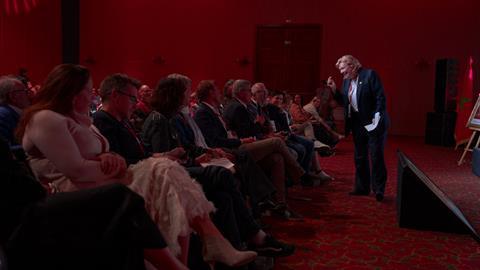
As the 2026 edition of World Congress of Science & Factual Producers (WCSFP) opens it doors to delegates from aorund the world, Broadcast International speaks to editorial director Sara Ramsden about the major issues facing the sector.
Financing content remains a major hurdle but Ramsden also points to emergent areas in digital as offering potential and asks how brands can be brought further into the factual industry.
It’s been an exceedingly tough time for factual producers over recent years. Are you finding that the business is beginning to improve among your delegates?
We can’t afford to be too nostalgic about how things used to work. We need to be curious about what comes next
I wouldn’t want to pretend that the pressures on independent producers have suddenly disappeared. Budgets are tight and companies are under enormous pressure.
But I do sense a growing appetite to look beyond the traditional models. I think that’s one of the reasons Congress matters so much this year. We need to get people talking about what’s working and where the opportunities are. I don’t think we can afford to be too nostalgic about how things used to work. We need to be curious about what comes next.
Is financing still the major challenge for producers? If so, how is WCSFP 2026 looking to reflect this?
Absolutely. Financing ambitious factual content is one of the biggest challenges facing the industry.
But I think we also need to broaden the conversation about what financing actually looks like. Are there opportunities in working with digital platforms? Can brands become more meaningful partners? Are there new international co-production opportunities? How do we build businesses that aren’t entirely dependent on a single broadcaster or commissioning decision?
We have sessions like Little Gems which showcases the best productions from 2026 made on small budgets, and we have eight Close Encounters of the Funding Kind, where we’ll hear insider information about how to gain funding from NHK, ARTE, CICC, ORF Universum, France TV & France TV Distribution, ARD, CBC’s The Nature of Things, and National Geographic. Plus a session on new funding in the creator economy, and what it’s really like to co-produce with PBS, NOVA, PBS Distribution.
We also have Pitch Me!, which gives producers the opportunity to put projects directly in front of relevant decision makers. And, of course, a huge amount of business happens informally throughout Congress. Sometimes the most important conversation is the one you have over lunch with someone from another country who is looking for exactly the kind of partner you need.
I don’t think there is a single answer to the financing challenge, but we need to be looking in more places and talking to more people. That’s what bringing an international community together allows us to do.
How will digital and the creator economy play into this year’s event?
It’s absolutely central to the programme. I think one of the biggest changes and opportunities in our industry is that the boundaries between traditional television and the creator economy are becoming increasingly blurred.
We have people like Tony Pastor from Goalhanger, Ian Shepherd from Electrify and Julie Walsh Smith from Complexly joining us in Tallinn. Between them, their organisations reach hundreds of millions of people. We’ll also be hearing from people like YouTube science sensation Mai Thi Nguyen-Kim, who has successfully crossed into broadcast, and BBC presenter Jim Al-Khalili, who has made the move into streaming.
I want us to have an honest conversation about what television can learn from these businesses and creators, but also what they can learn from the experience, editorial ambition and storytelling expertise of traditional factual producers.
We’re also looking at how audiences are changing, particularly younger audiences, who may be discovering science and factual content through YouTube, podcasts and social media rather than through a television schedule. Estonia’s teens are number one in Europe across science and maths, and we’ll be bringing them to the stage to talk about where they’re really consuming factual content and what makes them stop the scroll.
We’ll also recognise the growing influence of digital-first content through the Buzzies, which introduces a new Best Digital-First category this year, reflecting how much the factual landscape is expanding beyond traditional television.
And I think we need to stop treating digital as a separate conversation. It’s not something happening over there, outside our industry. It’s part of the same ecosystem. There’s a lot of opportunity afforded to us, if we can break through the noise and work together to challenge the algorithms.
How do you expect the factual side of the business to change over the next few years?
I think the industry will become much more diverse in terms of who makes content, where it is distributed and how it is financed. The traditional broadcasters will remain important, but they are no longer the only major players in the factual landscape.
We’ll see more collaboration between independent producers, digital creators, platforms, brands and international partners. Some of the most interesting businesses may not look like traditional television production companies at all.
AI will also have a significant impact, both in the practical business of making programmes and in the creative process itself. We’ve got quite a few sessions on AI at Congress this year, including: a sit down with Estonia’s leading neuroscientist Professor Jaan Aru, interviewed by Anthony Morgan, co-host of CBC’s The Nature of Things on what technology is really doing to our brains; a session on our deep worries with AI and how to televise this; and a game show where we’ll challenge top producers to figure out which clips are real and which are fake.
Plus, Dr Eckart von Hirschhausen will talk with Timothy Caulfield, author of Is Gwyneth Paltrow Wrong About Everything? and Nutopia’s Jane Root about battling misinformation in a world of deepfakes.
But I remain optimistic about the future of factual storytelling. The need to understand the world has not diminished. If anything, it’s become more urgent. People want to know what’s happening and what it means for them. There will always be an appetite for brilliant storytelling that helps make sense of the world. Our job is to find the right ways to deliver it.
Tell us which elements of WCSFP 2026 you are most looking forward to?
That’s a very difficult question because there is so much in the programme that I’m excited about! But I think the conversations around the creator economy are going to be particularly fascinating, with insider tips and tricks from people who are building some extraordinary businesses and reaching audiences on a scale that traditional television can only dream about.
The session I’m looking forward to the most is Tony Pastor being interviewed by Richard McKerrow, my former boss at Love Productions. Those two used to work together and I think Richard is very intrigued by Tony’s massive success and will dig very deeply into how Goalhanger works.
I’m also looking forward to my conversation with Tom McDonald from National Geographic. It’s a wonderful factual brand with a remarkable history, and I’m interested to hear how he sees its role evolving in this changing landscape. Plus I have a secret reveal clip of when Tom was Big Brother when he was 25!
But perhaps what I’m most looking forward to is the mix of people in the room. You can put together the most brilliant programme in the world, but it’s the conversations that happen between sessions, the unexpected introductions and the ideas that emerge when people from different parts of the industry meet that make Congress special. You never quite know what might come out of it.
What can attendees expect from your host city, Tallinn? How cold will it be?!
Well, I would definitely recommend bringing a warm coat! But Tallinn is a wonderful city to host Congress. It has a fascinating combination of medieval history, contemporary culture and a very forward-looking outlook. Estonia has an extraordinary reputation for digital innovation, so it’s a particularly appropriate place for us to be having conversations about technology and the future of our industry.
Our main venue, Kultuurikatel, is also rather special. It’s a former power station dating back to 1913, with a fantastic industrial character. It even featured in the film Stalker, so there’s a bit of cinematic history thrown in.
We’re also looking forward to our big Congress dinner at the Tallinn Maritime Museum and the chance for delegates to experience a little more of Estonian culture, not to mention our special performance from Estonia’s Eurovision entry Puuluup. And, of course, we’re working with PÖFF, Tallinn Black Nights Film Festival, which is celebrating its 30th anniversary this year.
Tallinn is only 200km from the Russian border so the key security issue of our age feels very close. The war in Ukraine feels much more urgent here than it does at home. This geography will focus our thinking in some of the history debates, which feature prominently this year.
This is our first Congress in Estonia and I’m really excited about opening up those Baltic and Nordic connections and giving people the chance to discover a part of the world that perhaps they haven’t worked in before.
And if it does get cold, there will be plenty of opportunities to warm up in the hotel bars! Some of the best Congress conversations happen there anyway.
World Congress of Science & Factual Producers 2026 runs 9-12 November in Tallinn, Estonia.






No comments yet