

The future of Skydance, YouTube and hyper-distribution among talking points from Cannes event
If it felt like this year’s Mipcom was in transition mode, it’s because it probably was.
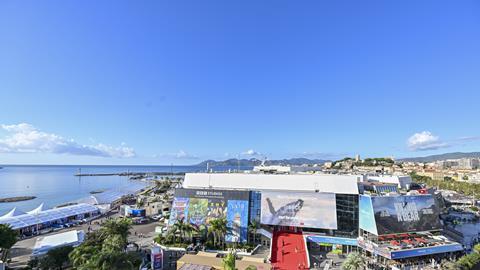
It was manifest on the ground in Cannes - this will be the last time the Palais beach hosts stands from both Paramount and Warner Bros Discovery - but also in most conversations over the past few days. News that Netflix would be cutting 6% of its workforce did not help either.
Hyperdistribution, YouTube and the scrabble to find models that work economically and creatively all played into an event that threw up no major news line but plenty of talking points. Here are six.
What’s next at Skydance?
Two major pieces of M&A provided plenty of cocktail chat this year. But while the timing of the Banijay Entertainment-All3Media deal had allowed it to get its ducks in a row for Mipcom, those at the newly enlarged Skydance were not so fortunate.
It meant former Paramount and WBD sales execs were trying to strike deals at their respective stands with their futures horribly unclear. Skydance did have time - just - to install WBD alum David Decker as content distribution chief last week, but insiders said the atmospheres within both camps was above all one of uncertainty amid looming cuts.
Rumours swirled over the futures of Decker’s key lieutenants on the sales side, but it is understood nothing has yet been formally confirmed. Expect those changes to come in the next couple of weeks.
Drama in the USA
Producing scripted remains a tantalising but risky business - and nowhere more so than in the US, where the bets are bigger and the misses more damaging.
So it was surprising to hear that two of the biggest non-US producers - Banijay and BBC Studios - are looking to double down in the country.
Jeff Zucker, Banijay Entertainment chairman and chief exec of its co-owner RedBird IMI, was in town pressing the flesh at the start of the week and he was clear that a move into US scripted is one he wants to make.
“We’re incredibly well capitalised, we’re ambitious and we see [scripted in the US] as an opportunity for us,” he said. Banijay’s scripted business accounts for around 25% of its total output at present, bringing in revenues of just north of $1bn annually, but Zucker sees growth.
Chief exec Marco Bassetti - a man who knows a thing or two about producing drama in Europe and the risks that the US poses - was more circumspect, pointing out that “some companies” had made the move only to pull out a couple of years later when the going got tough. “We need to go there with the right people and the right IP,” he added.
BBCS also sees Stateside opportunity and is looking for a senior exec to focus on building out its scripted commissions from LA. With greenlights from US broadcasters becoming fewer and further between, the role is focused on streamers and will sit under Ryan O’Dowd, who was recently appointed to become president of BBC Studios Global Productions LA.
“We’re rethinking our scripted strategy in LA and it’s going to be more streamer focused,” O’Dowd’s boss, president of BBC Studios Global Productions Matt Forde, told Broadcast International. The direction of travel is clear.
YouTube reality
YouTube’s presence at Mipcom again increased this year as the Google-owned service looked to tempt in rights holders and their content.
EMEA vice president Pedro Pina made his latest appearance at a European TV event as part of that push and there is no doubt that YouTube is now broadly seen as an essential place to play for rights holders.
RTL chief exec Stephan Schmitter was on hand to provide a case study - reporting that 200 legacy episodes of its long-running Cobra 11 drama had reached 30 million views in the first year.
But speak to smaller producers and distributors, and the model still barely stacks up. Several senior execs running small and mid-sized businesses on the ground in Cannes were clear about its limitations - not least because full access to the platform’s back end is only provided to a select number of companies.
Without that, features such as geo blocking become much harder - if not impossible - meaning it is often a pre-requisite to pay a third-party to do it for you. Yet in the wafer thin margin game of YouTube, giving away a further 10% of revenues (after the streamer takes its 45% cut) begins to look unsustainble, especially if you’re trying to produce original content rather than simply monetising library IP that had been previously ignored.
The service likes to tout its democratic, ‘cream rising to the top’ approach to content creation and distribution, but the suggestion from some is that the reality of YouTube’s proposition is far from straightforward.
Finding fandom
If there’s a buzzword for 2026 it’s probably fandom - and it’s quickly established itself as a key strategy for both producers and commissioners.
Sam Harowitz, senior vice president of content acquisition and partnerships at Tubi, highlighted how the Fox-owned service is tapping into this with scripted comedy series Safe Space, featuring social media star and actor Kevin Fredericks.
With a built-in following, Harowitz said Tubi had been able “to move a lot of those viewers to Tubi and engage them”.
A similar story is playing out at NBC Universal. Beatrice Springborn, president of Universal Global Television, spoke about upcoming launch Dungeon Crawler Carl (DCC) as an example of a scripted project that began life as a self-published title barely five years ago. Since then it has developed an avid online following and Peacock has handed the show a greenlight, with The Mandalorian’s Chris Yost attached to write. Risk appetite might not be high among US streamers right now but DCC is a welcome example that the right IP can make it through, regardless of its beginnings.
Window talk
With sales firms from all corners of the Earth in Cannes this week, it’s no surprise that the future of windowing was a major conversation.
Being in France helped: distribution agreements between French broadcasters and streaming platforms - such as TF1 with Netflix, or France Télévisions and M6 with Prime Video - underline the popularity of the hyper-distribution model for those buying content, but rights holders remain divided.
“For a distributor, it means your content can be found everywhere, so you need to reorient deals to keep financing possible,” said Julia Schulte, France TV Distribution’s senior vice president of international sales. Streamers’ investment obligations in France have already pushed them into high-end copro partners on scripted fare, she explained, but for such deals, “we had to make an immediate shift,” she said. “Now, whether through pre-buys or co-productions, the streamer has to come first in the release window.”
Schulte added that the rapidly changing windowing landscape is making it “quite difficult” to know what kind of returns you will be albe to recoup.
“The hardest thing is managing complexity in uncertain times,” agreed Mark Young, exec vice president of international distribution and networks at Sony Pictures. “We are set up to work with partners, but that complexity makes it difficult to navigate. We try to find value through different windows and models.”
Mipcom future
How Mipcom navigates this changing industry remains to be seen, but its push into creator content and microdramas continues, as does its extended embrace of YouTube.
Numbers were down on last year - the official figure of attendees stood at 10,100 - but Mipcom chief Lucy Smith said the focus would remain on “consolidating” the event “as the leading marketplace for content”.
Yet that market is getting increasingly consolidated - 2027’s event will likely look quite different with a combined Paramount-WBD stand leaving space on the beach.
Smith admitted the industry is experiencing “extraordinary disruption” and said comparisons with what Mipcom was five or 10 years ago were not possible because the sector has changed so fundamentally.
She pointed to the presence of firms this year such as YouTube, Meta and TikTok as examples of how the event has adapted, but emphasised that the “core business” remains distribution.
The goal, she added, is “not to recreate Mipcom but to make sure it continues to reflect the industry as it is today and where it goes next”. Yet as the events of the past week have highlighted, the answer to the question of just where it will go remains unclear.
Marie-Agnès Bruneau contributed to this report.





No comments yet