
Laurence Herszberg and Francesco Capurro appraise a turbulent TV landscape ahead of this year’s event in Lille
Series Mania takes place against a backdrop of rising geopolitical tensions and a global audiovisual industry facing tumultuous post-peak TV times, yet its importance to the industry has never been so clear.
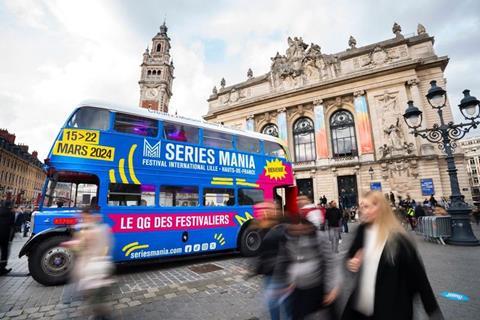
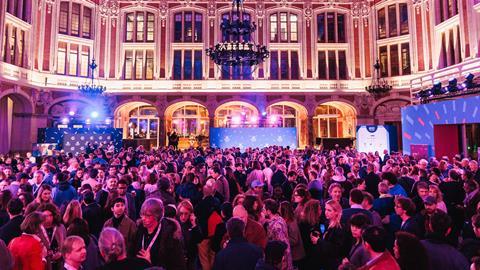
Organisers are expecting more than 5,000 professionals from some 75 countries for this year’s event, which runs 20-27 March (with the professional-facing Series Mania Forum taking place 24-26 March).
Budget belt-tightening and major media consolidation will be hot topics, but Series Mania founder and director Laurence Herszberg says such challenges mean more attendants, all keen to explore how to navigate the evolving industry.
”It is a tense time in the world and within that context, a structurally difficult time for the industry,” Herszberg tells Broadcast International, but “because of that, we have seen a boom in accreditations that are up by 20% from last year. The entire planet is coming to Series Mania.
“The role of an event like ours is to connect people and find solutions to financing shows that can work despite the changes in the landscape,” Series Mania Forum director Francesco Capurro explains. He calls the current market instability “an opportunity”, before adding that ”now, more than ever, people want to connect and do business together - that is a good sign.”
We all knew that post-Covid, we were producing too much. It wasn’t sustainable. The question now is: will series remain original?
Laurence Herszberg
Series Mania Forum has become an essential stop on the international circuit, with a three-day marathon of meetings, screenings, panels and conferences. Highlights include the co-production pitching sessions, the second year of the Buyers Upfronts, the Coming Next strand, and a focus on the future of the industry with major players from the industry and European politicians at the Lille Dialogues.
However, like current events, the global and industry-wide economic bind is also spilling over into the event itself. Herszberg says more people are attending while 97 exhibitors are booked in, “but professionals are being more careful with their spending - for example, their advertising budgets.”
All eyes on Europe
Amidst such industry instability - particularly in Hollywood - Europe has emerged as a focal point of creativity as US streaming giants double down on local production and European companies consolidate and continue to widen their scope.
“As the US is closing its borders both commercially and politically, this is an opportunity for Europe to partner with other places for ambitious international shows. The industry is just reshaping. This is not a bad thing, but instead a real opportunity for Europe to jump into the game,” Capurro says.
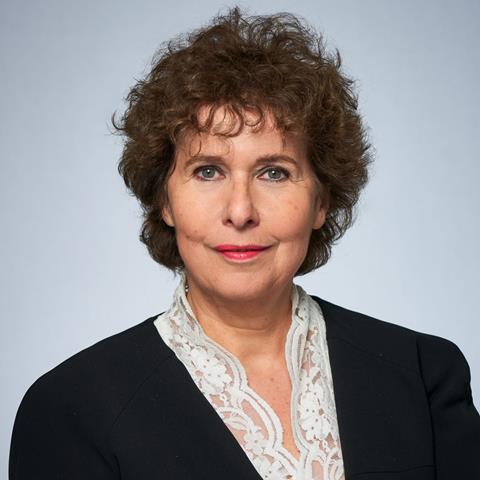
“Hollywood is in crisis,” Herszberg adds. “It is increasingly moving away from its longtime role as being the centre of the global TV market. So the industry is trying to pivot and reposition and find new alliances from Europe to Canada, Asia and Africa. Everyone is asking: ‘If the US isn’t playing the same role, what can we do ?”
Herszberg has observed that while European directives have often been considered to be too rigorous – “people said the regulations were putting the brakes on creation, au contraire” – today they are thinking outside of the box to structure financing. “Before, streamers would just take world rights, but now they are agreeing to share rights with traditional broadcasters.”
Netflix and TF1’s distribution partnership will be one topic of conversation, while a similar agreement between France Televisions and Prime Video has also been struck, and Herszberg says countries such as the UK are “shifting and looking to Europe because it is losing its longtime US ally.”
The Council of Europe’s convention for the co-production of series will also be officially signed by several ministers at Series Mania. “This will really give a boost to the industry and open doors to new forms of financing,” she says. Series Mania will host a panel specifically addressing how the new legal framework will facilitate co-productions on the continent in future.
And as Hollywood’s dominance dwindles, Herszberg says Series Mania is getting more and more global. ”It is reflecting an industry trend – we have people coming from Japan, Korea, Canada and beyond to Lille because they want to explore new partnership opportunities with Europe and other regions whether that is through co-financing, co-productions or remakes- can take different forms but there is an appetite for it.”
Chain reaction
“When there are fewer commissions, the entire ecosystem is more fragile. Fewer productions means less work for everyone in the industry. It’s a chain reaction,” says Capurro of the current environment.
Herszberg admits that there has been “an incontestable contraction” in the industry, with cable and traditional broadcasters disappearing and ”essentially a handful of major global streamers - Apple, Amazon, Netflix and Disney - running the show. We are waiting to see what will happen with the Warner Bros Discovery–Paramount deal.”
The effect on Series Mania means is “fewer series submitted, shorter formats and seasons with fewer episodes.”
Herszberg and her selection teams on the festival side received just 380 submissions this year compared to 450 last year. “This means that there are more series not being made, more producers having trouble with financing, and then having to cut the number of episodes.”
In France alone, the belt-tightening has been intense with huge budget cuts at France Televisions and Canal+. Disney has pledged to increase its investment in local cinema production in exchange for a shorter window in France’s media chronology which, Herszberg says, “means more investment in films and less in series.” She also observes that series are taking longer to be greenlit.
For Capurro, the trend of consolidation is not necessarily negative, nor a threat to smaller producers.
“We need European champions,” he said of powerhouses like Mediawan, Federation, Banijay and Fremantle, which “have the financial capacity to bring high profile projects with A-list talent and high production value that can travel.”
At the same time, he adds: “We have a lot of independent producers in Europe continuing to provide quality content. We need both indie producers providing content for local broadcasters and streamers and the bigger companies who can compete on a global scale.”
Herszberg adds that consolidation is both inevitable and - at present - still unpredictable. “It’s a readjustment. We all knew that post-Covid, we were producing too much. It wasn’t sustainable. The question now is: will series remain original? It is too early to say. The industry was completely turned upside down a year ago. For now, series are still creative, but it remains to be seen whether this will still be the case in the years to come.”
Despite the economic constraints, Herszberg insists that scripted quality has not suffered. “Platforms in the US are taking fewer risks, but here in Europe, broadcasters are daring to air shows - look at ZDF with The Flaws or even an ambitious adaptation of Lucky Luke for France Televisions and Disney.”
The Forum is also exploring new types of programming and embracing ways of working with more nascent parts of the industry, for example microdramas and AI. “The definition of a series is more and more complicated so we are trying to explore new forms series can take. We don’t see these new things as replacing the old ones – they are additions. We try to give a platform to industry newcomers and show people how they can join… or not if they so choose.”
For example, she adds: “Everyone is talking about microdramas. It’s a huge trend in Asia, but new in Europe.” YouTube’s Justine Ryst will also discuss opportunities, while the Forum has launched Innovation Talks and has invited eight companies developing AI solutions to present their software.
Lille as a microcosm
While the industry will be laser-focused on business in Lille, Herszberg admits that global tensions “directly affect the festival.”
Iranian filmmaker Ida Panahandeh, selected for the international competition jury, will not be able to attend as planned, nor will many participants from Israel for the Sam Spiegel Series Lab, while executives are facing travel disruption from locations such as Australia and Asia.
Thematically, Herszberg highlights a handful of trends programmers have seen with this year’s crop of submissions, namely series that are either politically-charged or, on the other end of the spectrum, a complete escape from the current global state of affairs.
“It is clear that screenwriters are inspired by the world as it is, whether that means looking back on historical events particularly when they expose extreme, totalitarian regimes,” Herszberg says.
She cites festival selections such as Belgian series Breendonk (exploring how the Flemish people faced the German invasion during World War II), Etty (depicting the Nazi occupation in Amsterdam), Spanish series Anatomia de un Instante (which revisists the failed militry coup after Franco’s death), and The Best Immigrant (set in a dystopian near-future fictional Flanders with a far-right government).
For audiences looking for a distraction from wars old and currently brewing, there are escapist opportunities in shows like comic book-based western Lucky Luke, Japanese sci-fi Queen Of Mars and Germany’s satire of contemporary society and work, The Flaws, which Hersberg calls “burlesque, hilarious and Kurismaki-esque.”
She also suggests series have entered a more diverse era of storytelling. “For a few years, every series had a strong female heroine. Now, we are seeing new forms of masculinity emerge as well,” citing festival selections Dear Killer Nannies (about Pablo Escobar’s son), US series The Audacity (about a tech boss in an existential crisis) and the UK’s Waiting For The Out (about a philosophy educator teaching prisoners).
For the time being, as the industry lands in Lille, organisers see the past year’s turbulence as a rerouting rather than a scripted TV crash landing. Herszberg’s outlook is clear: “I’m optimistic,” she says.



No comments yet