

For a generation of fans, creators aren’t a marketing channel around the product – they are the product, says Nick Walters at SuperAwesome
Every generation discovers sport differently. For decades, football fandom began with television. Families gathered around the biggest matches, broadcasters shaped the narrative, and pundits explained the game.
That model still matters, but for many sports it’s in terminal decline – the average viewer of televised pro baseball is pushing 60.
Sports that rely solely on traditional broadcast may soon have what you might call actuarial challenges.
Fortunately, there’s no need to rely solely on traditional broadcasts. For many Gen Alpha and Gen Z fans, football is viewed somewhere else.
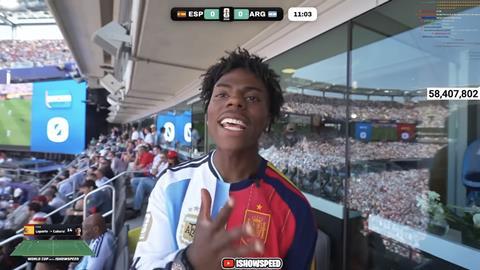
At this year’s World Cup, IShowSpeed’s livestream from the final (pictured) racked up more views than the official Fox broadcast.
Insight: The Broadcast Sport Summit 2026 (Ermirates Stadium, 4 November) includes a new Content Hub with a series of panel discussions focused on the creator economy. Tickets are available here.
SuperAwesome’s research found that 35% of UK teens follow the players or teams competing in sporting events on social media or YouTube, while 29% follow influencers or creators covering those events.
And social is also often when loyalty begins. One in four teenagers now discover new sports fandoms through creators.
For years, creators have largely been viewed as another marketing channel. They help launch kits, promote sponsors, or generate excitement around tournaments. But today, they’re part of the fan experience itself: helping new fans understand the game, celebrating successes, and connecting with fans that share the same passion.
The interesting question, then, isn’t whether creators matter to sport. That argument is pretty much over.
It’s what leagues, broadcasters and brands should actually do about it.
There are already some useful answers.
At this summer’s World Cup, FIFA and TikTok appointed 30 creator correspondents from 22 countries. They weren’t simply given tickets and asked to post about how excited they were. They were given access – training sessions, press conferences, warm-ups, player interviews and the bits around the game which traditional broadcast coverage rarely has time for.
FIFA went further still, allowing a wider group of creators to work with archive footage.
Also during the World Cup, BBC Sport partnered with the Sidemen on an alternative watchalong of Ecuador against Germany.
The NFL and YouTube have gone further. For their 2025 Chiefs–Chargers game in São Paulo, viewers could watch the conventional game broadcast or effectively watch it with creators including IShowSpeed, Tom Grossi, Robegrill and SKabeche. Destroying was on the sideline. Some creators analysed; some entertained; some spoke to completely different communities. Same sporting event, multiple front doors into it.
And there is an equally important lesson here for brands.
The traditional creator sponsorship model tends to start with the brand message: here is our campaign, here are the mandatory talking points, please make something suitably authentic around them. A more interesting model gives creators control of the format.
NBCUniversal’s Olympics play was a good example. Its creator collective puts creators on the ground at the Games and then gives advertisers the opportunity to sponsor content from selected talent. The Paris version generated nearly 300 million views. NBCU brought the format back for the 2026 Winter Olympics.
Brands should be asking rights-holders where creators fit into the media proposition itself. Could a sponsor fund a creator commentary feed? A daily behind-the-scenes show? A creator newsroom? Tactical explainers for people discovering the sport for the first time? A season-long group of correspondents covering a league from different cities or different fan perspectives?
And rights-holders need to build the infrastructure that makes those ideas possible – creator accreditation, cleared footage, access, sensible usage rights and, critically, enough editorial freedom that the end result still resembles the creator people chose to follow in the first place.
Conventional broadcast won’t become irrelevant overnight, and may always have a place. TikTok says its World Cup content didn’t replace live viewing; it created more routes towards it, with creators helping new and casual fans understand what was happening and why they should care. Instead, the mistake is thinking that the broadcast is the product and everything else is marketing.
For a growing number of young fans, creators can be an integral part of the product. It is the match, the highlights, the group chat, the explanation, the reaction, the joke and the creator they trust to make sense of all of it.
Sports organisations are beginning to build around that reality. Brands probably should too.

Nick Walters is president & CSO at SuperAwesome



No comments yet