

Sam Bird, SVP of sport and entertainment at WPP Media, looks at how sport entertainment is evolving
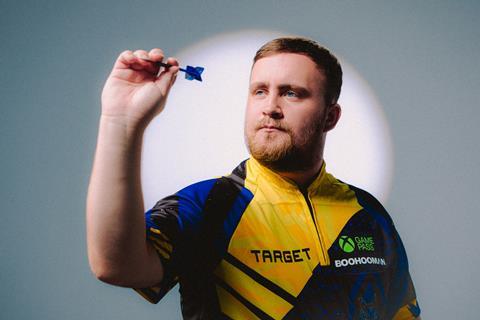
Netflix’s announcement of its new Beat Luke Littler show could be seen as another step in the streamer’s expansion into sport, but it’s more revealing than that.
Airing live on 30 October, the one-night competition will give 20 amateur darts players the chance to take on world number one Luke Littler and win £501,000. The challengers will be selected through open regional heats, transforming a familiar pub debate - could an ordinary player beat the world’s best? - into a high-stakes entertainment format.
Rather than buying rights, Netflix is creating a live sporting occasion of its own, built around a recognisable personality, a simple proposition and the genuine possibility of an upset.
The format has the fundamentals of sport but the packaging of a primetime entertainment show. That combination points towards an important next phase for sports media.
Beyond the sports rights race
Rights to established leagues and tournaments will remain immensely valuable. They deliver passionate audiences and cultural relevance that cannot simply be manufactured. However, they are also expensive, fiercely contested and finite. Acquiring more fixtures cannot be the only answer for platforms trying to build a distinctive live proposition.
Owned formats provide another route. Broadcasters and streamers can take the ingredients that make sport compelling and create new appointment to view occasions.
Netflix has already tested this model; The Netflix Cup paired Formula One drivers from Drive to Survive with golfers from Full Swing. Jake Paul versus Mike Tyson showed the pull of a one-off spectacle built around personality as much as competition.
These properties differ, but the principle is the same: sport is increasingly becoming the foundation for broader entertainment formats, rather than a category confined to broadcasting existing competitions.
Creating the event also gives a platform more control. Talent, pacing, production, commercial integrations and surrounding content can be designed together. The result is a media property built to travel before, during and after the live moment.
When the athlete becomes the media property
Beat Luke Littler is particularly well suited to this approach. Darts is accessible and immediately understandable. Viewers do not need detailed knowledge of rankings or tournament structures to grasp the proposition: can an amateur beat “The Nuke”?
Most importantly, the format is built around a personality who reaches beyond his sport. Littler is not only a world leading darts player; he is the organising idea for the entire property. His profile supplies the audience, narrative and stakes.
We are likely to see more of this athlete-entertainer model. The most culturally powerful sportspeople increasingly operate as media properties in their own right. Their stories unfold across live competition, documentaries, podcasts, social clips and entertainment appearances. A platform can build around that audience relationship without owning every competition in which the athlete participates.
This reflects how audiences now experience sport. The live broadcast remains the emotional centre, but engagement extends far beyond it. Anticipation builds beforehand; conversation unfolds in real time; and clips and reactions extend the event afterwards, bleeding into much wider culture.
A participatory format activates that wider ecosystem. Viewers can imagine taking part, debate who has a chance and follow the challengers before the show begins. It signals a move from broadcast towards a deeper experience.
From sponsorship to co-creation
For brands, that creates a different proposition from appearing around another fixture. When a property is built from the ground up, partnerships can be designed into the content, participation and fan experience rather than added around the edges. Brands can support contestants, extend challenges into social content or give viewers their own route into the action.
We have seen the potential of that approach through Adidas’ Matchday. The YouTube talk show brought football together with hip-hop, fashion and lifestyle, positioning Adidas as a co-creator rather than simply a sponsor. Social clips extended the property across platforms, helping the series generate more than 29 million views.
It was not a live format, but it demonstrates the same broader principle: brands can create entertainment around sport that reflects how audiences actually experience fandom.
Major sports rights will remain unrivalled engines of shared attention, but the future of sports media will also be shaped by platforms, talent and brands capable of creating live occasions audiences feel they cannot miss.

Sam Bird is SVP of sport and entertainment at WPP Media



No comments yet