

The BFI has launched a public fundraising drive to fund the specialist conservation work required to save the tapes for future generations
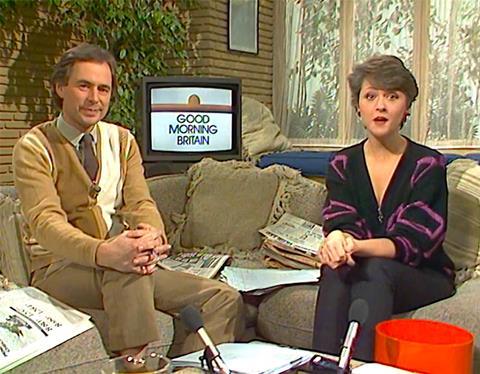
The BFI has launched a BFI National Archive preservation project to safeguard the complete TV-am collection. The collection includes more than 10,000 hours of breakfast television broadcast on ITV between 1983 and 1992.
The TV-am collection is currently held on videotapes at risk of technical obsolescence. Caring for the collection requires a team of specialists responsible for its acquisition, inspection, repair, conservation, and curation.
It also requires fostering a new generation of conservators through traineeships at the BFI National Archive, ensuring critical conservation work will continue to thrive into the future, says the BFI.
The TV-am collection documents the birth and rise of independent breakfast television over a formative decade in British social, cultural and political life. Its programming combined major news coverage with interviews, entertainment, children’s television, lifestyle features and fitness, helping shape breakfast television as well as the informal news and magazine formats familiar to audiences today.
The BFI says support is needed for every stage of caring for collections such as TV-am and without it it can’t continue to bring the stories of our shared past to future audiences.
So, during a launch event for the project at the BFI Southbank last night, the BFI also announced a public fundraising campaign – The BFI Collections Fund – to support the year-round work of the BFI National Archive.
It is seeking donations to support the BFI National Archive team’s work to protect this collection and unlock its potential for social history and research opportunities, by preserving these tapes to better understand the collection.
Lisa Kerrigan, senior television curator, BFI National Archive said: “The TV-am collection is a milestone in British television history and a unique record of British life in the 1980s and early 90s. Leading the national news agenda on a daily basis along with a heavy dose of fun, it was essential Breakfast viewing which changed the face of broadcasting and became part of the fabric of our society and daily lives. As a vital part of our shared history it is wonderful to care for it in the BFI National Archive, home to the UK’s national television archive. But these historical videotape formats need expert and costly assessment and preservation, which is why we need support for this work so we can ensure future generations are able to enjoy the collection’s riches.”
The TV-am collection includes Good Morning Britain, Daybreak, Frost on Sunday, Wide Awake Club and First Report. TV-am captured a dramatic decade of British life providing an extensive record of every aspect of the 1980s. It features political interviews with figures including Margaret Thatcher, Tony Blair, Nelson Mandela and Ken Livingstone as well as reflecting on breaking news tragedies such as the Lockerbie Air Disaster, Hillsborough, Piper Alpha and the Great Storm. Big moments in politics such as The Miners’ Strike, General elections and the resignation of Prime Minister Margaret Thatcher sit alongside regular features, celebrity interviews and music performances.
Music icons including Nina Simone, Elton John, Ringo Starr, Whitney Houston, Kylie Minogue and Mariah Carey plus Hollywood stars such as Bette Davis, Lauren Bacall, Gregory Peck, John Travolta, Liza Minnelli, Eartha Kitt, British screen icons such as Joan Collins, Kenneth Williams, Barbara Windsor and authors like Jilly Cooper, Jeffrey Archer and Germaine Greer all sat on the sofa to give exclusive interviews to TV-am. Take That made one of their very first TV appearances on TV-am dancing with Lizzie Webb. The collection includes memorable contributions from a range of experts including Lizzie Webb, Loyd Grossman, Diana Dors, Rustie Lee, Dr Hilary Jones, Claire Rayner and Russell Grant.
Although individual clips have appeared in documentaries and television programmes since TV-am ended, the full programmes have not been preserved. Preservation is now time critical as fragile videotape formats face deterioration and technical obsolescence, while replacement parts, specialist playback equipment, manuals and the skills required to maintain them are becoming increasingly scarce over time.

No comments yet