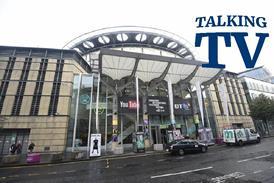
With Edinburgh the talk of the TV industry, Ian White sidesteps the attractions of the festival to see how the Scottish facilities market is faring and finds much of the broadcast action 50 miles west - in Glasgow.
With the exception of a few outposts in Aberdeen, The Highlands and even Stornaway, the Scottish facilities scene is really a tale of two cities, Edinburgh and Glasgow. While one is faring pretty well in the prevailing national climate, the other is suffering at the hands of ad agencies who are taking full advantage of EasyJet's cut-price return flights to London and financial institutions which are attempting to solve their communications problems by buying up half the stock at the local Dixons. This year, both cities are experiencing something of a shake-up.It began with the closure of Digital Facilities in Edinburgh. It continued in March when one of Scotland's longest established firms, Picardy, went into receivership and was bought by Barcud Derwen. Then in July, Avatar, an Avid-based post facility which set up in Edinburgh two years ago, went into liquidation.Now in Edinburgh, which was once home to several medium-to-large facilities operations, including those of BBC Scotland and Scottish Television (STV), only Waterside TV remains as a post house of any size. Though some broadcasters such as the BBC have left small operations to cover goings on at the Scottish Parliament, Edinburgh's media scene is now dominated by advertising agencies and the communications departments of banks and insurance companies. The city's famous festivals bring in work for smaller facilities/production houses such as Crystal Media and a few resident freelancers but the real facilities action is taking place 50 miles to the west in Glasgow.The home of Rangers and Celtic is thriving by comparison, with Barcud Derwen's new venture, Arc Facilities, about to square up to serious competition from Edit 123, Jim Allison and Serious Facilities as well as the in-house resources of BBC Scotland and STV. A new "digital media campus" is about to be built at Pacific Quay, a 60-acre site on the south side of Glasgow and both the BBC and Channel 4 are expected to relocate there from the city centre in the next two to five years.A media centre is also being developed on the rather more modest site of Govan Town Hall in a part of Glasgow not traditionally associated with trendy media types. Among those slated to set up shop there are a new Avid-based post house, Serious Facilities, and a production company called Sigma."The Glasgow Film Office is investing in the centre and everything will be under one roof there," says Colette Boyle, facilities manager at Serious which plans to move from its city centre location at the beginning of 2005.Jim Allison, one of Scotland's most respected editors who established his reputation first at the BBC and then Edit 123 before setting up his eponymous company 10 years ago, says there will be a market for the centre in Govan though he doubts that it will attract blue-chip clients because of security concerns.He is more interested in the Pacific Quay development and the fact that the BBC has indicated that it won't move until the developers, which include Scottish Enterprise, build a car bridge to it from the city side of the Clyde."We're not moving to the Pacific Quay site itself but we are at an advanced stage of planning our own custom-built premises which will be located very close to where that bridge will be. We'll have one floor for production companies to hire and we could be moving by the turn of the year." Allison's company started with one offline NLE suite and is now the biggest independent facility in the region with nine Avid-based editing suites including a DS system and six full-time editors."We also use freelance editors and those that producers have chosen," he explains. Last year, Jim Allison clocked up 300 hours of broadcast programming, far and away the facility's main source of business.At newly named Arc Facilities, managing director Bill Fairweather says that work divides into roughly equal thirds broadcast, corporate and commercials."We'll have a clearer idea once we've been going a year," he adds. "We're freshening the whole thing up - Picardy had slipped a bit in terms of post-production, levels of equipment and staff."Having expanded into Glasgow from its Edinburgh base of over 10 years, Picardy's management decided to close its video facilities operation in Edinburgh completely two years ago and shift its focus to the provision of broadband content for the corporate market."Glasgow is a larger centre of production," says Fairweather, "but Edinburgh should not have been ignored, it requires a similar service on a smaller scale."Now, with the closure of Avatar, Arc Facilities is going back to "re-establish a presence" in Edinburgh and is working on a 26 episode co-production for CBBC called Shoebox Zoo which is being shot in HD. "We've identified premises and staff," says Fairweather. "We could be up and running by September."Arc Facilities is keen to shake off the ghost of Picardy and has invested in new equipment including an Avid Symphony and Glasgow's first Discreet Smoke. Though the Smoke suite is not yet up and running, Arc has already signed up the man to drive it - Ian Valentine from rival company Edit 123. He starts this month.The arrival of Valentine, who had been at Edit 123 for some 17 years, as well as the appointment of a new commercials producer - Sharon Fullarton - who used to work at Waterside, is a strong indication that Arc intends to pursue graphics and facilities based commercials production and post-production work."I'm confident that Smoke will attract both high-end broadcast work and agency work," says Fairweather. In the run-up to receivership, Picardy had been shedding jobs but, according to Fairweather, when Barcud Derwen took over the company's assets, it preserved all the jobs in post-production.It has also retained much of its broadcast business.Serious Facilities is more geared to commercials and corporate programming but it does pick up broadcast work."The BBC is quiet right now but they're buying up a lot of scripts," says Boyle. "We're also trying to branch into film and even dry hire one of our suites for two or three months for a particular project - there are a couple in the pipeline. September's going to be busy."The fact that the facilities do not depend on the independent sector for work is interesting - and could indicate a lack of commissions. Not according to some. "We get a sizeable chunk of broadcast hours," says Stephen Anderson, managing director of production company, Kelpie Films, in Glasgow which often uses hire company McMillan (which has bases in Arbroath and Glasgow) on shoots. "We have a reasonable relationship with the BBC and find them quite accessible. It's not like London where there are so many indies and the broadcasters tend to favour a chosen few. In Scotland, there's more of a willingness to spread it about a bit," he says.But, from a purely facilities point of view, Fairweather says the corporation isn't the cash cow it could be. "Not so much work comes out of the BBC now," he says. "Resources hang on to a lot of it.""The broadcasters like a good bargain," comments Allison, "but they also like a safe pair of hands. It's like getting an Equity card - until you've done one, they won't give you one. We've done quite well and secured a lot of jobs because the production teams have requested us." It's certainly true that much of the broadcast work that does get "spreead around" Scotland's many small indies tends to be regional and produced on tight budgets - worth a punt from the production companies' point of view.On the facilities side, it's probably Allison and Edit 123 that pick up the lion's share of the bigger productions in Glasgow at the moment.In Edinburgh, where there is little or no broadcast work to speak of, Waterside looks to commercials and corporate work to fill its large studio and audio/video post suites while Crystal Media is more focused on corporate work for its smaller studio and two edit suites, though it also dry hires facilities to the BBC during the Edinburgh Festival."Work in Edinburgh is dwindling," says freelance assistant editor Alistair Ferguson, who worked at Avatar and says that, of their five suites (two offline and three online including Symphony), four always seemed to be busy. "I am finding it harder to get freelance work from the facilities houses." For assistants, it's particularly hard as most budgets simply won't stretch to employing one. Ferguson, who worked on the online editing of John Logie Baird for BBC4 and has assisted on many short films and corporate videos, is considering launching his own facility with a partner."There are probably half a dozen really good freelance editors who find work regularly," says Allison. "For the other 20, it's hand-to-mouth stuff.Edinburgh's not really a market anymore. It's been dying ever since the BBC pulled out and gave up its huge place in Queen Street."While the ad agencies and corporate giants are handing out jobs to local producers and facilities, a lot of the post work on big-budget productions still goes south to London and Manchester."The in-house production teams can hop an EasyJet for a few quid and not be pestered by the office for 48 hours," reasons Allison. Arc Facilities' Smoke may change that but old habits die hard. "Even though we have a Symphony, which is a good grading tool, a lot of companies still prefer to go to London," says Boyle at Serious.But helping to keep facilities alive north of the border are two beacons on Scotland's media landscape - its commitment to independent film-making and its reputation as a prolific producer of half-hour television comedy shows.Both Anderson and Allison acknowledge the important contribution that Scottish Screen makes to their business. As the "official face of film in Scotland", its remit is the development, encouragement and promotion of every aspect of film, television and new media - which may well help to keep up the strong tradition of television comedy in the country. This was demonstrated when staff at BBC Scotland's comedy unit left to start up their own company called, aptly, The Comedy Unit. The BBC responded by setting up a new comedy department so that the area now has two teams of people pumping out comedy ideas.Scottish facilities continue to get work but unlike the half-hour sitcoms that they edit, the current situation is no laughing matter.
No comments yet