

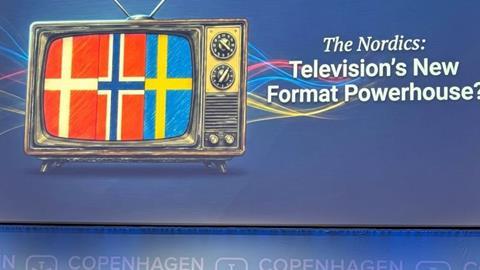
BBC, Netflix, HBO Max and Prime Video among companies appearing at Nordic industry’s flagship event
The rise of platforms, creators, AI and increasingly fragmented audiences is reshaping television, and broadcasters and producers are rethinking formats, distribution and their relationship with audiences. Yet the underlying message from this year’s Copenhagen TV Festival was clear: technology may be changing the business, but compelling stories and strong creative talent remain television’s core currency.
Around 1,000 people from the Nordic TV industry and beyond gathered for the Copenhagen TV Festival at the Tivoli Hotel & Congress Center in Denmark, an 800-metre walk from the 184-year-old amusement park, Tivoli.
With around 150 speakers across 50 sessions, the 2026 programme reflected an industry increasingly focused not only on producing content, but also on finding audiences, extending IP and adapting to new distribution platforms.
The event, organised by the Danish Producers’ Association, delivers an international outlook while also serving as a valuable networking opportunity for the Nordic TV community.
The 2026 programme confirmed that the festival has moved on from the traditional craft and business of television. Several key industry issues, including production, technology, formats, funding, and audience retention and growth, were themes throughout the two conference days.
BBC’s value judgment
One recurring theme was how to maximise the value of content – or simply make sure that good content finds its audience.
Director of BBC iPlayer and TV channels, Dan McGolpin – who is also responsible for the BBC’s YouTube strategy, which he talked up at the Edinburgh TV Festival this week – shared his insights into how established broadcasters are trying to win or maintain audiences by making their content available on other platforms.

Having 20 million regular users on iPlayer is not enough, he explained, and the BBC is increasingly exploring ways to work with third-party platforms. The BBC started working with YouTube in 2025, raising some questions around programme strategy and rights.
But McGolpin was clear in how he sees the ecosystem evolving. “We don’t perceive other platforms as competitors. It’s never a case of either or. We want to do better and give value on all platforms.”
A broadcaster venturing onto third-party platforms usually hopes that viewers will eventually return, in the BBC’s case to iPlayer. But McGolpin admitted there “is no guarantee” that new viewers would do that. “Your key task is to build native communities on YouTube and have viewers develop a relationship with the BBC. Perhaps they want more,” McGolpin said.
Along similar lines, Helen O’Donnell, vice president of content & creators at BBC Studios, explained how the broadcaster’s commercial division is building global audiences and franchises across YouTube, social media and the creator economy.
O’Donnell leads content and creator strategy for BBC Studios Digital Brands, working across IP including Bluey, Doctor Who, Top Gear and BBC Earth. She presented insights into how the business approaches platform-native content, creator partnerships and audience growth, including how established IP can reach and engage audiences well beyond traditional television.
Fuelling Nordic formats
BBC Studios’ Sumi Connock, exec vice president of global creative network & formats, was in town to lead a session with the premise: Do the Nordics have the potential to emerge as the next format powerhouse?
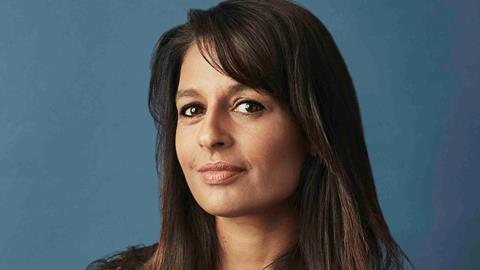
The Nordics were early adopters 15 years ago, in part because of strong internet connectivity in most households, Connock reminded attendees. “The Nordics were front runners. Today, Norwegians have six million paid streaming subscriptions, not bad for a country with about 5.6 million people,” the formats boss said.
“We operate on smaller budgets, which is a strong engine for creativity, while also working in smaller teams than in most other markets,” added Karin Lindström, group vice president of programming for the Nordics at Warner Bros. Discovery. “That combination makes you a fast learner.”
Another factor is that formats usually travel early between the four markets – Sweden, Norway, Denmark and Finland.
“It’s an effective process to launch a format in one market – as a test – and then scale it to other markets,” Lindström said, adding that the road to even stronger formats could be smoother if commissioners started sharing more of their data.
“We are increasingly more open to sharing knowledge, such as user data, between countries, producers and production companies,” added Niklas Vestberg, head of formats and development at Sweden’s TV4.
Streamers lay out regional strategy
The major international streamers – Netflix, HBO Max and Prime Video – all appeared on stage in Copenhagen to demonstrate presence and their approaches to Nordic market conditions, with increased collaboration, flexible financing and the cross-border potential of Nordic scripted content among recurring themes.
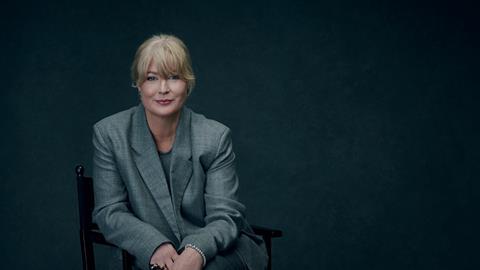
Speaking to the delegates, the international streamers were quite clear on their Nordic identities. Netflix’s Jenny Stjernströmer Björk, Nordics vice president of content, went as far as to describe the streamer as deeply embedded in the industry’s ecosystem.
The streamers also acknowledged a regional advantage: Nordic series often travel easily across borders while remaining rooted in local markets. Netflix recognised an emerging appetite among Scandinavian viewers for each other’s productions, while Prime Video highlighted its expanding scripted ambitions, including Snakekiller and Murder in the Dark.
Looking ahead, the streamers see scope for more collaboration, longer production lifespans across platforms and a more flexible financing environment. They also highlighted the need to attract younger talent and maintain an ambitious commissioning culture.
Public service debate
In one month, BBC alum Naja Nielsen takes up a position as a key executive at public-service broadcaster DR, responsible for content and publishing across genres and platforms.
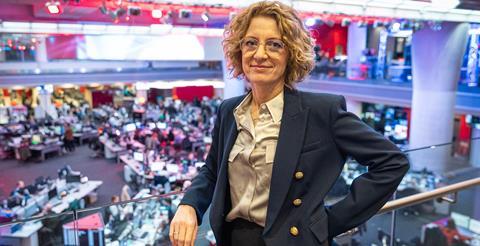
Her message was relevant to broadcasters in most countries: the more fragmented, commercialised and technology-driven the media world becomes, the stronger the case for a modern, innovative and trusted public-service media organisation. But public service has to adapt to remain relevant.
Nevertheless, Nielsen’s closing message was optimistic. She refused to let the current disruption trigger a public-service retreat.
Instead, the future DR executive sees technological transformation and audience fragmentation as an opportunity for organisations such as DR to rethink what public service can be, mirroring a similar outlook to that of her UK counterpart at the BBC, Matt Brittin, this week in Edinburgh.






No comments yet