

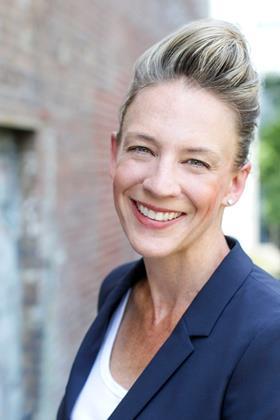
Janet Brown, president of global content sales at BBC Studios, on geographical expansion and adjusting to the creator economy
As buyers descend on the UK capital for Showcase, London TV Screenings and Mip London this week, Broadcast International speaks to Janet Brown, president of global content sales at BBC Studios, about the key trends and challenges facing the business.
What was the single biggest challenge for your business in 2025?
Timing. Buyers are increasingly selective and operating under tight budgets. You may have the perfect programme for a buyer whose budget is already committed or have a buyer with available funds but without a slot that aligns with your show. Achieving that perfect alchemy of content, budget, and scheduling is more challenging, and more essential, than ever.
What are your top three growth priorities for 2026?
Our content priorities centre on deepening the impact of our biggest brands, scaling our creative pipeline, and building long term value. This includes growing returnable multi partner procedural and light crime franchises, strengthening and expanding our Australian scripted offering, and amplifying the awareness, reach and commercial value for Bluey ahead of the Bluey Movie premiere in 2027. Developing and backing new kids’ animation franchises with long term value potential is also an area of focus.
We continue to look for growth opportunities which expand our business beyond our traditional core markets. Latin America is a great example. We agreed our first co-production with Globo last October for a documentary series about the Amazon. It is being produced by BBC Studios Specialist Factual Productions and we are acting as the global distributor.
Broadening and diversifying our buyer relationships across all territories continues to be a priority in order to maximise the reach and value of our IP. We are focused on building deeper creative partnerships with our key buyers globally by involving them earlier in the development process, for example. This deeper level of collaboration results in content that meets their editorial, marketing and financial needs.
Streamers have struck some eye-catching deals directly with YouTube creators over the past year. What do you make of this trend and do you see it impacting your business?
Our industry is fuelled by creativity and great ideas come from a variety of places. In the past, the creator economy may have felt to some like a separate space, but recent deals such as Dude Perfect or Mark Rober’s prove how those two worlds can meet successfully. At BBC Studios, we’ve been partnering with YouTube creators for over a decade now, and the BBC just announced last week a landmark agreement with YouTube focused on investments in new programming and upskilling the next generation of future creators and producers from across the UK.
Broadcaster-streamer IP pacts have also become popular across Europe, in particular the TF1/Netflix deal starting this summer. How will such arrangements affect your business; will we see a similar deal in the UK; and, what do they mean for the future of second windows?
At a most basic level, these agreements make life easier for consumers who can now find a broader range of content on one platform rather than having to surf between multiple services. Beyond that, these types of agreements provide an opportunity for a title to reach multiple audience segments, unlocking greater visibility and engagement than if they were sold exclusively. Instead of considering their own needs in isolation, a streamer can combine the insights of how titles perform on both platforms, offering a much richer understanding of audience demand. As both a funder and distributor, this presents opportunity for an expanded range of commercially viable content.
What impact will the WBD-Netflix deal have on your business and the wider industry, if it goes ahead?
The arrival of the streamers into the entertainment business was the last major inflection point, back around 2009, 2010. That resulted initially in an expansion of buyers/ platforms as the old (which had content production at their core) and new (which had content distribution at their core) lived alongside each other. We are now into another inflection point where economic and technological realities hasten consolidation. Amazon’s acquisition of MGM was a clear harbinger in that regard.
Ultimately, time will tell on how any WBD agreement reshapes the industry, but any deal will be part of an ongoing evolution on the part of all of us operating long-term business models in this space. Our business is ultimately about connecting stories with receptive audiences. It is not based on any one group of storytellers, any particular type of distribution technology, any solo source of financing, or any single construct of the supply chain. The BBC has doing this for over 100 years and a notable number of our peers have similarly long lifelines. As an industry, we do what we always have – lead change where we can and be open-minded and fleet of foot to respond to it elsewhere.
If we gave you £2m to invest in a show of your choice with a view to getting the biggest returns within five years, what kind of show would it be?
At Studios, our goal is to drive commercial returns for the BBC so we ask ourselves this, and place these bets, every day. In today’s market, you might see us spend that money to back an unscripted format from a YT creator, or to take a documentary podcast from audio to screen, or to come in alongside other partners to fund an ambitious premium scripted series.
Tell us about your key title for LTVS and what makes it stand out?
You know we can never choose just one, we love all our children! Especially this year, when we are celebrating the 50th edition of BBC Studios Showcase. But, as a compromise , we will choose one for each genre.
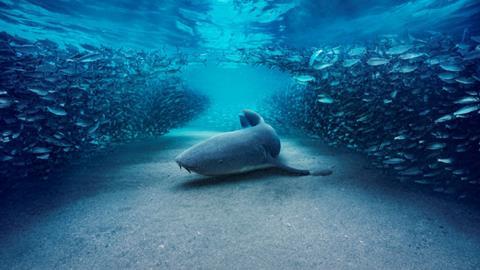
In unscripted, 25 years after the original, groundbreaking series aired, we are presenting natural history landmark Blue Planet III. The show will bring brand new stories about ocean life to audiences who fell in love with Blue Planet I & II, as well as those who weren’t even born when those premiered. Our unparallelled natural history team has exploited a whole new generation of camera technology to reveal extraordinary animal behaviours, previously impossible to film or only newly discovered.
From our scripted team, we are presenting Mint, a comic and unconventional drama which is the first television project from Charlotte Regan, the acclaimed filmmaker behind the award-winning film Scrapper. The show is produced by the Oscar-winning team at House (Conclave) and Fearless Minds, and will be arriving at Showcase hot off the back of its world premiere at the 2026 Berlinale.






No comments yet