

UK-based exec talks period romance, a shapely forearm and his focus on ’emotional generosity’
Eight on the Slate is a series of monthly articles brought to you in partnership with Broadcast Intelligence that explore what commissioners from around the world are looking for and how producers can work with them.
From rights and windowing to key genres and programming priorities, we explore the must-haves for those holding the purse strings and how they are shifting their wishlists in a fast-moving landscape.
Today, BritBox International head of commissioning Stephen Nye discusses
What makes a show uniquely suitable for BritBox?
Our ambition is to make television that actively brings joy. That’s harder than simply making something warm or reassuring. Joy isn’t a tone you can apply, it has to be earned. Television became extraordinarily good at wounding us beautifully, but after years of exquisitely rendered misery, the audience signal is getting hard to miss. People aren’t asking television to be less intelligent. They’re asking it to stop mistaking exhaustion for depth.
Making someone’s evening a little easier matters, but comfort is only one part of it. We want them to feel genuinely better for having watched.
Familiarity gets you through the front door, but specificity is what makes you want to stay
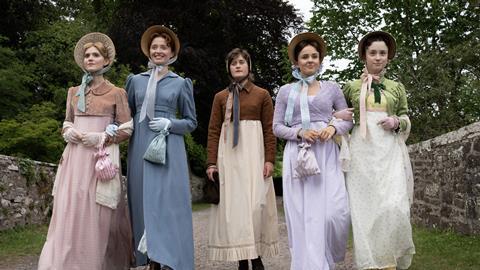
What’s interesting about how strongly our audience responded to The Other Bennet Sister is that it goes beyond a period romance and a shapely forearm, though I don’t lightly dismiss either as a strategic asset. Crucially, the show doesn’t insulate its characters from rejection, embarrassment, or the small cruelties of being overlooked. What it offers is not escape from those pressures, but the deeper pleasure of seeing them answered.
What genres do you commission?
Mystery for us encompasses a wide tonal and structural range, but what connects it all is a central unknown, an unfolding process of discovery, and a resolution that feels both airtight and emotionally rewarding. Mystery, at its best, makes the same bargain as close-up magic: deceive me elegantly, play fair, and make the eventual explanation more pleasurable than simply being right.
Our other major priority is period drama. The past should press in on the characters. If all it contributes is beauty, the show might as well be an unusually expensive wallpaper sample. The strongest period pieces do more than recreate the past. They use the restrictions of another era to sharpen desires that remain entirely contemporary: to be loved, to be seen clearly, and to claim greater authorship of one’s life. We want the past meticulously realised, but the drama unmistakably alive.
In both genres, familiarity gets you through the front door, but specificity is what makes you want to stay. The most interesting shows use that familiarity as a kind of cover, then quietly alter the emotional contract from within. The familiar builds enough trust for the unexpected to land.

What are your top priorities for your upcoming slate?
Across the slate, the priority is clarity of identity and emotional generosity: television that leaves the audience with more than it took from them.
In mystery, the ambition is longevity: leads with gravitational pull, relationships that continue generating stories, and worlds audiences want to revisit long after the murder is solved. An informal litmus test for franchise potential is when otherwise reasonable people start developing surprisingly firm opinions about a detective’s outerwear.
In period, we want romance, emotional scale, and characters pressing against the limits of the lives assigned to them. There is enormous pleasure in watching a society discover it has made a category error. You can see both reflected in Ludwig S2 (released 13 October) and The Other Bennet Sister special, an extension to the series: one deepens an established mystery world, while the other gives us another chapter in a period story whose characters, romance, and particular emotional sensibility have connected strongly with audiences.
And then there is Hercule, where those ambitions find their fullest expression. It brings the sweep and emotional scale we want from period together with the character, intrigue, and longevity we prize in mystery. It is deliberately exceptional in scale: the point at which our ambitions for mystery and period reach their highest pitch.
Are there any trends you’re keen to capitalise on?
The interesting shift is towards shows that understand the conventions of their genre intimately enough to start bending them without losing the pleasures those conventions were designed to deliver.
In mystery, that means looking beyond the procedural pairing towards characters whose comic incompatibility, attraction, or competing ways of thinking become part of the investigative engine. That approach is central to what excites us about Agatha Christie’s Tommy & Tuppence (released September 15). The key is not to treat romance and comedy as tonal seasoning around the mystery. Treating the characterisation, the romantic comedy, and the investigation as equally important gives a very familiar structure an entirely different pulse.
Stories can take anxiety, loneliness or injustice seriously without becoming the only colours it knows how to paint with - what matters is emotional resolution, not prescribed optimism
The strongest new period dramas aren’t embarrassed by the scale, beauty, or romance audiences associate with British period. They speak in that familiar grammar while composing different sentences. The meaning changes as perspective shifts, desire moves to the centre, and power is redistributed. That feels much fresher to me than conspicuous modernisation. Sometimes the most interesting thing you can do with an inherited form is know its blueprint well enough to take it apart with manners.
That formal experimentation has an emotional counterpart. The appetite is not for compulsory happiness, but for shows that treat joy as something the story earns rather than something the tone merely suggests. Audiences don’t need television to pretend the world is fine. They need it to acknowledge what is difficult without behaving as though difficulty is the only honest thing to say.
Joy often begins with recognition. A show identifies something its audience has been carrying in private, then finds a way to answer it in public. Being seen matters, but the real dramatic pleasure comes from what recognition unlocks. That can lead to anything from justice to intimacy to self-determination, but the essential pleasure is the sense of a future charged with possibility.
This is why describing the trend as a move towards ‘lighter’ television feels like a simplification. The distinction is not between heavy and light, but between dramatic weight the audience is simply asked to carry and weight the story eventually helps them put down. A story can take anxiety, loneliness, or injustice seriously without them becoming the only colours it knows how to paint with. The payoff can take many forms. What matters is emotional resolution, not prescribed optimism.
What do you NOT want to be pitched?
Our remit is deliberately focused: we’re not looking for children’s television, state-of-the-nation drama, science fiction, or horror. So if there’s anything lurking beneath the floorboards, it had better be either a clue or a disputed inheritance.
What would surprise people about your slate?
Probably the range hiding inside the familiarity. British mystery is sometimes reduced to vicars, villages, and murders committed at a fête with just enough villagers to suggest community spirit without causing a background artist overage. Mind you, BritBox remains very fond of those familiar pleasures, but the genre is much bigger than its bunting. Cosiness is optional. Craft is not.
Similarly, in period we’re less interested in reverently dusting the furniture than in characters who want things fiercely, love unwisely, and refuse to stay in the lives assigned to them. The scale and sweep of traditional British period drama let you approach a story diagonally, drawing the audience in through grandeur before revealing, almost by stealth, that the real drama has always lived at a far more human scale.
What are the key components you consider for international co-productions?
A good co-production has more in common with an intimate relationship than you might expect. At its heart is communication. The best co-productions start with mutual clarity: what each partner needs, what each partner brings, and what they are genuinely trying to achieve together. The partnership should make the show easier to realise without making it less itself. It’s better to have the difficult conversations early, when difficulty is still the only cost.
Every creative relationship has to survive a conversation about money - commercial clarity is an underrated virtue
The real test, as in any relationship, is whether everyone thinks they’re in the same one. Creatively, that means having the same show in their head. There should be a shared understanding of who the show is for, what it should feel like, its scale, and its creative ambition, rather than parallel interpretations of each. We also need confidence that the producer knows what must be protected, what can flex, and where flexibility ends and erosion begins.
Sooner or later, every creative relationship has to survive a conversation about money. Commercially, as romantically, clarity is an underrated virtue. Every relationship has dealbreakers. The red flag is finding out about them after everyone has committed. Things rarely improve when either partner is left to guess what the other wants.
How, and at what point in development, should producers pitch to you?
If there’s more to it than a mood board and the word “elevated,” fire away.
The sweet spot is a project that knows what it is, but still has room to become more completely itself. Our job in the creative conversation is to sharpen that identity, not sand it down. We want to protect what made the idea irresistible in the room, then help sustain that charge all the way from the room to the screen.
We’re assessing the producing proposition as much as the creative one. Nobody needs to have solved every problem in advance, but we do need confidence that the producer can navigate the ones we haven’t met yet. A producer can come from a company of any size. What matters is whether they can find a way through the market without making the show smaller in the process.
If a project excites us, our instinct is to become useful: helping sharpen the creative, interrogate the difficult bits, and strengthen the things that are already working. Being useful can extend beyond the creative process too, including championing the project to other partners who might respond to it.
For more information on pitching, check out Stephen’s profile on Broadcast Intelligence.





![BW_E101_MB_01764 edit2[2]](https://d11p0alxbet5ud.cloudfront.net/Pictures/100x67/6/0/9/1487609_bw_e101_mb_01764edit22_386968.jpg)
No comments yet