


American broadcasters are facing considerable turbulence as they navigate a rapidly shifting political landscape
It has been quite the week for arguably America’s most recognisable TV news magazine show – and it’s not yet Friday.
60 Minutes is one of a handful of news programmes that can claim international cut-through, with the show seen by many as a bastion of investigative, unbiased reporting that frequently makes headlines that ripple around the world.
Recent headlines have come from within, however, most recently with the firing of the show’s longtime anchor Scott Pelley and an escalating war of words with its former correspondents.
Pelley was fired on Tuesday by Paramount-owned CBS News after a heated argument during a staff meeting led by 60 Minutes’ recently installed exec producer Nick Bilton.
And unlike the vast majority of staff memos that get sent when a senior figure departs a US organisation, Bilton put platitudes to one side and let rip.
He accused the veteran anchor of having “no interest in contributing to the future success of the show” and claimed Pelley had “hijacked my first meeting with staff to disparage me, my qualifications, and my intentions with remarkable incivility and contempt.” Attempts to reconcile with the anchor had been futile, he added.
Pelley, who had been at CBS for nearly four decades and was once the network’s White House correspondent, subsequently came out fighting with his own statement that neatly highlights the rupturing of US media during Donald Trump’s second term.
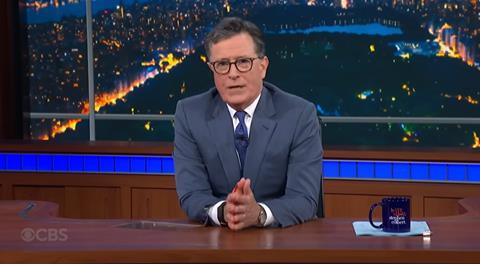
He said audiences had found “integrity, quality, and humanity” in 60 Minutes but that “the new owner” of CBS - Paramount chief exec David Ellison - “is casting this legend aside, apparently to curry a moment of favor with the Trump administration,” which is overseeing the potential merger of Paramount and Warner Bros Discovery.
Pelley said new management had instructed him “to inject falsehoods and bias into a politically sensitive story” and “include assertions that are unverified”. Politicians had been invited to choose which correspondents interviewed them, he continued.
“Giving politicians control over 60 Minutes interviews is not how this is done,” he wrote, adding that “incompetence and unprofessionalism in the new management have wreaked havoc.”
Pelley’s exit was not an isolated incident and nor were his sentiments. A week earlier, Bilton’s predecessor - Tanya Simon - departed, along with correspondents Cecilia Vega and Sharyn Alfonsi.
Vega claimed censorship was at play while Alfonsi was, if anything, even more forthright than Pelley in her parting shots.
The correspondent claimed she and her producing teams had “experienced efforts to insert political bias into our stories”, with pitches being held back for fear of “internal repercussions”.
“Let’s call this what it is: censorship, both imposed and self-driven,” she wrote. “It is dangerous for the show and dangerous for democracy.”
Context and concerns
These fears are not necessarily new but they are getting louder. They also come alongside a US media landscape that seems to be rupturing at pace, with different parties taking markedly different approaches to operating during Trump’s second presidency.
For CBS, the high-profile exits of Pelley and his colleagues over the past seven days mark the latest escalation between staffers and the network’s senior management team installed by Paramount chief, David Ellison, after he bought the US studio last year.
The US network had already paid $16m towards Trump’s presidential library following his lawsuit against 60 Minutes’ interview with presidential rival Kamala Harris, while Ellison’s appointment of Bari Weiss to oversee the show following his takeover provided further fuel to simmering concerns at the US network.
Earlier this week, Weiss praised Pelley’s ”amazing contributions” during a call to staff, but said attempts to engage the with anchor had proven futile. “That’s the path that he chose,” she said, according to US reports.
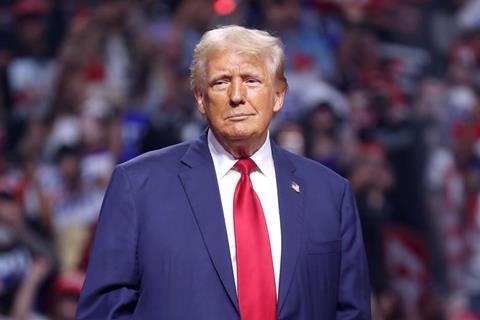
And 60 Minutes is not the only CBS show to have been affected. The newsroom drama comes just weeks after the network pulled the curtain down on The Late Show with Stephen Colbert for the final time on 21 May.
Its host had become one of the most high-profile critics of Trump, who in turn became a major critic of Colbert. When the show ended last month, the US president celebrated by posting an AI generated video of him throwing the talkshow host in a bin, before dancing to the Village People.
It’s not just CBS facing heat, though. Public broadcaster PBS has seen its funding slashed, while outside of the US, the BBC remains in a $10bn legal tussle with Trump over the editing of his speech in Panorama’s film, Trump: A Second Chance?.
Disney-owned ABC is also navigating turbulent waters.
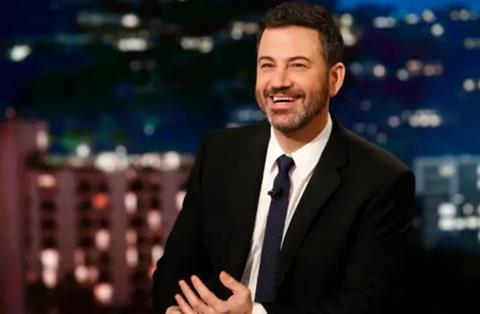
The broadcaster had already paid $15m towards Trump’s presidential library to settle a defamation lawsuit in 2024 when it found itself at the centre of attention from the Federal Communications Commission (FCC) last month, in what many see as an attempt by the president to leverage power over the network following the president’s calls to fire the broadcaster’s late night host Jimmy Kimmel, another vocal critic.
Kimmel was suspended by Disney last year following a monologue in the wake of the killing of conservative activist Charlie Kirk. Disney reinstated the talkshow host after a week, describing some of Kimmel’s comments as “ill-timed and thus insensitive.”
Fast-forward nine months, and the FCC - headed by Trump-appointed Brendan Carr - ordered ABC to file licence renewals for eight of its channels earlier this year, despite the current licences being due to run until 2028.
While the FCC suggested its renewal order came amid an ongoing investigation into Disney’s diversity, equity and inclusion policies, ABC’s response suggested otherwise.
The broadcaster invoked no less than the US First Amendment protecting freedom of speech, religion and the press, in its rebuke last week - suggesting an inclination to fight fire with fire.
In a filing alongside its renewal application to the FCC, Disney wrote: “It is an extraordinary demonstration of power and coercion directed at disfavored editorial voices which sends a clear warning to every broadcaster in America.
“This is a threat to the First Amendment that this Commission and this proceeding must not be permitted to normalise.”
Such statements - emerging from a corporate giant such as Disney - are stark. What happens next remains to be seen but one thing is abundantly clear: US networks are operating in a very different ecosystem to the one they had become accustomed to.





No comments yet