

From C-Suite exec motivations to microdramas, sales and M&A rumours, talking points from CEE’s flagship event reflect a fast-changing sector
International markets have come under increasing scrutiny over recent years, as distributors and buyers trim travel and expense budgets to fit with the lean times we’re living through.
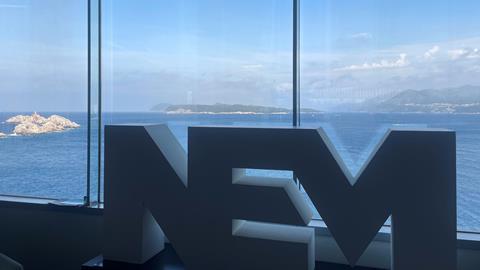
A more nuanced version of this story emerged over the past few days at NEM Dubrovnik, which has grown over the past decade to become the flagship event for the CEE region.
Not only did the number of stands increase by 150% on 2025, there were more execs in attendance - including 200+ buyers - and the spread of companies making an appearance grew exponentially to in excess of 300.
Global entities such as Paramount, Disney, Amazon, Warner Bros Discovery and Lionsgate were among attendees in Croatia, while Brazilian giant Globo and Colombia’s Caracol repped LatAm. There was also a slew of companies from Turkey including ATV and InterMedya, while Fremantle, ITV Studios, BBC Studios, Banijay and All3Media were joined by the likes of Avalon, France Televisions, Cineflix Rights and Mediawan Rights from Europe and the UK.
The reason for this uptick in attendance is simple: while the countries that make up the CEE region are diverse, they are also rather different to those in Western Europe and North America. Pay TV remains a viable and, in some cases, growing business in many part of the region, while streaming uptake is also increasing.
It is by no means all clear blue skies and crystal clear Adriatic water - piracy remains problematic and the size of individual markets means returns are less than many Western European markets - but the flurry of sales announced this week made it feel like it could almost have been 2015 all over again.
Deals, deals, deals
ITV Studios, Fremantle, Disney, A+E Global Media and Lionsgate were among companies to host screening events during the event, while a flurry of format sales underlined local demand. Serbia’s Prva TV and Romania’s ProTV both struck deals with Warner Bros to remake shows from The Bachelor franchise, and André Renaud, general vice president of format & finished sales, pointed to the “vibrancy” of the region when it came to demand for adaptations of all flavours. He wasn’t the only one.
ITV Studios reported recommissions of shows ranging from The Chase (Slovenia’s Pop TV and TV Nova in Czechia) to Game of Chefs (Antena 1 Romania) and The Voice (Serbia’s PRVA), while I’m A Celebrity… Get Me Out Of Here!’s regional CEE hub, set up with local operator Paprika Studios, is the location for RTL Hungary’s seventh season of the format and deals with other broadcasters and streamers are understood to be in the works.
All flavours of finished tape are selling too: Spanish drama Sueños de Libertad (aka Dreams of Freedom) is heading to Happy Channel in Romania and Polish streamer TVP Play; Canal+ Polska tooks Scott Brothers’ lifestyle shows Top of the Block and Don’t Hate Your House with the Property Brothers from Cineflix Rights; and Sphere Abacus revealed more than 200 hours of sales, with buyers including Viasat World, Czechia’s Prima Group and AMC Global Media.
Licence fees remain towards the lower end of the European scale here, but as distributors look to the likes of YouTube to squeeze every last penny or cent from their libraries, the opportunity to strike meaningful sales with CEE buyers is clear.
Opportunity knocks?
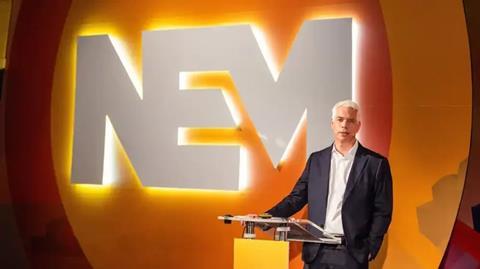
Henning Tewes, the former content chief at RTL Deutschland, used his keynote to point to what he sees as another opportunity across Europe, namely the potential offered by combining forces to compete with US giants.
Tewes now heads up Antenna Group - the Greek company whose operations reach 32 countries and span TV, streaming, cinema, publishing and events. The chief exec said ITV and Sky’s proposed merger, as well as RTL’s deal for Sky Deutschland, should provide “inspiration” to the rest of the industry at a time when national broadcasters are grappling with the might of US scale and their 360-degree businesses.
He spoke of “monetising belonging” and generating “gravity” across brands to keep consumers within a company’s orbit, whether it be via watching a TV show, spreading word on social or attending a live event.
It is not dissimilar to the strategies that have been deployed by groups such as All3Media and Banijay over recent years, which have looked to generate a far more direct-to-consumer relationship with their audience. Fremantle’s chief exec of commercial and international, Jens Richter, also alluded to his approach of delivering an experience that connects his company’s brands with the viewer more directly during his keynote.
“The power of the brand is becoming increasingly more important and that’s what we want to create - brands. We want to create them for the broadcaster of course, but we also want to build our relationship with the audience.”
Heated discussion
The Fremantle boss also outlined the importance of social when it comes to casting and gaining new viewers, with windows collapsing to deliver extended reach. “Now, a show gets launched on linear but it is also launched with social media and we’re immediately thinking what is the second or third window for that show, how can we build the maximum reach for that launch,” he said.
He highlighted Farmer Wants a Wife on Fox, which goes out on linear before moving onto sibling AVOD service Tubi as well as a myriad of social media verticals. Episodes are also being reconfigured for vertical viewing on the MyDrama app, owned by Holywater and in which Fox owns a stake.
Richter also made a case for Farmer being one of the more successful dating formats out there, with couples meeting on the show going on to have more than 600 children between them - although it wasn’t immediately apparent who had been doing the counting.
The Fremantle exec added that he was among numeorus execs to have passed on one of the biggest scripted hits of 2025, Heated Rivalry. Discussing his biggest flop, Richter joked that he had now been forgiven for the decision - one that was made by almost all his contemporaries at both distributors and US studios.
The success of the steamy relationship drama set within the ice hockey world had come as a huge surprise, he said. HBO in the US and Sky in the UK picked up the show after Sphere Abacus - owned by Canadian commissioner Crave’s parent Bell Media - filled a budget deficit and took sales rights.
It proved a savvy move - although even with the investment, creator Jacob Tierney and EP Brendan Brady still had to forego their producers fees to get the show onto the screen.
Creative passion
Such belief in content lay at the heart of Robert Franke’s assessment of those behind the ongoing industry consolidation, particularly in the US.
The former ZDF Studios’ scripted chief, who now runs Intaglio Films, blasted C-Suite execs for “not giving a shit” about the shows their companies are producing and instead focusing only on increasing share prices.
“The people facilitating these mergers are incentivised because they will get a big fat cheque if they complete but they don’t come from the creative fields. Frankly speaking, they don’t give a shit about the content. It is just a balance sheet gain,” he said.
While Paramount’s $110bn acquisition of Warner Bros Discovery wasn’t mentioned by name, the prospect of the latter’s chief exec David Zaslav and his senior team receiving hundreds of millions of dollars in bonuses remains a hot topic in an industry where creatives are struggling to make ends meet and thousands have lost their jobs.
Franke described a “culture of corporatism” washing over the sector, adding: “The people running these companies’ objectives are not about making a piece of IP or a show successful. Their only reason and focus is to keep you as a subscriber - for them there is no incentive to make an individual piece of content successful.”
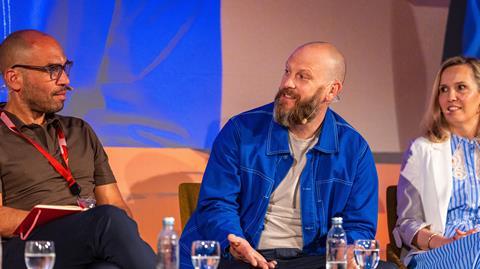
Sitting alongside him was Jamie Cooke, exec vice president & GM of CEE, Middle East, Turkey and Africa at WBD, who admitted there was “some truth” in Franke’s comments but suggested it wasn’t “about not giving a shit, but rather competing priorities”.
Cooke was also refreshingly honest about the impact of M&A, discussing the “draining” effect it can have on teams. The “chaos” can provide opportunities, he said, highlighting WBD’s acquisition of Turkish streamer BluTV, which was completed in the wake of the Discovery and WarnerMedia merger having largely gone under the radar.
Micro going major
M&A was an ongoing theme across the three-day event and several execs suggested another company going under the radar with its acquisition activities is Amazon, with suspicions it is looking at another major deal to bolster its IP and library.
The company’s ability to monetise across all areas – as noted by Tewes – does not yet extend to microdrama but rumours were surfacing that a shift into the space could also come soon.
The rise of vertical video has been well documented over the past few years, with spending on the genre expected to hit $16bn this year alone, according to analyst firm Omdia. Advertising brands are now looking to make moves in the medium, replicating their moves in telenovelas and soap operas decades earlier.
“Brand-supported content is growing very quickly,” said Timothy Oh, general manager and chief marketing officer at COL Group International, whose company is behind apps including ReelShort, Sereal and FlareFlow.
Oh also suggested moves into AI-driven dramas were in the works, particularly licensing the likenesses of global celebrities – especially sport stars not normally associated with acting – to appear in shows.
That may all seem like something of a departure from the nuts-and-bolts sales being discussed on the market floor - but the reality that NEM reflected is one where the industry is navigating a path from the traditional ways of doing things to a rapidly changing new world.



No comments yet