

Banijay’s Steve Matthews argues that turning to trusted genres is not laziness but an evolutionary necessity
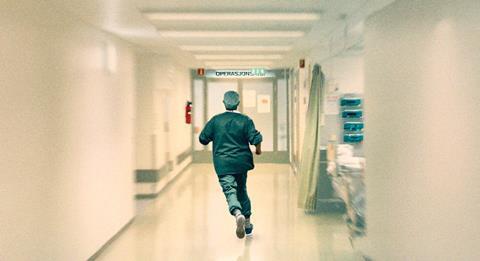
As far as I can tell, the first TV crime series was called Telecrime, made in 1938 by the good old BBC. No material still exists, although we do know there was a spin-off show called Inspector Holt of Scotland Yard, which sort of introduces my point here - everything changes and nothing changes.
The medical show came a little later.
Emergency Ward 10 debuted in 1957, quickly followed over the next decade by classics like Dr Kildare and General Hospital.
By the time I joined the industry - not quite as long ago as 1938 - the basic trinity of cops, docs and lawyers was clearly visible, and you could see them come round in a cycle. In the 1980s, Hill Street Blues led to St Elsewhere, which led to L.A. Law.
The 1990s followed the same path with NYPD Blue, ER, then The Practice.
But why are cops, docs and lawyers so ubiquitous? Why is genre so necessary to TV?
Police, medical and legal shows simply have a clear shorthand for audience access. The dramatic stakes are clear, the conflict easy to find. And the protagonists have jobs that allowed them, in a network world of 22-episode seasons, to be presented with a case, a story, every week.
Is this formula? Is it lazy just to keep doing the same thing?
In the more art-house corners of my patch, there was some grumbling a couple of years ago about statistics showing that 44% of all new commissions in Europe in 2024 were crime shows. I like to point out that Adolescence was one of those. It’s just a cop show. The Wire, True Detective, they’re just cop shows. The creator’s job is not to trash and replace these loved genres, it is to make them fresh again; the process is of evolution, not revolution.
Now the wheel has turned, and medical shows are having their day again. Recent successes have cemented the hospital series as high‑pressure drama at its most confident.
If you can see a trend in shows on-screen, you’ve missed it!
In the US, The Pitt stripped the genre back to physical intensity, moral pressure and institutional dysfunction. In Norway, Rubicon’s Still Breathing became NRK’s biggest launch ever by combining youthful energy with a clear-eyed portrayal of systems under strain. Neither series reinvented the genre, they made it relevant again.
Incidentally, medical shows are slightly different from crime and legal shows. I think it’s because they don’t have an antagonist in the same way, so the conflict can’t just be with a virus or broken limb. And that’s why a lot of medical shows are actually something else in disguise.
For example, do you know what Dr House’s address was? 221 Baker St, Apt B, Princeton NJ.
Now, do ‘House and Wilson’ sound a bit like a different pairing of characters? Yep, House MD is a detective show. Grey’s Anatomy is a romantic soap. But the pure centre of the genre, the classical engine, is the high-stakes workplace drama and that is what The Pitt and Still Breathing are.
So now the cops-docs-lawyers wheel turns again: legal shows are coming back. In the UK projects like Reputation from The Forge for the BBC and ITV’s Believe Me point to fresh interest. In the US, titles like The Lincoln Lawyer - recently confirmed for a fifth and final run - demonstrate durability and international appeal, while HBO’s War signals an evolution towards broader questions of power and accountability.
It makes sense: legal shows wrestle with the moral uncertainties of a time, and right now there’s plenty of moral uncertainty around. That’s the beauty of these genre forms: they provide (repeatable) exciting dramatic plots, but they also work as a lens to look at the world.
So, does this mean you should rush out to develop a legal show? Well, not quite. The way to do it is not to react: it’s not like Rubicon saw The Pitt and then went out and developed Still Breathing. As my friends in unscripted comment to me, the lead times in scripted are excruciatingly long. So, both those shows were developed separately, in different rooms on different continents, by creatives whose instinct was this was where it’s growing next.
In other words, if you can see a trend in shows on-screen, you’ve missed it! (This, by the way, is the primary argument against too much reliance in commissioning on data analytics, which by definition look backwards).
So what is next? Back in the 1990s, I remember I was at a panel where the excellent producer Linda James said: “Find out what nobody is developing, what is completely out of fashion, what nobody wants - and develop one of those. Because soon enough, they’ll want it, and you’ll be the only one in town who’s got one”.
Genre is not lazy formula; it is a beautiful evolutionary family tree. And one way or the other, cops and docs and lawyers are never going away.
Steve Matthews is head of scripted, creative at Banijay Entertainment





No comments yet