


Analysing the rationale behind the streamer’s launch of a format that is a throwback to broadcast TV
It has gone under the radar in many countries, but the launch of Netflix talent show Star Search earlier this week has not gone unnoticed by producers - or broadcasters - around the world.
The streamer has experimented with several musical talent hunt shows in recent years, such as rap competition format Rhythm + Flow and Building the Band, from Banijay UK’s Remarkable Entertainment. But Star Search, is reboot of a decades old format created by the late CBS exec Al Masini that aired in US syndication more than four decades ago.

Helping to launch stars ranging from Dave Chappelle and Beyoncé to Britney Spears and Christina Aguilera, it typically consisted of performers battling each other across disciplines such as dancing and singing to impress judges and reach a grand finale.
After a decade-long hiatus in the mid-1990s, the show was relaunched by CBS in 2003, running across four seasons, before largely sinking from sight for more than 20 years.
That was until Netflix and its unscripted chief, former NBC Universal Entertainment chairman Jeff Gaspin, returned the show to screens earlier this week as part of its increasing push into live programming, and a first stab at viewer voting.
How the show works
Produced by Jesse Collins Entertainment (also behind Rhythm + Flow), Star Search marks the streamer’s first major move into live entertainment series (putting to one side its occasional and somewhat unsuccessful ‘live streamed’ dabbles with shows such as Love Is Blind: The Reunion).
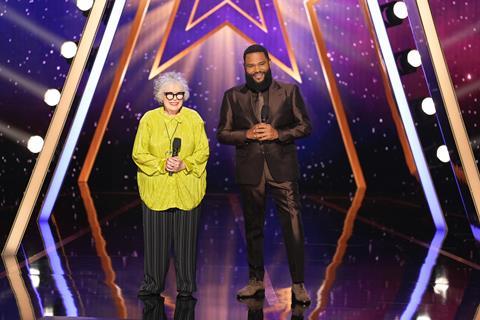
Notably, the programme - available globally and hosted by actor Anthony Anderson - also offers viewers the chance to vote (more on how, and when, below), with two episodes being streamed live each week.
This all feels innovative and distinctive for a global streamer – despite being an absolute staple for traditional broadcasters over many years.
Making its bow earlier this week at 9pm ET, chances are that - unless you’re US-based - you won’t have seen the show.

It is by no means a budget version of American Idol: performers are attempting to impress a big-name judging panel of Sarah Michelle Gellar, Jelly Roll and Chrissy Teigen, while production values are decidedly premium. It is just the sort of show you might expect to see in a US network’s primetime slot.
And it shares a similar ambition - to deliver live views. Driving this, is the live voting mechanism.
“To vote, you need to watch Star Search as it streams live,” a Netflix explainer states. “If you rewind, pause for too long, or join late, you will miss the limited voting window.”
That ‘real-time’ voting process is tied into the Netflix platform, with viewers needing to use a mobile device or their smart TV (but not a laptop) to provide a 1-5 star rating on each performance when prompted.
Results are then revealed live during the same episode, with multiple voting rounds on each show helping to keep viewers engaged.
All votes then build towards the finale - also live, of course - where the audience will help choose the winner. Netflix says. “Be sure to stay tuned during each performance break,” viewers are told. “Voting prompts appear only during designated windows.”
Why does it matter?
While the subject matter is not new, live programming is part of a far broader evolution at Netflix around how it delivers content.
And the reason is clear: the push into live coverage - sports mainly, but also shows such as Star Search and Plimsoll’s Skyscraper Live - has “the potential to deliver outsized value” the company said during its Q4 results earlier this week.
What it means by this is that coverage of a live event seriously propels key metrics, a point Ted Sarandos outlined on the subsequent earnings call.
“These events typically have outsized positive impacts on the business around conversation and acquisition,” the Netflix co-founder said, “and we’re also starting to see some benefits to retention as well.”
It remains “a small portion of the content spend,” Sarandos added, no doubt an attempt to assuage any analyst fears of spending splurges on pricey sports rights.
But the direction of travel is clear.
“We remain really excited about [live],” Sarandos said, “and that’s why we’re building out and strengthening that offer, with things like Star Search premiering globally [on Tuesday] with live voting.”
Co-chief exec Greg Peters also pointed out that the company had now streamed more than 200 live events and will be “expanding to do more” outside of the US. The ambition is to “ramp and grow” in this area, he continued, while confirming the opening of two ‘live operation centres’ this year that allow it to monitor and address production and delivery issues for live shows in real-time.
One of these hubs will be in the UK and another in Asia, Peters said.
This bodes well for companies with decades of experience of producing live shows for broadcasters, and it seems this is a genre only likely to grow among streamers.
“Live programming has become a core part of the content mix,” Paolo Pescatore, founder of UK-based PP Foresight, tells Broadcast International. “Netflix is evaluating further opportunities that make economic sense - it all supports its growing ambitions in advertising, which offer scope for further personalised ads for users.”
And where the streamer leads, others will follow, he says, providing further optimism for producers in other major Netflix markets.
For broadcasters, however, the launch of Star Search signals another boundary being crossed by Netflix into their long-held turf. “Ultimately, broadcasters remain in a precarious situation,” Pescatore says.
The streamers have already become major competitors for precious ad revenues. Now, they are also offering the type of appointment-to-view content that traditional broadcasters had hoped might insulate them from the reach of their global rivals.






No comments yet