

Scripted and unscripted chiefs outline Australian public broadcaster’s content strategy and its international outlook
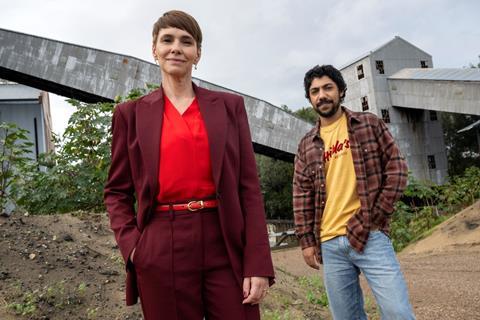
With a charter to provide multilingual and multicultural broadcasting to inform, educate and entertain all Australians, SBS has to strike a tricky balance between entertainment and importance - a common challenge for public broadcasters the world over.
During Screen Forever, Broadcast Intelligence sat down with SBS’s head of unscripted and head of scripted to gain an insight into how Australia’s second public service broadcaster operates.
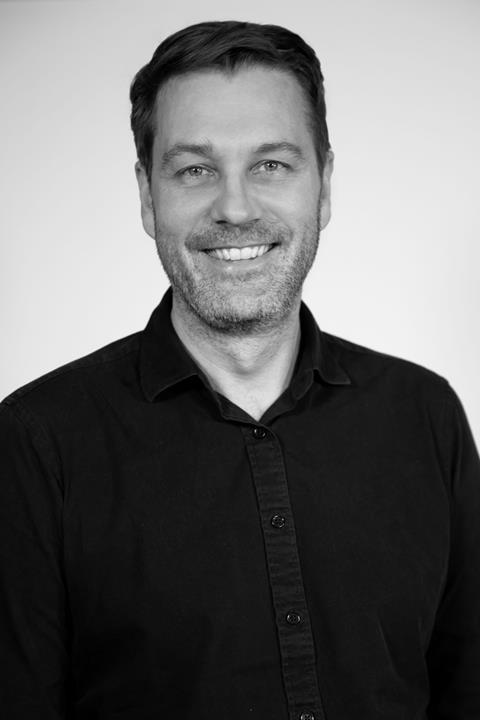
“We embrace the fact that there are two public service broadcasters in Australia,” Joseph Maxwell, head of unscripted at SBS explains. “We operate in a very defined, different, distinctive space.”
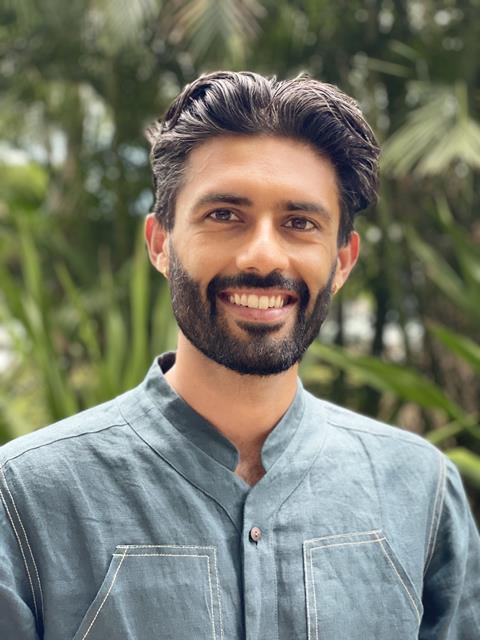
That space is undeniably important to both audiences and Australia’s production community. Amongst those wiuth experience of both camps is SBS’s head of scripted, Nakul Legha.
“Being a person of colour, being an immigrant, I think I’ve got a way into understanding our charter that is less intellectual and connects closer to the audience,” he explains. “I grew up on SBS.”
Speaking to both commissioners about their strategy a clear tension emerges: How do you highlight underrepresented stories and voices, and promote inclusivity and social cohesion, while also competing commercially?
Reckless experience
For Legha, it’s about finding “bold and brave new ways into beloved genres” in order to create a “marriage of commercial and charter”.
Reckless, the four-part crime drama based on BBC Scotland’s Guilt, shows this in practice.
Taking the original format of two siblings trying to get away with murder following a hit and run, Reckless tapped into SBS’s charter by way of its main characters being First Nations Australians.
“Their experience of crime and justice is informed by their race,” Legha explains. Writer and EP Kodie Bedford “wanted to tell a story that says something really bold and brave about what it means to be First Nations in Australia today,” he continues.
“Having something to say and putting it through the container of something commercial - that’s the marriage.”
Reckless not only exemplified SBS’s strategy, but it also delivered in audience numbers for both SBS’s linear channel and its on demand platform, over performing in the 25-54 age group.
Legha is interested in “shows that make people switch to SBS and start conversations… distinctiveness is a huge driver for us, we want to back bold and brave stories”.
In practical terms, this translates to contemporary genres, with the commissioner highlighting romance, thrillers and precinct as areas of interest.
There’s also a consciousness that with a slate not driven by volume (SBS produces between two and three primetime dramas a year and a similar number of short-form digital originals annually), there is no need for the broadcaster to try and compete on big genres like crime.
Distinctiveness is a huge driver for us, we want to back bold and brave stories
Nakul Legha, SBS
“We’re not looking for things that others do really well,” Legha explains.
Similarly in the unscripted space, Maxwell isn’t looking to double up on anything seen on the likes of the ABC.
“If we know the ABC inhabits that area, why would we compete in that space?” he says, referencing the broadcaster’s strong natural history and wildlife slate.
He is, instead, looking for new angles and voices within commercially viable or well-known genres, with ideas that can explore anything from recent events to well-trod history.
Maxwell’s upcoming slate includes a documentary on the 2025 Bondi Beach massacre from Mint Pictures that “looks at that terrible event and asks: how can we bring an SBS point of view and come as a multicultural broadcaster, swiftly and supportively, into that space?”
Meanwhile, in the Australia Uncovered documentary stand, The Hunt for the Last Nazis takes a look at the thousands of Nazi war criminals who fled to Australia following WW2, living undetected and unprosecuted. It gives an age-old documentary favourite a new lens, in a way that the commissioner says “is fascinating and still very resonant today”.
Maxwell is also keen to highlight that he “looks for stories that are more playful” alongside serious topics. Shan Micallef’s Origin Odyssey is described by the commissioner as a “blend of Travel Man and Who Do You Think You Are?”, with comedian Micallef taking celebrities around the world to explore their history, culture and identity.
Similarly to Reckless, the format marries commercial with charter.
“You’re getting the giggles or watching a scenic train trip through China… but what it starts to unpack are issues of identity and immigration. There’s a richness in its layers that speaks to our charter.”
Co-pros and financials
With such a strong charter dedicated to serving the Australian audience, is there an anxiety of how SBS can play on the international stage, particularly in a world where it seems as if co-producing or international funding is the only way to get a programme made?
Maxwell concedes that co-productions are “one of the things we need to do more of” and Legha also notes that he is trying to go “more upstream in our collaborations”.
Legha says that international success comes from “making something that feels uniquely tied to a place,” adding that he is leaning into “what makes us different and what makes us unique” in the co-pro space.
In unscripted, Maxwell is looking for an “authentically Australian story with global resonance”.
Here, he uses the example of We are Jeni from the Australia Uncovered strand, a documentary financed by SBS and Investigation Discovery in the US, made by Arrow from the UK and Smith and Nash from Australia.
“It’s an extraordinary film with finance from across the globe, but a totally Australian story.”
SBS is also still fully funding projects and Legha says he is asking whether the broadcaster can “find clever methodologies to bring the cost of production down so that we are a little less reliant on the gap being covered by international financing”.
One answer, he says, lies in development. “It comes down to thinking about being creatively ambitious and still delivering quality on a budget.”
Meanwhile in unscripted, Maxwell highlights that the broadcaster can be “agile” and is open to taking on third-party money. Branded, or AFP, content is also of interest, but at present this lies mostly on SBS Food.
“We have a lot of commissions that explore food and culture, so it’s quite an easy way to bring in a brand where we still maintain editorial control,” concludes Maxwell.






No comments yet