

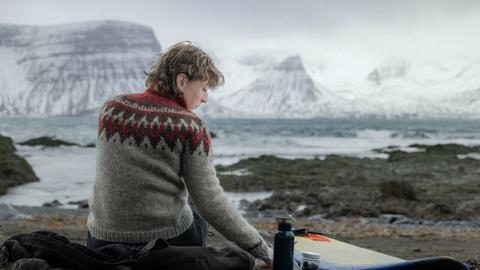
Relying on multiple international partners has helped Icelandic and Finnish creatives maintain production despite global contraction
Nordic scripted producers have faced a rather turbulent period in recent years.
No country across this diverse and creatively rich region has escaped the impact of global streamer commissioning squeezes and broadcaster budget woes.
Even Piv Bernth – one of the key architects of Danish drama growth over the past two decades – has been affected, revealing this week that Apple Tree Productions, the highly rated ITV Studios-backed label launched with acclaimed exec producer Lars Hermann, would be closing, citing an “increasingly difficult” local market.
But there are signs that the frosty environment might be thawing out and, perhaps paradoxically, they are being felt in the smaller territories first.
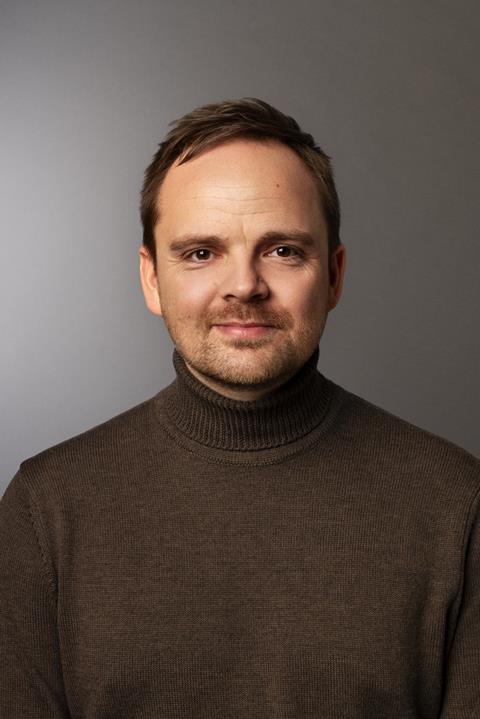
Iceland (population 400,000) is by almost all measures a tiny market.
“With an extremely small subscriber base, it has historically been difficult for Icelandic content to find a meaningful space on global streamer slates,” says Andri Omarsson’s, chief exec of Iceland’s Glassriver, which is behind Cold Haven, Black Sands and Huso.
When the global market contracted, the challenge for Iceland “naturally intensified”, he says, but local producers were well-placed to be nimble. “The creative ecosystem stayed strong. Producers like us adapted quickly and became even more reliant on multi-layer financing and international partners from day one,” he says.
It’s a similar story from Hordur Runarsson, producer and creator at Death of a Horse outfit Act4. He agrees that the landscape “has definitely shifted” but adds that international streamers had never been “as aggressively present” as in some neighbouring countries, so the local commissioning environment hasn’t changed dramatically.
“What has changed is the international financing ecosystem – the sales climate is different, the availability of large-volume partners has softened, and the broader market correction has been felt.
“The Nordic region went through a boom cycle that simply wasn’t financially sustainable long-term, so when the correction came, it was abrupt. But it’s more of an adjustment than a decline. Producers have had to recalibrate expectations, timelines and risk profiles, but production hasn’t stopped and the creative ecosystem remains very much alive.”
Kjartan Thor Thordarson, managing partner at Hildur producer Sagafilm, points to structural issues – including cuts at state broadcasters and weak ad markets – as causing “quite a lot of uncertainty” across the Nordics, but Iceland’s small market has proven remarkably resilient.
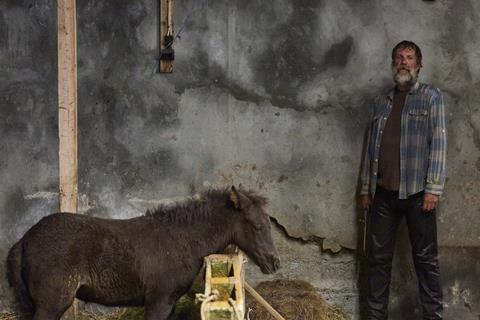
“Iceland continues to be strong even with fewer buyers in that market for high-end drama,” Thordarson says, supported by Icelandic streamer Siminn and public broadcaster RUV. “The two buyers that are active have kept demand up and the cooperative nature of Icelandic producers has resulted in a steadier industry than the larger Nordic markets have experienced.”
Sagafilm is currently co-producing Hildur with Finland’s Take Two Studios, with Cineflix Rights selling globally, and Thordarson points to creativity – around both storytelling and financing – as the key factor in both countries’ ability to continue producing through industry adversity.
“In Iceland there is a very strong storytelling tradition. Even though our drama industry is young our storytelling tradition is deeply rooted in society. We have a great IP base to dip into,” Thordarson adds, with Hildur based on Finnish author Satu Rämö’s best-selling novels.
The two countries are also well-versed in partnering up on projects from the outset. Sara Norberg, COO and partner at Finland’s Take Two Studios, highlights that appetite for scripted content “remains solid but increasingly selective”.
Projects, she continues, need a sharper positioning and more robust financing structures from the outset, two areas that producers in Finland and Iceland excel in.
“This environment has made collaboration even more essential. Co-productions, early partnerships, and diversified financing play a bigger role in how we develop and package our shows,” she continues, with Hildur co-developed with Sagafilm from the outset.
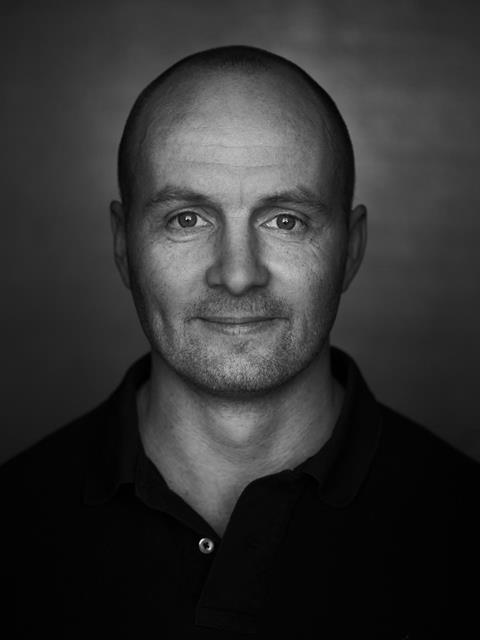
“Finland and Iceland continue to perform strongly in drama because both markets have a distinctive creative voice and a proven ability to deliver high-quality, internationally resonant storytelling,” Norberg adds. “Even as streamer strategies shift, there is steady global demand for stories that feel culturally specific yet emotionally universal.”
None of this is to dismiss the huge challenges of getting a show into production. Almost all execs spoken to for this piece say budgets are under great pressure and pre-sales can be particularly tricky to secure. Buyers often wait until a project is “at a very advanced stage”, Norberg says, and will only commit once “scripts are ready, a strong cast is attached, and a confirmed local broadcaster [is attached].”
Budgets vary widely, starting as low as €200,000 (£170,000) per episode and rising up to north of €1m, with some higher still. This means shows from the region can be accessible to a range of buyers but the real superpower of Iceland and Finnish productions is the experience of multi-layering finance and getting bang for their buck.
“Our budgets are nowhere near international levels for local-language series, so the industry has become exceptionally good at identifying the quality bar and then engineering creative solutions to reach it. There’s pride, ownership and a remarkable level of problem-solving – but also an honest acknowledgement that it requires real grit,” says Act4’s Runarsson.
The typical financing model is not dissimilar to those used elsewhere, with a local broadcaster or streamer propping up projects as primary commissioner, before a distributor or sales agent provides an MG.
There’s then soft money – tax incentives in Iceland come in at 35% while a 25% rebate is available in Finland – plus national film institute support. Co-production partners (Nordic or European) are also used, with gap financing, regional funds, and brand/alignment partners brought in as required.
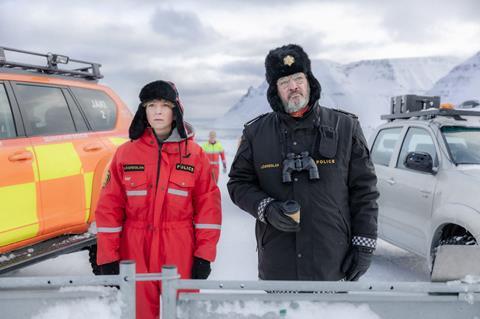
The importance of regional funding is key, adds Olli Suominen, chief exec at Rabbit Films – whose upcoming shows include crime thriller All the Best Girls for Elisa. The murder-mystery drama set in a Helsinki suburb found pre-sales challenging, but local partner Elisa and the Finnish Impact Film Fund got the show onto screen. “When the story is strong, the local players are keen to come on board,” he says, adding that initiatives like the Business Finland audiovisual production incentive has been “invaluable”.
The Nordic Film and TV Fund is also a key resource for bridging budget gaps, while the N12 system “provides a strong framework to help finance high-quality local shows, even in smaller territories.” The scheme was set up in 2018 and is backed by pubcasters DR, NRK, SVT, RÚV and YLE, who order 12 Nordic drama series with 12-month rights in the Nordic region.
Also worth noting is the increasing interest from private equity partners – it is probably not a coincidence that one of the more well-known fund managers in this respect is IPR.VC, which has bases Helsinki and London.
“[Financing drama] is rarely a single-source model and often requires multiple layers of co-financing, even on domestic titles,” adds Runarsson. And while creative funding models are key, the collaborative nature of the Finnish and Icelandic industries extends to long-standing creative partnerships too.
Sherlock & Daughter creator, Brendan Foley, has been a frequent partner on shows from the region, ranging from Viaplay and Lionsgate’s Cold Courage to The Man Who Died for Elisa and ReelMedia. And the Nordic ties were also apparent with Sherlock & Daughter, which was picked up by Nordic pubcasters YLE, DR, NRK and SVT – alongside buyers such as HBO Max in the US.
He says the mindset of producers in the region is key.“Iceland, despite or maybe because of its small population, has some great internationally-minded producers like Kjartan Thor Thordarson and Kristinn Thordarson.
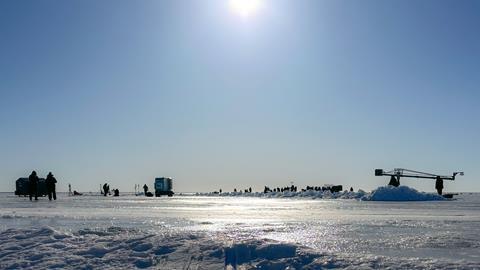
“They seem to get in their longships and go out to where the co-pro work is, rather than doing too much lamenting,” Foley continues, underlining a can-do attitude that has persisted amid uncertainty around Finland’s government support and tax break schemes.
“Finland still has to contend with their language being very different, even from the other Nordics, but I like to think they make up for that with heart, which translates internationally.”
For Runarsson, it comes down to: “personality first, talent second.”
He explains: “You can train skills, but you can’t teach mindset. The Icelandic mentality is a huge factor – people in the industry embody what Icelanders are known for: hard-working, smart, agile, flexible, and driven by a strong sense of community.”
Local crews are highly skilled thanks to numerous international productions shooting in the country – True Detective: Night Country was shot in Iceland recently, for example – and that experience “has created world-class practitioners who know how to deliver ambition on tight budgets,” Runarsson says.
Foley tells a similar story. “At it’s simplest, it boils down to tight, compact crews who are used to working quite speedily, but doing their absolute best with often limited time and resources.
“Of course, that can be pushed too far and no one wants to see a high-end series made on a phone with sock puppets, but the Finns and Icelanders often show what can be done very well on a relative shoestring.”
Antti Kaarlela, chief exec at Finland’s Whatever Pictures, paints a similar story. Kaarlela’s company has been behind shows such as A Midnight Sun Affair, Evilside and Ice Skater, but the trick has been using experience of squeezing as much quality on screen from limited funding.
“In Finland we’re able to achieve a high production value with a reasonable production cost below the line. One key element of this is the fantastic professionals we have working in the industry in Finland. They excel in what they do; they’re flexible and ambitious.
“We can get incredible bang for our buck because we have learned to make the best of what we have. In a small market like Finland this has taught us to work efficiently. The real question is, how far can we push the borders and how big a bang for our buck can we create with bigger international budgets?”
Such comments reflect the underlying confidence of producers in both Finland and Iceland. Having navigated the scripted squeeze of recent years, the feeling is that both domestic markets and the international landscape is stabilising.
Challenges still abound, however. Glassriver’s Omarsson points out that access to soft money has been declining in Iceland and the country’s reliance on certain genres may also become troublesome.
“Icelandic producers are shifting their slates toward more IP-based, crime, and thriller-driven projects. These genres travel internationally but don’t always align with soft fund evaluators’ priorities. Historically these projects didn’t rely heavily on soft money, but with shrinking international investments we now need soft funds to fully close budgets,” Omarsson says.
Kaarlela at Ice Skater producer Whatever Pictures is also “seeing commissions dropping and the streamers aren’t ready to regularly commission from the smaller territories.”
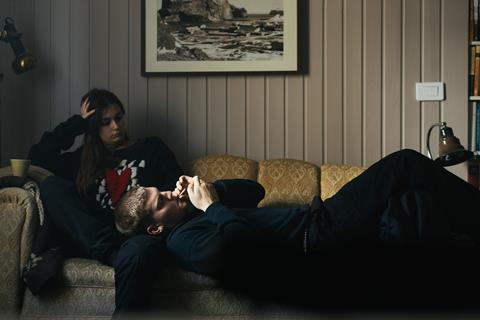
This creates a challenge for financing, especially with traditional anchor investment in local content decreasing, putting more emphasis on “creative and clever ways of building financing structures that support bigger and better production value in the international market.”
Yet optimism is growing.
“A lot of it is psychological,” says Runarsson. “The industry had to move from boom-time thinking into a more realistic, sustainable mode, and that transition was tough. Volumes dropped, buyers became more risk-averse, and producers who relied on high throughput needed faster decisions – which exposed gaps across the value chain.
“But over time there’s been a collective acceptance of the new reality. People have stabilised, companies have restructured, and we’ve adjusted our strategies. At recent industry events I’ve felt genuine optimism – you can almost smell it in the air. Even though the data shows that volumes are still significantly down, there is an active market. Shows are being financed, commissioned and sold.
“The optimism comes from a shared understanding that projects need to stand out, be commercially strong, and be backed by trustworthy partners. The difficult part has been the layoffs and the financial strain on companies, but the resilience across the sector has been remarkable.”

Broader industry developments such as stabilising, if lower, budgets mean producers can plan more effectively, while AI-assisted dubbing and automatic translation could “reshape the market for non-English scripted”, Runarsson says, who also wonders whether it will reduce “perceived barriers for buyers.”
That will build on the steady flow of Finnish and Icelandic shows making their way to international shores. Tom Misselbrook, senior vice-president of scripted sales and development at Cineflix Rights, highlights series such as The Minister, which reached the US, the UK, Germany, Canada, Australia, Spain, Southern Europe, CEE, and the Nordics.
He adds that an evolution is also taking place when it comes to scripted. “Hildur is a good example of great storytelling in a new genre which sets it apart from traditional Nordic Noir crime series.”
It is, he adds, a crime thriller “with a point of difference” in that “it embraces the concept of Nordic Blue, leaning into the genre of a gripping police thriller, but also has a levity to it.” The hope is that the genre mix makes it feel distinct, with appeal beyond pure crime thriller fans and a deep-set local story.
Foley agrees that series need to focus on what they do best. “The best [shows] remain true to the sensibility of their people and their wonderful wild landscapes, but they also have one eye on the immediacy and emotion that drive drama in the international market.
“That’s always a balancing act. But if it was easy, where would be the fun in that?”






No comments yet