

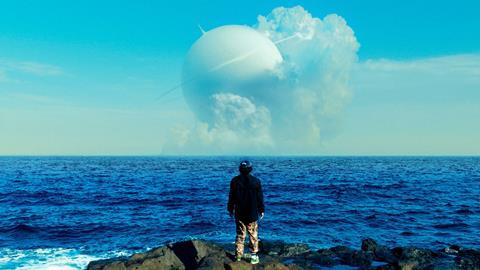
Japanese public broadcaster’s president outlines global strategy to fuel domestic demand
Public broadcasting is being squeezed the world over, with organisations ranging from PBS in the US to the BBC in the UK and France Televisions all facing existential questions around funding and audiences.
NHK in Japan is no different. The broadcaster’s licence fee was reduced three years ago and it has since been finding ways to deliver programming within tighter budgetary restraints. While what’s on screen remains the central focus for NHK, president Tatsuhiko Inoue - who took up the role in January - tells Broadcast International that stabilising its operational structure and its financial structure are central to delivering that mission.
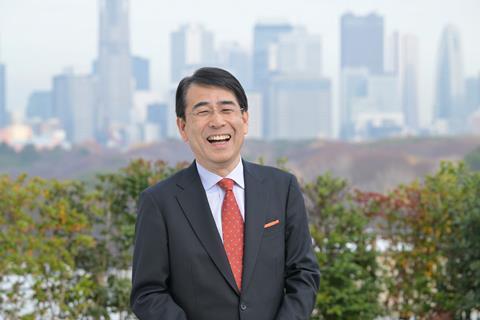
“These are not short-term challenges but are fundamental issues that will determine the long-term sustainability of NHK as a public media organization,” he says. The broadcaster’s “core source of competitiveness” lies in the strength of what NHK puts out to the world, Inoue continues, and it is to that end that investment in on-screen programming has been supported.
“While our output spans a wide range of genres including news, documentaries, drama, and entertainment, the common and essential factor is our ability to remain an organisation that can consistently produce high-quality content,” he says, adding that the launch of streamer NHK One is also enabling greater reach.
Yet the financial reality facing many public broadcasters - evidenced by recent job cuts at the BBC, PBS and France Televisions - is unavoidable. NHK is primarily funded by receiving fees, a system that delivers income to the organization but which also provides “the foundation” for its editorial independence and its public mission. Receiving fees are paid by each household living in Japan and account for 96% of NHK’s operating revenue, and this financial independence is seen as being essential to maintaining autonomy.
“NHK accepts no investment from the government, the business community, or any other organizations, and as a result, NHK broadcasts carry no commercial advertising for corporate or organisational products or services,” explains Inoue, himself a former editor for the broadcaster. With the receiving fee reduced in 2023, and as prices and production costs rise globally, finding efficiencies has been vital. Inoue is clear: “We see the next three years as a critical period for ensuring that the receiving fee system remains sustainable well into the future.”
International outlook
Part of Inoue’s strategy to delivering improved content to its audience comes in the form of greater partnerships around the world. “Building strong networks with public media organisations around the world is extremely important,” he says, with NHK having a long history of partnering on co-productions and distribution. The broadcaster has also joined PSB alliances such as the ABU (Asia-Pacific Broadcasting Union) (where Inoue is vice president), the European Broadcasting Union (EBU), and the Public Broadcasting International (PBI).
NHK execs are also frequent attendees on the global event circuit, with delegates attending INPUT (the International Public Television Conference), WCSFP (the World Congress of Science and Factual Producers) and Sunyside of the Doc, the latter of which is taking place this week. “These events are essential for NHK to proactively build new networks that lead to international co-production and collaborations, which are indispensable to strengthening NHK’s production capabilities,” Inoue adds.
Documentaries have been NHK’s most frequent area of activity when it comes to coproductions and Inoue says this strategy will be expanded. “International co-productions are extremely important for NHK. Beyond the ability to bring together budgets, talent, and production resources, collaboration with global partners from the planning stage enables us to combine investigative strengths, production expertise, and diverse perspectives.
“This results in programs of greater scale, depth and impact. Far more than a means to sharing costs, international co-productions enhance program quality by incorporating diverse cultural context and values, while enabling NHK to deliver multi-perspective content to audiences in Japan and around the world,” he explains.
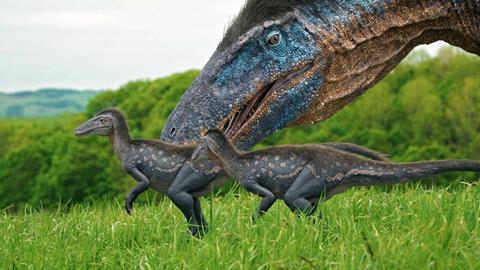
NHK typically focuses on genres such as nature and science, with shows such as animal series Wildlife, marine-focused Deep Ocean and the ongoing Satoyama series, which portrays the coexistence of people and nature, as flagbearers on the natural history front. Science shows include The Body series, co-produced with ZDF, ARTE and ZDF Studios, and Amazing Dinoworld, which taps NHK’s CGI and VFX expertise.
The upcoming slate is broader, with one project tracking the final stages of construction of the Sagrada Família in Spain, with the show coinciding with the centenary of creator Antoni Gaudí’s death this year. The basilica is scheduled to complete its central tower, the Tower of Jesus Christ, in the coming months and NHK’s production team has landed exclusive, long-term access to film the site - the only broadcaster in the world to do so.
Scripted & formats
While factual has tended to be the focus for NHK’s international activity, the broadcaster is increasingly looking to explore its scripted ambitions with partners outside of its borders. NHK found success with Queen of Mars at Series Mania recently and it is also producing gaming drama Lost and Found in co-production with Singapore-based Empire of Arkadia and Mocha Chai Laboratories, and Japanese producer TV Man Union.
“NHK productions share a common approach of carefully exploring characters and their social contexts, while leaving space for viewers to reflect and think, a quality we see as one of our strengths in drama production,” Inoue says. Among other projects is 30,000,000 Yen, NHK’s first drama to use a writers room to create the original script. An agreement with an unnamed North American production company has been agreed distribution partners are being sought.
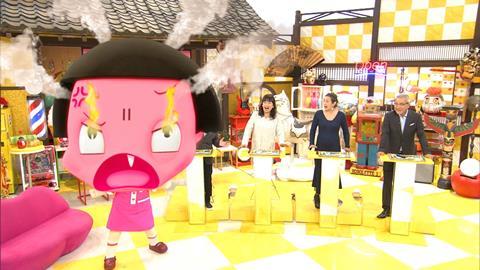
NHK is also looking to expand its format business, building on successes such as kids quiz show Chiko’s Challenge (which is being adapted by a broadcaster in Spain) and ob-doc Document 72 Hours, which has been formatted for a Chinese streamer.
Chiko’s Challenge is a quiz show in which an “eternal 5-year-old” named Chiko challenges celebrity panels with “questions hidden in everyday life” children tend to innocently ask. Document 72 Hours captures the diverse and colorful realities of everyday life by placing cameras in a single location and observing the people who pass by over three days.
“While these two programs belong to different genres, they share a common focus on human behavior and the questions embedded in everyday life, offering a sense of universality that resonates with audiences everywhere,” Inoue says. “NHK believes that this perspective and approach lie at the heart of what makes our content distinctive and form the foundation for formats that can be embraced across borders.”
The broadcaster’s strategy is now trained on developing formats that combine entertainment “with a strong sense of public purpose - content that is distinctly NHK’s”, adds the president. Distribution is also being ramped up, particularly with an eye on making use of its substantial archive and delivering the country’s famed animation shows globally.
Viewing habits
NHK’s increasing international focus and attention to what’s on screen has at least partly been driven by changing viewing habits, with global streamers, YouTube and social media such as TikTok bringing what Inoue describes as “major structural changes” across the broadcasting industry worldwide.
Allowing viewers to compare domestic and international content easily, the effect on organisations such as NHK has been “to fundamentally reassess our traditional roles and methods of delivery and to adapt to the times.”
Inoue wants NHK “to steadily create moments in everyday life when a wide and diverse range of viewers -including younger generations- genuinely feel that the content we offer is useful to them or that they are glad they watched it.” He also wants the broadcaster to become a refuge amid the spread of misinformation online.
“In this environment, I believe the role that public service media should play has become increasingly clear: to remain a trusted point of reference, offering accurate, verified information and a stable base for thoughtful and informed public judgment. I believe this role will become even more important in the years ahead.
“What matters is not simply increasing opportunities for exposure but valuing a natural process in which an encounter with content leads to understanding, and understanding then develops into trust. As a public media organisation, we want to foster relationships in which our assured value truly reaches audiences and is genuinely felt.”
While Inoue has only been in his three-year role for six months, his impact has been considerable. His most recent watch - Franco-Belgian detective series Astrid et Raphaëlle, which is broadcast on NHK - reflects an eclectic taste and he points to a pair of domestic shows that reflect where ambitions lie.
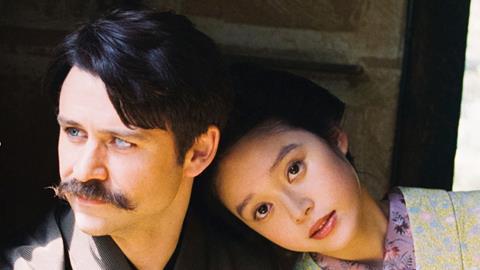
The Ghost Writer’s Wife (Bakebake) is an NHK morning drama, a form of scripted series that typically air 15-minute episodes each morning over a six-month period. The show was inspired by the life of Setsu Koizumi, the wife of Lafcadio Hearn (Koizumi Yakumo), a Meiji-era writer known for works such as Kwaidan (ghost stories) and for introducing Japanese traditions and culture to audiences overseas. The series explores the Meiji period, a time of profound transformation in Japan, with the story portraying how the two lived together while respecting each other’s differences.
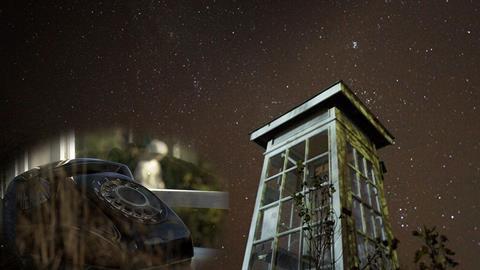
Inoue also points to The Wind Phone, broadcast in March to mark 15 years since the Great East Japan Earthquake. The doc was a follow-up to The Phone of the Wind, originally aired by NHK in 2016, which allows people who have lost family members and friends to visit a phonebooth to ‘call’ their loved ones – “an act that allows them to open their hearts and begin to come to terms with their loss,” Inoue explains.
The show was subsequently broadcast around the world and similar ‘wind phones’ have now been installed in more than 500 locations across the US, Europe, Africa, and beyond. The most recent doc focuses on this expansion, exploring who installed the devices and with what intentions.
“Shows like The Wind Phone represent one example of NHK’s mission as a public service media organisation - to stand beside people in times of hardship and to capture the resilience that sustains them,” Inoue explains. The hope is that NHK can replicate that at scale to deliver similar reach and response, both domestically and around the world.






No comments yet