
Commitments made around cable and CNN, but TV studios face uncertainty as focus falls on film
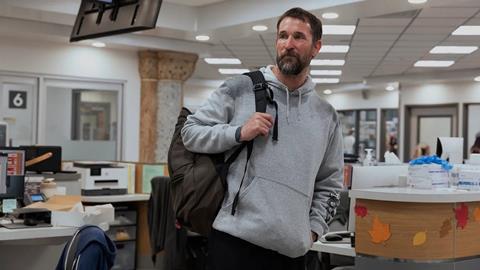
Paramount’s antitrust settlement with the 12 US states that were looking to stop the $111bn takeover of Warner Bros Discovery have been revealed by California attorney general Rob Bonta, who had led the action.
Bonta outlined the terms on Monday after the parties had earlier announced that they had settled the antitrust case. The agreement, which is understood to have closed on Sunday night after days of negotiations and a personal trip by Paramount chief exec David Ellison to meet Bonta in the Bay Area, clears the final hurdle in Paramount’s proposed $111bn acquisition of Warner Bros Discovery (WBD).
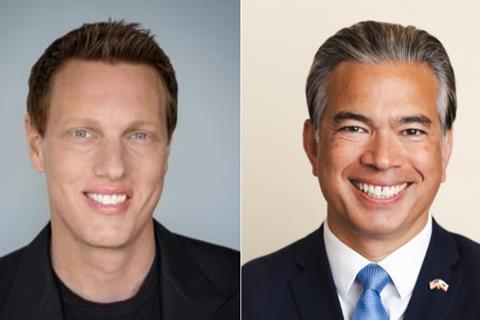
Bonta said that Ellison and his team have agreed to legally-enforceable terms over a five-year post-merger period that crucially include keeping the studio lots in Los Angeles after Ellison had threatened to take Paramount out of California if the states did not settle; investing $1.5bn in US production; and building a combined annual release slate of 30 features for the first two years, rising to 32 over the following three years.
Much of the focus was on film, with no protections around the merged company combining fabled TV divisions Warner Bros. Television, Paramount TV Studios and CBS Studios, although an independent editorial board will be created in a bid to support CNN and CBS, the latter the BBC’s US news partner.
Cable & Miramax penalties
Despite weeks of rhetoric from Bonta there is no immediate requirement for Paramount to divest itself of corporate assets under a structural remedy. Reports attributed Bonta’s change of heart to political pressure from California Governor Gavin Newsom and Los Angeles mayor Karen Bass, who were concerned about the impact on jobs in the eventuality that a disgruntled Ellison would relocate Paramount.
However should the merged company fall short of its annual theatrical output commitments it will be subject to two penalties. Bonta said the company would be required to divest itself of Miramax, and must pay $30m for each “missed film”. Ninety percent of the payment will go to entertainment industry workers and the 10% balance to a bipartisan national attorneys general fund to enforce ongoing antitrust enforcement.
Furthermore, should the combined company fall foul of cable negotiation guardrails (see settlement terms below), it could be required to divest itself of a suite of channels including BET, VH1, and Comedy Central.
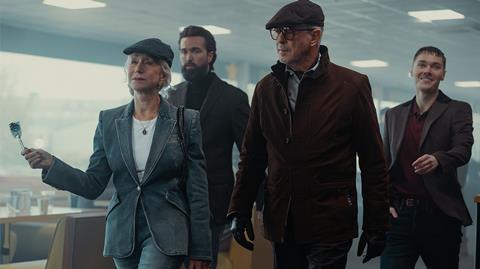
Bonta, who has been the figurehead in the antitrust lawsuit brought by 12 states against the proposed merger, told a press conference on Monday morning that the settlement would protect entertainment industry workers and their livelihoods, protect competition, and create more choice.
However he stressed that he did not support the merger. ”This was a meat-and-potatoes, black-and-white, bread-and-butter antitrust case and we got a strong antitrust outcome: more production, more choice, and guardrails that keep this industry competitive,” he said.
”I don’t think these two companies should merge, but that’s not something that we are focused on with our resolution.”
The attorney general added: “This agreement is the opposite of all the things we saw in the [2019] Disney-Fox merger – a massive decrease in film production, in film output, less films being made. This doesn’t just guard against that, it locks in a massive upside.”
Ellison said in a statement: “Our shared aim was an outcome that best serves consumers, workers and — most importantly — the creative community so vital to the art of visual storytelling. We’re confident this agreement does exactly that, memorialising a series of commitments that include 30+ films annually and expanded U.S. film production to help revitalise our industry here at home.” Scroll to the bottom for the full statement.
Settlement terms
Under the terms of the settlement covering the first five years of the merged company, Paramount has agreed to:
- spend $1.5bn over the first five years of the merger / $300m per year on US production;
- release 30 films a year in the first two years of the merger, rising to 32 a year in the following three years;
- keep its lots in Los Angeles and not sell them;
- establish “guardrails” around separate negotiations by the combined company on behalf of Paramount and WBD with cable providers and exhibitors to ensure consumer prices are in the words of Bonta “fair and affordable”;
- establish a news editorial independence board to support CBS News and CNN;
- pay $9.5m annually over five years for workforce training and career development in film and television production, and to film programmes and community arts organisations; and
- maintain a free, ad-supported Pluto TV ”or a successor or substantially equivalent replacement brand or service” and maintain service and quality levels as they are when the five-year period begins.
A trustee will be nominated to monitor Paramount’s compliance with the terms and the merged company has agreed not to retaliate against anybody that reports a compliance concern. It will also pay up to $40m in ”reasonable attorneys’ fees and reasonable economic expert fees” incurred by the states during the lawsuit.
Bonta said the annual production requirement was a minimum level that could be increased by “triggers”. One example he gave was if the US Congress were to enact the proposed federal production incentive, Paramount has agreed that 20% of all film production must take place in the country for the first two years, rising to 30% for the next three years.
He said roughly 5% of Paramount’s annual global production currently took place in the US. Were California or New York to pass an uncapped state film incentive, Paramount has agreed to increase its domestic production levels to 40%.
Alongside film commitments that include four independent movies and 20 “wide release” features to be produced in each of the first two years, rising to 21 in the following three, the settlement also includes the establishment of an acquisition fund for indie films. The merged company will run the fund and make an annual contribution of $5m over the first five years.
Ellison and his team will now race to complete the merger before 1 October, when a ticking fee of approximately $7m a day and $650m a quarter kicks in, payable by Paramount to WBD shareholders.
The chief exec told staff in a memo he expected the merger to close within two weeks, after which Paramount will have layoffs to address.
Ellison’s team has indicated there are $6bn in savings that need to be made, with duplication across a large number of roles that straddle streaming, studios and TV.
In particular, eyes will turn to the futures of former Netflix content chief Cindy Holland, who is now co-chair of Paramount Pictures and vice chair of platforms, and HBO veteran Casey Bloys, hwo is chairman and chief exec of HBO and HBO Max content.
WGA settlement
The Writers Guild of America has also settled its antitrust case after negotiating separately with Paramount. Its suit was due to be heard alongside that of the state attorneys general at a trial on March 2, 2027.
The Guild said as part of the settlement Paramount has agreed to prohibit writer lay-offs at CBS News for five years, and to pay $17.5m to the Guild’s health fund, plus attorney fees in the litigation. The WGA said it remained opposed to the merger.
Los Angeles mayor Karen Bass said the deal made commitments to the workforce and added: ”I do not want to see two of Hollywood’s largest studios consolidated under one company, but now we must focus on holding the companies accountable to these commitments to keep productions on L.A. stages, crews on sets, and ensure paychecks for hardworking Angelenos.”
Paramount stock fell by nearly 3% at close, while WBD shares were up by almost 11%.
This article originally appeared in our sister title ScreenDaily
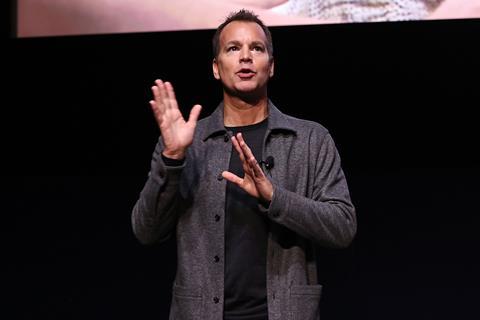
Paramount chairman and chief exec David Ellison
“We are grateful to Attorney General Bonta and his fellow AGs, as well as the WGA, for engaging in good faith to find a path forward to a resolution that serves all parties, and to Governor Newsom for his support throughout this process. Our shared aim was an outcome that best serves consumers, workers and — most importantly — the creative community so vital to the art of visual storytelling. We’re confident this agreement does exactly that, memorialising a series of commitments that include 30+ films annually and expanded U.S. film production to help revitalise our industry here at home.
”Our goal has always been to build a stronger Hollywood — one with more stories told, greater choice for consumers and stronger competition. That vision was validated by unanimous approval from competition authorities in nearly 70 jurisdictions worldwide, who agreed this deal is pro-competitive, pro-consumer and pro-worker. Having now addressed the State AGs’ and WGA’s concerns, we have complete clearance for this merger and look forward to putting these commitments into action. Bringing Paramount and Warner Bros. Discovery together will build that stronger Hollywood, creating expanded opportunity for our people and even more great entertainment for audiences around the world.”
WGA East and West statement
”We continue to believe the merger will cause damage to writers and the industry at large. Now that the Attorneys General have settled with Paramount, however, as a nonprofit, the WGA must contend with the reality of forging ahead alone, with no backing from government enforcers, with a complex antitrust lawsuit that would cost millions of dollars to pursue through trial. Consequently, we have also settled our lawsuit with an agreement from Paramount to prohibit writer layoffs at CBS News Broadcast for 5 years, and to pay $17.5 million to our health fund along with our attorneys’ fees in the litigation.
“Though we were not successful in blocking the merger, our advocacy brought more attention to the harms that this merger—and others like it—will cause. We will continue to fight the harms of industry consolidation.
“As the number of outlets to sell our work to and the corresponding diversity of programming shrinks, we need industry-wide structural separation between streamers and studios in order to promote competition in programming, like the Financial Interest and Syndication Rules once required in broadcast television. We will continue to fight for these goals.”






No comments yet