

Treaty update to allow companies to co-produce shows while receiving the same treatment as solely UK or Canadian projects
The UK and Canada have signed an updated, modernised co-production treaty with a wider scope to include digital platforms, increasing financial and creative flexibility for producers.
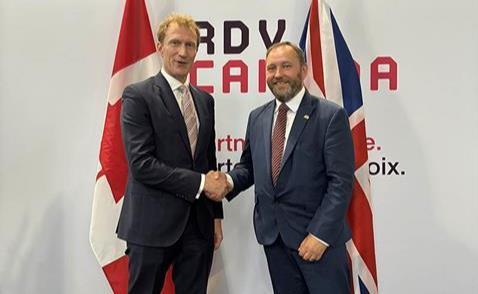
The treaty will allow companies to co-produce films and TV shows and receive the same treatment as solely UK or Canadian productions.
This will give them greater access to national funding and tax incentives in each country, more flexibility, clearer rules on sharing copyright and revenue and stronger guarantees around distribution and broadcast when collaborating on a production.
UK culture minister Ian Murray signed the treaty with his Canadian counterpart Marc Miller on September 13 at the Toronto International Film Festival (TIFF). The treaty still needs ratification to become operational.
“We need this co-production treaty for a number of reasons,” said Murray at TIFF. “One is that we are close historic allies in an increasingly fraught world. And what we need to do through audiovisual is to tell our stories… It’s the only way in which we learn about each other’s cultures and are able to do these treaties in order to be able to work together because we understand each other in an ever increasingly divisive world. That’s more important today than it’s ever been, particularly when some of our allies are not as close as they perhaps should be.”
“The old rules-based international order is effectively gone, and it’s hard to see it coming back as technology, geopolitics, and economic pressures put the strength of our values to the test,” added Miller. “The question is not whether we adapt to this reality, but how we must,” he continued. ”It’s also whether we adapt by building higher walls or whether we can do something that should be more ambitious. And I think it’s safe to say that Canada chooses ambition.”
Harriet Finney, deputy chief executive of the BFI, said in a statement the updated treaty was designed to be more user-friendly for producers.
”The treaty…recognises the major shifts we’ve seen in our sector, where building finance for new film and television projects now regularly requires numerous partners and territories. Providing greater flexibility and covering both film and television, there is now more scope for UK producers to look to Canada for their next creative partner.”
The first co-production treaty was signed between the two countries in 1975. Since 2015, there have been 98 co-productions between the UK and Canada, including Bafta-winning 2015 film Brooklyn (also as a co-production with Ireland), Netflix series Geek Girls and Pablo Trapero’s & Sons, which premiered at Toronto last year.
“Around the world, Canada’s audiovisual sector is known for its world-class talent, innovation and stories that showcase our values and diversity and resonate with millions of people,” said Miller in a statement. “We’re proud to see this shine at the Toronto International Film Festival. As we build a more resilient sector at home, ensuring it remains competitive in an increasingly digital world is key. These modernised coproduction agreements will make it easier for our filmmakers to collaborate with partners around the world, bring Canadian stories to new audiences, and strengthen our audiovisual industry as a pillar of our cultural and economic sovereignty.”






No comments yet