

Industry reacts to new legislation that marks a first for the English-speaking world

From one side of the fence, the Australian government has seemingly played a blinder in speedily passing legislation to impose local content quotas on major streamers.
As Arts minister Tony Burke said: “We should never underestimate how important it is for Australians to see themselves on screen. It helps us to better understand ourselves, our neighbours better and allows the world to see us.
“We have Australian content requirements on free-to-air television and pay television, but until now, there has been no guarantee that we could see our own stories on streaming services.”
Under the new legislation – expected to take effect in January 2026 - streamers with over a million subscribers will need to invest at least 10% of their total program expenditure for Australia – or 7.5% of their revenue – on new local drama, children’s, documentary, arts and educational programs.
The move is a first for the English-speaking world – though the European Union and individual countries, including France, have already introduced their own quota requirements.
Paramount Australia, owners of Channel 10 and Paramount+, welcomed the new legislation.
In a statement to Broadcast International, the company said it “reinforces our longstanding commitment to Australian storytelling. We have consistently invested in a diverse slate of local content, across formats and genres to ensure that authentic Australian stories resonate with audiences nationwide.
”Our ongoing dedication is reflected in significant investments in Australian drama, reality, and children’s programming on Network 10 and Paramount+.
“The introduction of the new local content requirement provides valuable clarity and certainty for our existing and future investments. As global strategies evolve, Paramount Australia remains focused on delivering high-quality Australian content that connects with local viewers while appealing to audiences worldwide.
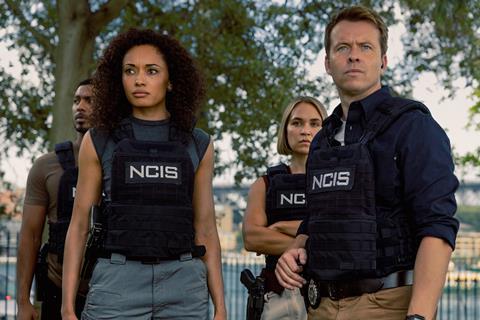
“International co-productions, such as NCIS: Sydney, showcase Australian talent and locations, and under the new rules, eligible co-productions meeting local criteria will continue to play a vital role in our strategy, with the potential for further expansion.”
Dialling into the detail
But what do these new guarantees mean for those on the ground and what can other countries learn from Australia’s strategy?
Opponents of the legislation, many of whom spoke on background briefing, say there’s a real risk that the streamers will commission fewer local shows, seeing the legislation as a ceiling not the floor.
That fear is supported by the 2024-2025 Screen Australia Drama Report released this week, which notes higher expenditure (spending up by 43% to a record A$2.7bn (£1.34bn)) but fewer shows being made.
They worry that there’s not enough writers or crew to deliver more shows if they are commissioned, that production costs will go up, and that the legislation was rushed through the Parliament in an unprecedented fashion, so the devil may well be in the detail.
The Streaming for Australia coalition, which represents 12 Australian streamers including Paramount+, said they were “deeply concerned” by the legislation.
Coalition chair, Paul Muller, said the streamers had “constructively engaged with the government in good faith” but the bill had been “rushed through the Parliament without proper input from those it directly impacts.”
He says the bill acts as “an active disincentive” for streamers who license Australian content for global audiences. And it doesn’t recognise the streamers “substantial investment in building the capacity of the screen industry through skills and training.”
He points to the latest report on SVoD expenditure from the Australian Communication and Media Authority (ACMA), which will also be monitoring the new legislation compliance.
Based on data provided by the streamers, the report released this week showed streamers spent $414m on Australian programmes in the 2024-2025 financial year, up from $341m in the previous year.
But they commissioned fewer programmes – 41, compared to 55 – and spent $19m less on acquired programmes.
Despite that decline, Muller says this data “further demonstrates that the legislation passed last week is trying to solve a problem that simply doesn’t exist.”
Question of timing
So why did the legislation hit Parliament when it did?
Arts minister Burke is a passionate supporter of the screen industry and quotas - and a powerful force within the current Labor government. He’d made a promise and he was determined to deliver.
This debate has been raging for years – so, the supporters say full power to him for grabbing the moment and whizzing the legislation through Parliament in the run up to Christmas – along with a $50m sweetener for the ABC to produce more kids and drama content over the next three years.
That was a condition set by the Greens to pass the legislation because acquisitions/licencing of programmes doesn’t count as Australian content under the new rules and the ABC makes significant income from those acquisitions.
(That hasn’t gone down that well with other broadcasters.)
The legislation was firmly pitched under a ‘cultural’ banner, apparently to avoid a scrap with the US under free-trade agreements. And, importantly, it was launched after prime minister Anthony Albanese has just finished a successful round of negotiations with president Trump.
Matt Deaner, the chief exec of the Screen Producers Association (SPA) has been a driving force in uniting the screen industry factions to get this bill through.
He admits that the initial ask from producers was a 20% of spend - not 10% - but notes that the higher figure was talked about before the legislation excluded sport and international content.
He also acknowledges that there will be some disappointment with the lack of sub quotas in under-served genres.
“Especially if you’re a children’s producer or some of documentary producers who’ve seen the content they make cut out of a lot of commissioning from broadcasters and streamers.”
But he sees this as a strong starting point which will be thoroughly tested in the next four years, when there’s a review of the legislation already planned and built into the framework.
“You’ve got this opportunity to properly look at it in four years’ time, with the data and the impact and the research. I’m buoyed by that.”
Paramount Australia remains largely positive – while recognising the concerns.
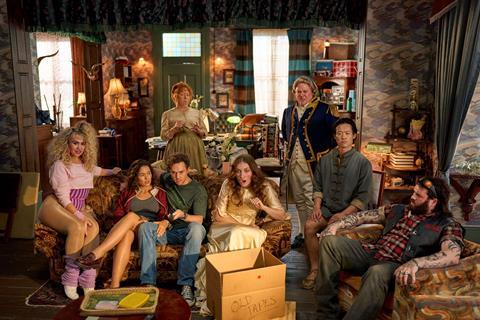
“We believe we are in a golden age of Australian content, with hit series such as Fake, Last King of the Cross and Ghosts breaking streaming records and driving significant subscriber growth. Local stories remain central to our content strategy, enjoyed by audiences both here and globally, alongside our important global franchises.
“Paramount Australia acknowledges the challenges faced by the industry, including potential inflationary costs of production and constraints related to stage space and talent, particularly among writers and production accountants.
“We remain committed to working collaboratively with industry partners to address these issues, ensuring a sustainable and vibrant future for Australian content production.”
For now, it’s a ‘watch this space’ to find out how the legislation impacts on productions – local and international – when it takes effect next year.
Denise Eriksen is executive director of Screen Careers Australia - a not for profit organisation designed to further the careers of crews in Australia.






No comments yet