

Broadcast Sport spoke to Channel 4, the Boat Race Company and Filmnova about the broadcaster’s first airing of the race
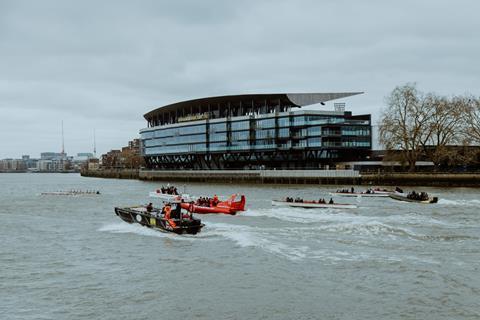
4 April 2026 won’t be the first time that the Boat Race, an annual rowing race between Oxford and Cambridge universities, has been shown by a broadcaster that isn’t the BBC, thanks to a short stint on ITV from 2005-2009.
However, every other race since its first broadcast in 1938 has been shown by the BBC, and this new deal, signed last year, will see both the 100th anniversary of the women’s race in 2027 and the 200th anniversary of the men’s in 2029 be shown by Channel 4.
Siobhan Cassidy, chair of the Boat Race Company, told Broadcast Sport that while, “The BBC was a great, longstanding partner,” of the event, “Channel 4 brings new energy and drive.”
Channel 4 head of sport Pete Andrews, who explained his first thoughts on the deal to Broadcast Sport last year, said, “It was always going to be an evolution, not a revolution.
“The tradition and history are really important, but we want to help translate it in a different way.”
The fact it’s an evolution rather than revolution is shown by the retention of Clare Balding as the race’s main presenter, alongside Channel 4 regular Ade Adepitan, as well as Filmnova continuing to produce the coverage.
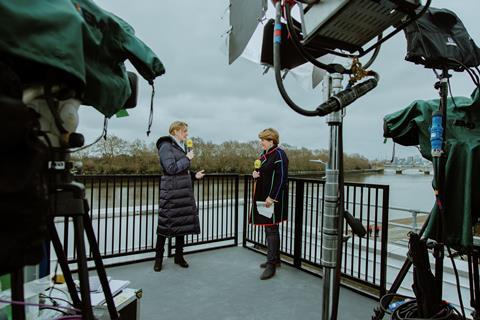
Filmnova, which has been producing the Boat Race with the BBC for the past four years, will now have full control of the production, rather than the production partner role it had previously. Managing director Phil Sibson echoed Andrews, saying, “We don’t want to alienate the old audience but we do want to attract a new one,” adding that, “The coverage will evolve over five years,” and future races could see more data integrated to show the power of the rowers.
However, for this year, there will be 15 cameras across the course, fewer than some previous editions as drone footage means there is less need for land-based cameras. There will still be a helicopter for landscape shots and resilience in case the drone can’t fly, and 120 people will be on the ground across production and technical teams. Gravity Media continues as technical partner, as it has done in past years, with a single OB truck at the start of the course.
New for this year are cameras in the boat house, to see the teams preparing pre-race, as well as the addition of ads for the first time since ITV’s coverage. The races themselves won’t be interrupted by ad breaks, but elsewhere in the broadcast they actually bring up opportunities for the production, according to Sibson, “There will be more shoulder content, with longer VTs, which is helped by having ad breaks to slot them in.”
Channel 4’s arrival also sees a greater emphasis on diversity, Cassidy claiming, that “there are a lot more diverse backgrounds than some people realise,” and that some rowers won’t have taken up the sport before university. Fergus Pim is one who would exemplify this in 2026, if he makes it into the team on the day.
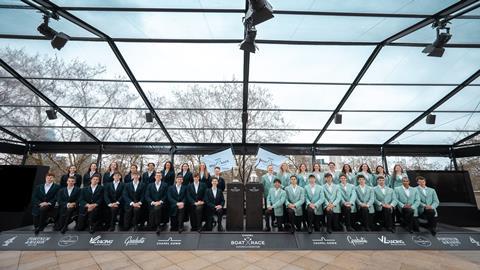
Andrews is keen to feature the Youth Boat Race, which has local state schools competing, more centrally, but, “this will take time,” and says that the broadcaster is, “trying to broaden the scope of what we talk about and have different voices.”
Cassidy is also hoping that viewers will, “understand what it’s like to be a young person rowing in the Thames in front of such big crowds,” and the psychological impact this can have for the 50% of competitors who will lose. The stories behind the rowers is a big focus for the Boat Race Company, with YouTube series Turning The Tide delving into the stories behind the race in the build up to the event, and a greater focus on TikTok content, where, “Younger fans want to have fun with it.”
Channel 4 and Filmnova will do the same, with Andrews saying, “We’ll focus on the students and their personalities.
“What we don’t have is what they have for the FA Cup Final – why are they doing it? Who are they?”
Sibson added that the, “audience will learn about the crews during the programme,” and that new graphics brought in with the arrival of Channel 4 will aim to be more clear about where rowers are in the boat and what their various roles are. “We’re not expecting any received knowledge,” he said.
Overall, Cassidy hopes that the new partnership will see, “people re-engage with the race and come down to west London to watch.” Good weather on Easter weekend will help, and over 200,000 are expected to line the Thames to get a view of the action.






No comments yet