

BBC Sport’s head of major events also speaks about the broadcaster’s strategy on digital and social channels
BBC Sport achieved huge viewership growth with the Milano Cortina Winter Olympic Games, scoring almost three times as many streams on iPlayer as the last Winter Games (83m v 31.4m) while also slightly growing linear audiences to 26.3m.
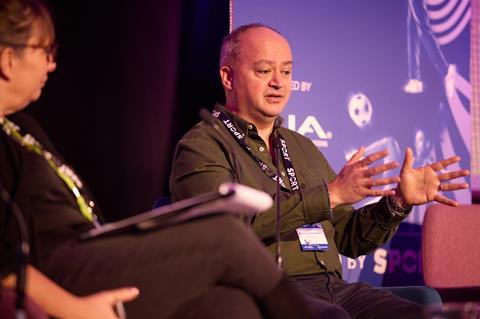
BBC Sport’s head of major events, Ron Chakraborty, spoke to Broadcast Tech & Sport Group director Charlotte Wheeler at the Broadcast Sport Content Summit earlier this month, explaining the strategy that went into getting such numbers. You can now listen to the conversation below, and subscribe to the Broadcast Sport Podcast on all major podcast platforms to hear similar discussions from across the sport content world.
Not only did Chakraborty expand on the work that went into the Winter Olympics, but he also spoke about how the BBC is trying to reach new audiences and adapt to a world of declining linear viewership.
Chakraborty said, “I still think right now you’ve got that clouut of linear, but inevitably you’ve got to get ready for when people are going to watch it on iPlayer and make iPlayer the most user-friendly, well sign posted, well organised and dynamic service that it can be. It is in all in all of our interests because at some point, whether it’s the 2030 Games the 2034 Games and so on, that’s going to be where the majority of people will watch it.”
He also revealed that, “Like so many other broadcasters we’re trying to focus as much as we can on on digital. The 26 million we had on linear, that audience reach was bigger than the last Games but that was despite reducing the number of hours we did by 25. We had 25 fewer hours and still had more people watch so that kind of looked after itself.
“We took the resources from there and focused on digital. As a result, from Tokyo to Paris it doubled the audience, well, this went even further here. It was 31m in the last Winters and went to 89m [sic] here, so two and a half times the social numbers. It was off the scale.
“It does it just lends itself to social. There’s so many nutty moments, from the wolf in the cross-country race to the biathlete announcing he was cheating on his on his girlfriend, that’s social media gold isn’t it. As a result the numbers don’t even really compare. We had 35 million video views, I think it was, in Beijing go up to 230m and I think that was just a real embrace of Instagram and TikTok in particular, but also obviously BBC Sport has just started its partnership with YouTube and I think that’ll really come into fruition in the summer with the World Cup.
You can hear more on this topic, as well as discussions around dealing with unexpected editorial stories, what could be different for the LA 2026 Summer Olympic Games, working with influencers and a wider range of talent, and more, below.






No comments yet