

















“The stories of the bereaved are interwoven with the story of the one tangible good that rose from their limitless suffering”
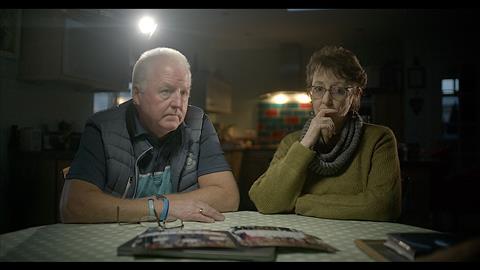
The Dunblane Tapes, Channel 4
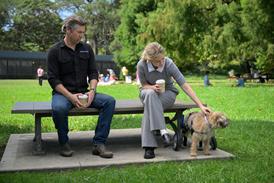
“The Dunblane Tapes told how, in the aftermath of the horrendous mass murder at a primary school in Scotland, the grieving town organised a petition to stop people from keeping small arms in their homes. The first 20 minutes of the documentary relived the atrocity, when 16 children aged five and six were slaughtered by a gunman. Their teacher, Gwen Mayor, was also killed, trying to protect them. The grief and shock of parents, as news cameras arrived in the hours after the shooting, is still unbearable to watch, 30 years on.”
Christopher Stevens, Daily Mail
“The stories of the bereaved are interwoven with the story of the one tangible good that rose from their limitless suffering. It began with the Snowdrop Petition – named after the flowers that were the only ones blooming in Dunblane in early March when the children died. It was launched by Ann Pearston, who couldn’t get past the fact that assault rifles had been banned after the Hungerford shootings but not the handguns the killer had also used, which had in fact been more deadly and that Hamilton had legally possessed. “He didn’t actually do anything wrong until he fired the first shot,” says Jacqueline Walsh, who along with another friend of Pearston, Rosemary Hunter, had quickly became involved in the petition. It soon grew into a public campaign to outlaw the possession of handguns for all private citizens.”
Lucy Mangan, The Guardian
“This sensitive, intelligent film, made by Anna Hall, who grew up in Dunblane, also features Kenny and Pam Ross, whose daughter Joanna died that day, and Mick North, whose daughter Sophie was killed. I can recall no mention of the killer’s name, which is how it should be. There are contributions from, among others, the former secretary of state for Scotland Michael Forsyth, who saw the scene in the gym that day, the victims still there (“It was a scene from hell”), and Anne Pearston, who helped to co-ordinate the magnificent grassroots campaign to get privately owned handguns banned, something that, shockingly, did not happen after the Hungerford massacre of 1987.”
Carol Midgley, The Times
Murder Case: The Hunt for Arlene Fraser’s Killer, BBC2
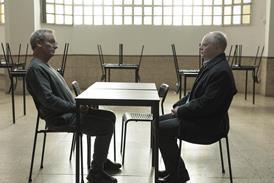
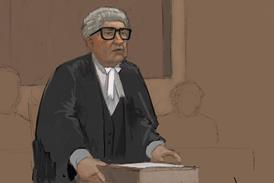
“When the police arrived at Arlene Fraser’s house in Elgin, Moray in April 1998, they found a place where time had stopped suddenly, like a needle lifted hastily from a record. Sights that would have been ordinary had she been there were disturbing in her absence: a bicycle on its side in the yard, a vacuum cleaner plugged into a socket in the hall, washing on the line. Having stood in her dressing gown to wave her two children off as they left for school that Tuesday morning, Arlene had since vanished. Across two episodes that sensitively manage to juggle a sobering reflection on violence against women and a gripping whodunnit where a full answer keeps maddeningly eluding the authorities, Murder Case lays out what is thought to have happened to Arlene, and replays the twists and surprises of the trial – or rather, the trials – where concrete details refused to emerge. It is sad, enraging, frustrating, compelling.”
Jack Seale, The Guardian



No comments yet