Ailish McElmeel, executive producer and co-founder of Deadpan Pictures, on exploring moral panics, recreating the 80s and completing the funding jugsaw

The origins of Video Nasty actually lie in another series, which long-time Deadpan Pictures collaborator Hugh Travers and I began developing for Channel 4 about 10 years ago.

The series, Hungry, was a comedy set against the backdrop of the Irish Famine. Hugh had given a general press interview about his work at the top of 2015 and the journalist picked up on the ‘famine comedy’ – and in doing so, unleashed a Twitter storm.

20181214_AilishMcElmeel_Headshot

Ailish McElmeel

As the moral outrage, and frankly hysteria built, Hugh was vilified for daring to broach such a topic in a comedy show. Soon opinion pieces popped up in The Guardian, The Independent and indeed the Irish broadsheets.

There was a protest outside Channel 4’s Horseferry offices (plus a counter protest), and eventually a Liberal Democrat MP brought up the controversy in the House of Commons calling the proposed series ‘insensitive and potentially highly offensive’.

Of course, at this point, no one beside us and the commissioners had actually read the pilot script or knew any of the details at the project – but that didn’t stop the condemnation, and ultimately the project didn’t go forward.

Hugh percolated the Hungry debacle and at the top of 2020 came to me with the idea of exploring censorship and cancel culture through the lens of the 1980s moral panic over what were known as ‘video nasties’ – low budget horror films, distributed on video tape, and at the time were considered gratuitously violent and gory.

It’s tempting to think of cancel culture as a very modern phenomenon, but it is far from a new concept – it just looked very different in the 1980s. In Video Nasty, yes, we’ve heightened the world – but as the little segments of archive used in the opening episodes reveal, the outrage and hysteria was real.

Taking the audience (back) to the 1980s

The look and feel of the series needed to draw in both younger audiences craving nostalgia (thank you Stranger Things), and the older audiences who remember the period and want authenticity. We really wanted to offer audience a heightened 1980s – not the high-gloss Americanised nostalgia, but an authentic and fun world with a darker, horror edge.

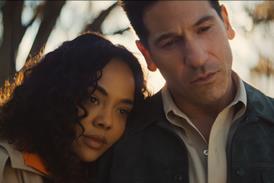
VN - 03

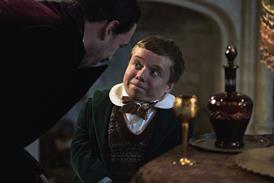
I think director Chris Smith’s attention to detail really elevated the series, while production designer Tara O’Reilly’s vision for this authentic, fun, yet at times creepy world paid off. The contrast she created between the vibrant 80s Dublin scenes and the more conservative world of our fictional middle-England town of Ashdale helped differentiate the two worlds. Ashdale’s traditions of burning objects on a ceremonial pyre and wearing plague mask-inspired outfits pay homage to wicker man mythology, while being entirely fresh, unique to our world of Video Nasty.

Joanne O’Brien’s costumes set our Dublin characters and British conservative characters apart, playing with the plague-mask styling to create a unique and terrifying villain in Ethel, played by Simone Kirby. Meanwhile, Rachel Gordon and Kelly White delivered on the fantastically big hair and bold make-up.

VN - 09

Simone Kirby as Ethel

Chris was adamant from the off that in order to ring true to horror fans we would need to licence a number of the original video nasties. Thankfully we managed to secure a deal for eight of the Severin Films titles, including Nightmare Maker and Nightmares in a Damaged Brain. Our production design and graphics team worked to create our character TJ’s Video Vault, painstakingly creating all the VHS covers.

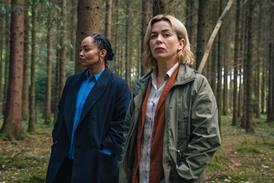
The casting is also so important in giving authenticity to the period of the show. Casting directors Louise Kiely and Thyrza Ging worked closely with our directors and producer to find our three leads. Throughout filming, Justin Daniels Anene, Cal O’Driscoll and Leia Murphy were agonising as to whether they had the dreaded ‘iPhone face’, I think we can safely say that all three have a timeless quality that further adds to the period feel of the series.

Commissioning in Ireland, the UK and Germany

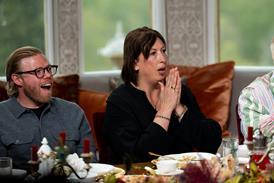
VN - 07

We have three broadcast partners on Video Nasty; BBC Northern Ireland and BBC Three in the UK, Virgin Media One in Ireland and WDR in Germany. The WDR co-commission came from the series being pitched at Content London Drama Pitch awards, which we went on to win. Frank Tonsmann from WDR saw the pitch via online (thanks to Omnicom in 2021) and was immediately lured in. Frank has been one of the strongest champions of the series, which we are really thankful for, and working with a party outside of the UK and Ireland was really useful.

We then approached Eddie Doyle in BBC Northern Ireland to find our UK home, with Virgin Media boarding the series last with an acquisition. BBC and Virgin work well together and we found the balancing of notes across all broadcasters to be very unified and streamlined.

With support of the BBC we started the story room for season two in December and Hugh is currently outlining series’ arc. As the series is a hybrid comedy drama, coming of age, horror, we have leaned into the horror sequel aspect, setting season two up as a new adventure for our three leads which builds on the complex relationship questions posed in season one. We hope it will build on our first season ambitions and, of course, give lots of thrills and fun along the way.

  • Video Nasty is available on BBC iPlayer

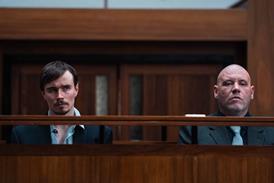
VN - 04