

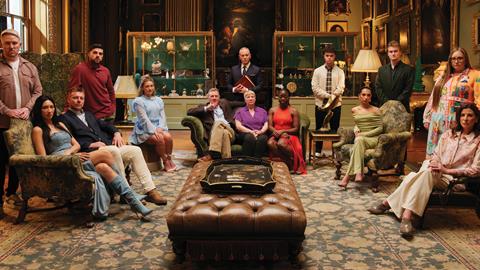
Sales chiefs at BBC Studios and the founding quartet of London TV Screenings unpack what’s next for an industry in constant flux
The past year has been tumultuous for distributors, and the market isn’t showing signs it will settle any time soon.
While shifting viewing habits, the growth of YouTube and the squeeze on budgets were in full force 12 months ago, the intervening period has seen predictions of mega mergers turn into more concrete action and the rapid adoption of new strategies from distributors designed to mitigate the effects.
Some of these tactics are pushing distribution divisions further into a direct-to-consumer world, making use of the power of their brands across new verticals and creating fandom to drive revenues. Other strategies are more traditional such as geographical expansion, but they are all focused on adapting after what was an undoubtedly tough 2025.
“Deals are taking longer to close and are happening later in the production process”
Louise Pedersen All3Media International
Part of the pain was caused by the slowdown in the US scripted market. “We worked with some fantastic US partners on a range of scripted titles, but in general, deals are taking longer to close and are happening later in the production process, pushing more risk onto distributors,” says Louise Pedersen, chief executive at All3Media International, whose slate for London TV Screenings ranges from Two Brothers Pictures thriller Maya to Studio Lambert’s format The Inheritance, which recently secured its first international remake (both are Channel 4 shows).
At the same time as distributors are taking ever bigger bets on some scripted projects, buyers are staying cautious.
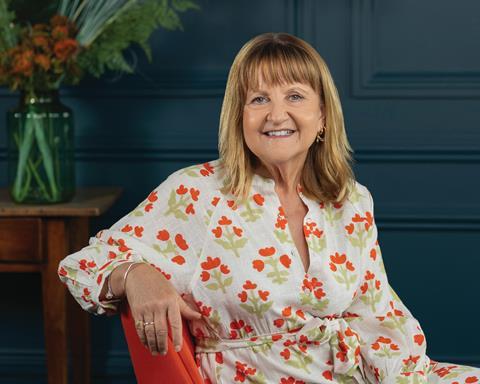
“The single biggest challenge over the past year has been how we, as a distributor, navigated the general lack of risk-taking across the business, while continuing to underpin scripted deficits,” agrees Cathy Payne, chief executive at Banijay Rights, which is bringing A Woman Of Substance (The Forge for C4) to buyers. It is a similar story from Janet Brown, the outgoing president of global content sales at BBC Studios, who says her real challenge is timing.
“Buyers,” she says, “are increasingly selective and operating under tight budgets. You may have the perfect programme for a buyer whose budget is already committed or have a buyer with available funds, but without a slot that aligns with your show. Achieving that perfect alchemy of content, budget and scheduling is more challenging, and more essential, than ever.”
Selective and cautious
Production costs that rose rapidly during the peak TV era have also remained high despite a decline in demand for shows, adds Fremantle’s chief executive of commercial and international, Jens Richter, while buyers are getting more specific in their requirements.
“We went from having a big sandbox to play in where we could try out all sorts of programming to now having buyers who need shows to be IP-based, to have a great cast attached, to be returning, to be mainstream, to be blue Sky and to off er escapism all at the same time.”
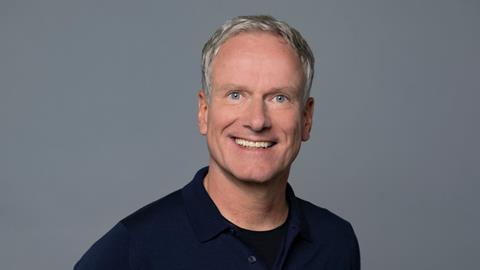
It can be done, he adds, pointing to the company’s upcoming Catherine Zeta-Jones-fronted series Kill Jackie, about a reformed drug dealer. “But it is very hard work.”
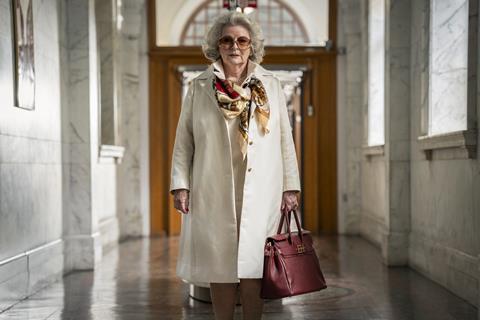
That refocusing is largely down to the streamers’ push to deliver ROI on their programming, but Ruth Berry, president of ITV Studios Global Partnerships and digital arm Zoo 55s, says issues such as the advertising squeeze on commercial broadcasters also contributed to “changes in content spend and content strategy that slowed the market down”.
“Buyers became increasingly selective and cautious around what content they wanted and needed, and how much they were willing to spend on engaging which audience and when. That said, we saw positive decision-making come back towards the end of last year, which seems to be continuing into this year.”
And while the past 12 months were tough, shows are selling. Berry points to Ludwig, now in 106 markets, and Vera, which has entered 191 territories, while her slate in London includes blue-chip natural history show Force Of Nature.
“This year there will be more clarity on what people want, and that will help the market become a little more buoyant – we’re seeing that in the US and in parts of Europe already.”
This pressure on the more traditional activities of distributors is ushering companies into new areas. All3MI’s Pedersen says her outfit has seen “very positive growth” from merchandising and licensing revenues in the past year. “We’ve launched two very successful live events in the UK based on best-selling formats The Traitors and Race Across The World, and we’re targeting further growth from this area.”
Revenue raisers
The growth of fandoms is a big priority for ITV Studios, too, and Berry points to brands such as Love Island as key revenue raisers. “If you’re a super-fan of Love Island, you’ll be watching the series, watching different territory versions, you’ll be watching clips through socials, you’ll be playing the game, have bought a water bottle – that’s huge engagement around the IP and valuable to us.”
Berry cites the fact that Love Island is the eighth-most-downloaded game on the iOS platform – and that a piece of virtual clothing is sold every second.
Monetising content on YouTube and using social media to market content has also become a major focus for distributors adapting to this shifting landscape. Richter points to Fremantle’s YouTube and social operations clocking up more than 50 billion views in 2025, while ITVS titles such as River Monsters are proving to be rampant hits on the AVoD platform.
Berry says the show’s YouTube channel has delivered 276 million views and 65 million hours of watchtime. “Just one clip had 200 million views in a week,” she continues, “and across our whole portfolio on YouTube, we are just shy of 50 billion views, significantly up from 2024.”
The revenue returns from these giant numbers might not compare to the US cable budgets of yore, but Berry is confident in doubling the size of the Zoo 55 business between 2024 and 2027.
All3MI is also looking to ramp up revenues from platforms like YouTube, Facebook and Instagram this year, where Payne at Banijay Rights says she is also focused on finding more affordable scripted models and securing co-productions and funding partners for local formats.
Global focus
But it’s not all about digital: Brown says BBCS is focused on “deepening the impact” of its biggest brands, but there is also geographical expansion at play beyond core markets. “Latin America is a great example. We agreed our first co-production with Globo last October for a documentary series about the Amazon. It is being produced by BBC Studios Specialist Factual Productions and we are acting as the global distributor.”
Broadening and diversifying buyer relationships globally is a major priority for BBCS, which is bringing shows such as factual duo Blue Planet III and Lucy Worsley Investigates: The American Revolution to buyers, alongside dramas such as Tommy And Tuppence.

Brown adds that BBCS wants to build “deeper creative partnerships with our key buyers globally by involving them earlier in the development process”, ensuring content meets editorial, marketing and financial needs.
Richter also points to Fremantle’s Canadian drama Sullivan’s Crossing, which has sold around the world and recently become a Top 10 hit globally on Netflix, via a second window. “That is insane,” he says, adding that returning dramas are a Fremantle priority.
Certainly the efforts to engage buyers are increasing, not least because streamers such as Netflix are looking at all corners of the attention economy to cement their position in the industry. Deals with YouTubers such as Ms Rachel have seen the star’s content going directly onto Netflix, and it is a trend likely to continue. In response, distributors are engaging more closely with creators, explains Payne.
“We’re already seeing creators doing their take on existing formats, but as a company we are expanding their reach to linear television through talent representation deals, while also forming new social media partnerships – and that helps them improve their reach and returns,” she says.
“YouTube is an increasingly important platform for fragmented audiences to seek out content”
Ruth Berry ITV Studios
“It’s also worth saying that it’s not just streamers,” Berry points out. “Look at the casting of someone like Angry Ginge [real name Morgan Burtwistle] in I’m A Celebrity… Get Me Out Of Here!, which was the highest-rating live show of 2025 for the 16-34 demographic, with the launch episode averaging an 84% share of the audience.
“YouTube is an increasingly important platform for fragmented audiences to seek out content to watch, so the top-tier creators are becoming household names and multiplatform ‘celebs’. We’re definitely seeking out those fragmented audiences in YouTube via Zoo 55, and how we work with creators is top of mind.”
Fragmented viewing effects
The fragmented market is also pushing unlikely bedfellows together. Across Europe, streamers have been partnering with broadcasters and their BVoD services to increase the reach of content, but it was Netflix’s announcement that it would be bringing French commercial giant TF1 into its ecosystem on a wholesale basis that raised eyebrows last year.
Just how the deal announced in June will play out in practice remains to be seen, with details still not having been released despite the pact’s proposed roll-out this summer. But some implications are clear.
“These deals will put pressure on the domestic market second window through a loss of sales income to other streamers,” explains Payne. “It will also restrict the ability to raise deficit finance from the secondary market if the programme will already feature on a streaming platform though such an arrangement.”

It is a similar story from Berry. “We have a lot of different partners, spanning broadcasters and streamers, so for us it’s really important that we find ways for all of us to succeed.”
But she adds: “It’s key for us to keep control of our distribution rights and manage how the content lands on each platform, even within these ‘pacts’. Ideally we can create a win-win for everyone and support our partners while valuing the associated rights to aid their expansion.”
Pedersen agrees and admits that in the UK, the value of second windows forms “an important part of our investment case”.
She continues: “Our key focus is always the long-term value of the IP. Distributors manage multiple second windows over a long period of time in a strategic way to generate maximum revenues for producers at a fair market rate. Any UK broadcaster/streamer deal would need to factor this in.”
“We are going to see more of those kind of co-op deals like Netflix and TF1”
Jens Richter, Fremantle
Whether an all-encompassing deal similar to the Netflix and TF1 pact comes to the UK, or many other markets around the world, remains to be seen, but Richter expects to see more partnerships growing.
“We are going to see more of those kind of co-op deals like that,” he continues, suggesting they could develop into “some form of variation on the old cable deals”. The key for those in rights management, of course, will be to ensure they are fairly recompensed if the deals do move ahead.

Another headache coming sooner rather than later is the Warner Bros Discovery sale. While the deal is far from certain, the acquisition of HBO Max and its studio assets by Netflix would provide even greater leverage to one company.
Richter admits that one buyer rather than two is not a positive development, but highlights that should the deal progress, it could also create demand via the creation of the Discovery Global entity – operating WBD’s legacy linear networks.
In the shorter term, the consolidation will likely cause delays to greenlights and further shifts on spending.
“If the WBD-Netflix deal goes ahead, it could create some realignment of budgets and creative direction, and possibly a short-term slowdown in decision-making while the market settles,” Berry predicts, adding that regardless of the deal, the companies represent a key strategic buying group.
“Ultimately, time will tell on how any WBD agreement reshapes the industry, but any deal will be part of an ongoing evolution on the part of all of us operating long-term business models in this space,” says Brown.
“Our business is ultimately about connecting stories with receptive audiences. It is not based on any one group of storytellers, any particular type of distribution technology, any solo source of financing, or any single construct of the supply chain.
“The BBC has been doing this for more than 100 years and a notable number of our peers have similarly long lifelines. As an industry, we do what we always have – lead change where we can and be open-minded and fleet of foot to respond to it elsewhere.”
DREAM INVESTMENT
If we gave you £2m to invest in a show of your choice with a view to getting the biggest returns within five years, what kind of programme would it be?
Janet Brown: You might see us spend that money to back an unscripted format from a YouTube creator, or to take a documentary podcast from audio to screen, or to come in alongside other partners to fund an ambitious premium scripted series.
Jens Richter: We’ve just done this! We’re in production on a high-volume, unscripted, long-running show that we have fully financed on spec with our own money. There is no commissioner but we believe it can hit all kinds of platforms.
Louise Pedersen: A long-running format with global appeal. No cloaks and round tables though as we already have the absolute best-in-class one of those, despite many imitators!
Ruth Berry: An elevated crime thriller with a key cast well known in the US that hooks you in with an action scene in the first two minutes.
Cathy Payne: A must-watch non-scripted format with broad audience appeal.





![IMG_4073[55]](https://d11p0alxbet5ud.cloudfront.net/Pictures/100x67/5/9/3/1489593_img_407355_748422.jpeg)
No comments yet