

Marco Bassetti urges streamers to reward success and talks up YouTube regulation
Banijay Entertainment has invested more than €1bn in content over the past four years but its chief executive has said such spending is at risk if streamers do not reward hits more fairly.
Marco Bassetti was at MIA in Rome today where he urged global streamers - for whom Banijay produced 110 shows last year - to share the spoils of success to support the broader European creative industry.
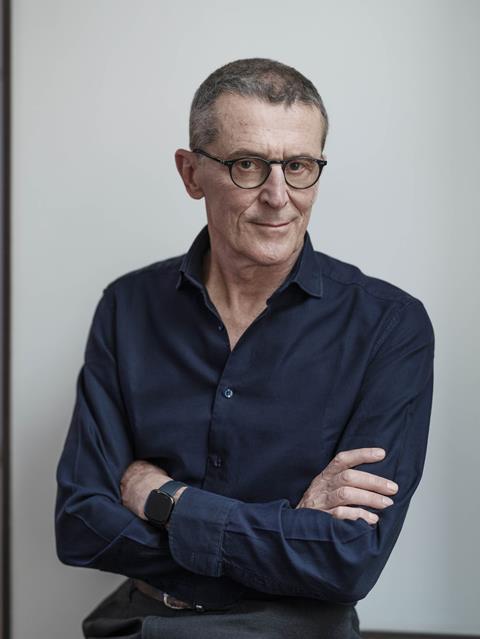
Bassetti pointed to an unnamed Italian film that had become a major hit for Banijay but which had returned negligible financial returns despite its streaming success.
“There must be a reward for producers when they make something extraordinary,” he said, adding that “if you look at the money we made off that movie, it was very little.”
Bassetti added that the squeezed budgets of commercial and public broadcasters have hamstrung investments in content, meaning streamers often represent the best route forward for many projects.
Improving tax incentives would only partly alleviate the problem, he added, pointing to a potential European landscape of the future that could look more like the US where rights are much harder to retain.
“Nowadays private TV and public broadcasters invest very little in creativity. Who does that? We do. They don’t have the money, so it is a question facing us - but also Mediawan and Federation Studios and the many others who are still independent.”
Bassetti said the “battle” is about “rewards and the remuneration from creativity if it is successful”, before adding: “I don’t know the best way that this can be done but IP retention can be successful.”
The Banijay chief exec pointed to countries such as the UK and France, where rights normally revert back to the producer, and highlighted the growth of groups located in those territories such as Banijay, Mediawan, Federation and Bassetti’s recent acquisition, All3Media.
“If we don’t give incentives back [to the creatives] then they will go somewhere else,” added Bassetti, who revealed that his company had spent €1bn to support productions through deficit financing and investment into shows, development spending, and various creativity funds.
Scale & YouTube
The Banijay Entertainment boss added that his company was investing more in content to secure rights but argued smaller producers would be increasingly hampered in following their lead, with that thinking partly playing into the scale-play that saw the deal for All3.
Bassetti also dismissed the notion of producing premium scripted solely for YouTube - “we are miles away from that model”, he said - and questioned the lack of regulation facing the platform despite being the second-most watched channel on TV’s in the UK.
Describing the Google-owned service as the “elephant in the room”, he added: “In Europe there is no regulation, but in UK it is most watched among 16-34s. They’re watching shows on YouTube on TV but everyone else on TV is regulated.”
During the far-reaching discussion with former Cattleya boss Marco Chimenz, Bassetti also talked up the role of Little Dot Studios in fueling Banijay’s YouTube push. But he was quick to point out that the service’s model of “€5,000 for one million views” is only viable with the support of brands.
Bassetti also admitted to seeing “incredible things” in the M&A space over recent years, pointing to the $900m valuation of Reese Witherspoon’s Hello Sunshine just three years ago. Owner Candle Media recently sold the asset to Mediawan and Bassetti admitted the market had been frothy.
“There was a craze about M&A and some competitors came in and made rash acquisitions,” he said. His own company’s spend of €1bn had allowed Banijay to focus fully on creative development and talent, he added.






No comments yet