



Market leader bucks trend with 20% revenue rise while biggest competitors all report declines
It has been a tumultuous 12 months for the TV and streaming industry, and the challenges facing the companies supplying the sector with the product it needs are laid bare in this year’s Distributors Survey.
While last year’s survey showed a return to revenue growth for the majority of respondents, a year on, the picture is more nuanced, reflecting the well-founded caution expressed by many 2025 respondents.
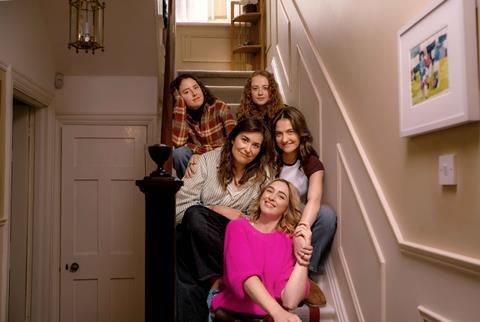
However, the industry travails captured this year only serve to put BBC Studios’ near 20% revenue rise into even sharper focus. The distributor of Doctor Who and A Good Girl’s Guide To Murder, which has been reshuffling its own operations of late under Zai Bennett, reports revenue of £481.8m, up from £402m in 2025 and £361.5m in 2024.

Distributors Survey 2026 table
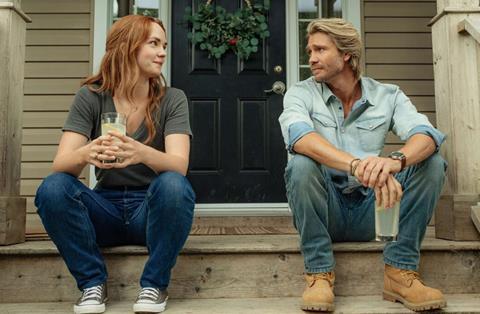
DOWNLOADSuch growth – an outlier across the broader sector – ensures that the London-headquartered firm remains at the top of our table for a second consecutive year. ITV Studios, helped by sales of Love Island and Code Of Silence, retains second spot with distribution revenues of £397m – down less than 1% on last year – while Little Disasters and Sullivan’s Crossing distributor Fremantle comes in third, posting a near 10% dip to just under £240m.
On a like-for-like basis – excluding companies that did not report turnover in both 2025 and 2026 – the cumulative total for UK-based distributors is slightly up from £1.31bn to £1.32bn. Worth noting is that this year’s survey is missing Banijay Rights and All3Media International, both of which declined to submit figures as their parent companies are consolidating into a single business.
Had their most recent reported figures been included (Banijay’s £397m for 2025 and All3MI’s £178m for 2024), the UK distribution sector’s revenues would be nudging closer to £2bn annually.
Indeed, the Banijay-All3M combination neatly underlines the consolidating distribution landscape and some of the strategic reasons behind it. Across the survey as a whole, which again includes international companies alongside UK counterparts, a combined £1.48bn was generated, with the top four companies accounting for 83% of that total. Of those four, only BBC Studios reports growth.
Industry squeeze
Pressures are being felt on all sides of the distribution industry. Bennett, BBCS’s global content chief executive and chief creative officer, tells Broadcast International that buyers remain selective in the face of a tightened sector, and that applies particularly around new content. Achieving cut-through and “consistently delivering on audience expectations” are the main demands from buyers, he says.
Bennett points to Death Valley as an example of a scripted title that has worked, landing with buyers in more than 100 markets and capitalising on a genre “that we know there is a proven appetite for”. Reunion and Nicole Lecky’s Wild Cherry have also performed well, but the former Sky exec is not alone in highlighting that buyers are laser-trained on the ROI of shows, with the reams of data derived from streamer viewing increasingly powerful.
For broadcasters, advertising declines are squeezing the aperture of their content demands. “Free-to-air [FTA] demand has been impacted in many markets by ongoing budget constraints,” says ITVS president of global partnership & Zoo 55 Ruth Berry. Decline has only been “offset in some cases” by streamer growth, she adds.
While global streamers remain powerful acquisitive partners, it is smaller regional SVoDs that represent the biggest client base for distributors, with 65% of companies striking deals with such operators, followed by 59% for Prime Video and Disney+.
Almost half of distributors have sold to Netflix, with Paramount+, HBO Max and Peacock also showing interest to varying degrees. For broadcasters, budget pressures are clearly evident: half of distributors say AVoDs such as Pluto TV and Tubi show most demand, a third say it is SVoDs, but only 16% say FTA buyers are keenest
Soft demand
Cineflix Rights chief executive Tim Mutimer is among many to highlight the “soft demand from our traditional buyers”, with “the biggest performing brands” most in demand, while Fremantle chief executive of commercial and international Jens Richter points to “increased demand for mainstream content”, noting that the necessity of delivering shows that cut through is only growing among streamers.
On one level, this broadly suggests a narrowing in the types of shows being acquired – fewer than a third of companies report demand from buyers has risen over the past 12 months. Yet delve a little deeper and it is the more boutique unscripted-skewing outfits that seem to be finding pockets of success in this challenged market, albeit revenue rises are coming from relatively lower bases.
| STREAMER | % OF FIRMS |
|---|---|
| North America | 87 |
| East Asia | 53 |
| Latin America | 53 |
| Central and Eastern Europe | 53 |
| South Asia | 47 |
| Western Europe | 47 |
| Southern Europe | 40 |
| Scandinavia | 40 |
| Oceania | 33 |
| Middle East and Northern Africa | 20 |
| Africa | 13 |
Take Woodcut International, for example: the factual-skewing firm has posted a 12.5% (£100,000) rise in revenue year-on-year and managing director Koulla Anastasi points to increased buying from specialist streamers such as BBC Select. Meanwhile, Matt Ashcroft’s Parade Media Group reports a 7% rise in revenue, with unscripted shows such as Find My Country House and Everyday Gourmet With Justine Schofield fuelling growth.
Orange Smarty, which sells unscripted shows such as The Beckham Feud: Truth & Lies, reports stable revenues this year, and chief executive Karen Young is bullish about the company’s prospects. She is clear that budgets are under tight scrutiny, but says “strong brands continue to resonate” and digital revenues are growing.
Ashcroft points to being nimble with models and financing, while Young says that “strategic windowing” is also becoming an increasingly powerful tool. It all adds up to an industry that is clearly in flux but adapting to the environment around it.
If selling content is proving difficult, the picture emerging from the supply side is equally challenged. Almost half of respondents report that it has been somewhat difficult to secure pipeline over the past year compared with the previous 12 months, a noteworthy stat and one compounded by the fact that most of the biggest players in this year’s survey are production group affiliated.
Part of this is simply because there have been fewer greenlights for shows. Bennett admits that commissioners are taking longer to make decisions and applying greater scrutiny to new projects, meaning that “investment approvals remain challenging”.
“Tenders for known IP are becoming increasingly competitive, reflecting a shift from what was once largely a local economy to a global one”
Zai Bennett, BBC Studios
In order to mitigate this, BBCS is making the most of strong partnerships in markets like Germany, France and Australia to “support momentum”, while “a growing acceptance” of co-exclusive models among buyers is helping to get new projects off the ground.
“The market is competitive for strong talent but there is more flexibility. Tenders for known IP are becoming increasingly competitive, reflecting a shift from what was once largely a local economy to a truly global one,” he adds.
Focusing on unscripted, Mark Bishop, chief monetisation officer at Blue Ant Rights and Streaming, says that while “core factual content” is in good supply, opportunities in other genres such as formats, factual entertainment and lifestyle are “more limited”.
David Hooper, chief executive at docs and fact-ent specialist Espresso Media International, says his focus is on building relationships with producers, but Blue Ant’s Bishop says part of the problem is the consolidation of production companies around the world, particularly in the UK.
As commissioners and buyers lean harder on producers at the development phase, the knock-on effect on suppliers becomes increasingly evident. “Only larger producers are often able to support the development of premium, primetime non-scripted content,” says Bishop. “And that reduces opportunities for independent producers and distributors.”
TVF International managing director Poppy McAlister agrees. “There is tougher competition between distributors for premium factual series,” she says. TVFI’s slate includes China’s Wild Secrets With Stephen Fry and Great British Train Journeys From Above. Yet with increasingly few broadcasters commissioning outright, financing gaps have grown, and that, she says, has left larger funding deficits needing to be covered, an area in which distributors can play a key role.
| Company | % OF FIRMS |
|---|---|
| Smaller regional SVoDs | 65 |
| Amazon | 59 |
| Disney+ | 59 |
| Discovery+ | 53 |
| Netflix | 47 |
| Paramount+ | 41 |
| HBO Max/Max | 41 |
| Peacock | 29 |
| Apple TV | 6 |
The question is, ‘at what level?’ More than half of respondents report that demand was the same as last year, while 36% say their year-on-year deficit financing levels have increased. Looking ahead, 43% anticipate the commitment expected from them over the next 12 months will grow again.
For an already squeezed sector, this could have far-reaching consequences. Rodolphe Buet, distribution chief at HPI and Cat’s Eyes outfit Studio TF1, is among those expecting the need for gap deficit financing to grow in the coming years, while BBCS’s Bennett says expectations are “becoming more grounded” but remain out of kilter with what the industry can tolerate.
ITVS’s Berry warns that “a fundamental mismatch” remains between the desired budget and sources of finance, but suggests the situation is shifting. Producers are acknowledging this imbalance more quickly than they had previously, she continues, “chasing down available soft monies harder, being creative about budgets and more willing to share some of the financial risk up front”.
While content demand from buyers across the sector has been muted over the past year, the trend of streamers looking to offer local programming to subscribers – and taking only the rights they need – is one area offering wriggle room to IP owners.
“In Europe, the growth of BVoD is underpinning FTA spend while streamers such as HBO Max and Disney+ are acquiring in the region from ITV Studios,” says Berry, who adds that output deals in Australia and New Zealand, with buyers such as Seven, BritBox and TVNZ – as well as local PSBs such as ABC and SBS – are cementing its Antipodean footprint.
North America, unsurprisingly, is the region where most respondents (87%) are looking to build sales, but Asia is also fast emerging as a key focus. More than 50% say both East Asia and South Asia are being targeted, while Latin America, Central and Eastern Europe are also potential hotspots.
Richter says Fremantle’s mainstream scripted content is showing growing appeal across Europe – particularly France, Germany and the Nordics – while Blue Ant sees FAST channels in North America as a growth area, as does Cineflix Rights. Mutimer says the Canadian group is growing its digital business significantly across VoD, FAST and YouTube, through brands such as Property Brothers, Mayday: Air Disaster and American Pickers.
Also emerging as a potential destination for certain types of content is China. The world’s second most populous country has long been touted as off ering huge opportunities, but the realities of doing business while navigating the local regulatory environment remain challenging. Nevertheless, Handan Özkubat, director of Turkish drama at Eccho Rights, says the market is “showing signs of opening up” to its scripted output, which includes well-travelled Golden Boy and I Am Mother.
Familiar dynamic
Clearly, the budget squeezes on streamers and broadcasters are forcing the distribution sector to reappraise its activities, but this is not new – Berry points out that “ongoing change is a very familiar dynamic”.
Warner Bros Discovery’s planned sale to Paramount Skydance continues to cause headaches, with staff restructuring meaning that the “speed of engagement” from buyers is reduced, Berry says, while Richter points to the inevitable slowdown of licensing as streamers combine.
On the production and distribution side, Banijay’s merger with All3Media will only further magnify the differences between the biggest groups and the rest.
“There’s now a clear difference between the top five distributors with huge catalogues full of content from their in-house labels, and independent distributors like Cineflix Rights that are able to off er a more bespoke service to producers and give a real focus to content from our production partners,”
| Genre | % OF FIRMS |
|---|---|
| Factual | 75 |
| Drama | 58 |
| Lifestyle | 42 |
| Factual entertainment | 42 |
| Entertainment | 25 |
| Kids | 17 |
| Comedy | 8 |
| Formats | 8 |
Mutimer says. “Producers will need to decide which type of distributor is the best fit for their IP.”
TVFI’s McAlister also points to her company’s ability to be nimble and more supportive of producers, while Parade’s Ashcroft says increasing scale “brings greater focus on larger deals and established franchises”. That could mean opportunities for more independent distributors, he says, which can “move earlier, be more entrepreneurial and work much more closely with producers, broadcasters, streamers and global brand partners”.

What distributors of all sizes are agreed on is that capitalising on the increasingly fragmented viewing landscape is key. For many, that means yet more focus on YouTube, but the Google-owned platform is facing competition of its own, not least with Netflix increasingly moving onto its turf.
The streamer’s deal to take TF1 shows onto its service in France last year is a neat example of how Netflix is looking to bolster its options, but Richter is among a number of execs who say that the value of powerful IP is only rising, potentially opening up the direct-to-consumer market even further to distributors and rights holders. “It continues to experience growth, and that unlocks additional opportunities,” he says. The right IP, as ever, holds the key.
BBC Studios retains top spot as rivals stumble

Market leader bucks trend with 20% revenue rise while biggest competitors all report declines
 Currently
reading
Currently
reading
Distributors Survey 2026: BBC Studios retains top spot as rivals stumble
- 2
- 3
- 4








No comments yet