


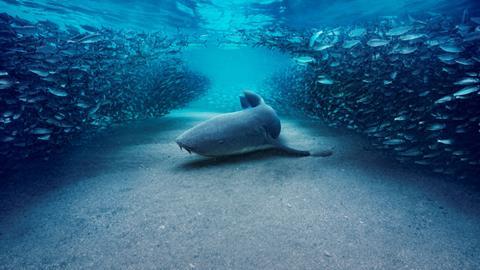
’Almost 10 years after Blue Planet II, this is a chance to engage a new generation
Distributor BBC Studios
Producer BBC Studios Natural History Unit
Length 6 x 60 minutes
Broadcasters BBC, BBC America (US), ZDF (Germany) and France Televisions (France)
It is a quarter of a century since viewers first immersed themselves in the magic of the world’s oceans in the landmark BBC series Blue Planet, and a decade since its sequel.
Now, Blue Planet III is hitting screens around the world following a four-year production cycle that has married cutting-edge camera technology with the latest developments in marine science to explore the aquatic realm that makes up 70% of our planet.
The six-parter promises newly discovered species, capturing behaviours and ecosystems that until recently were impossible to film. Executive producer Elizabeth White tells Broadcast International that it is also a series “rich in character, warmth and emotion”.
“Blue Planet III invites viewers to fall in love with the underwater world through remarkable animals which will surprise and delight and reveal themselves as more relatable to us than you may imagine,” she says.
The world-renowned BBC Studios Natural History Unit has taken cameras into the furthest corners of the planet’s underwater habitats for the show, with a focus on five key areas across the first five episodes: tropical seas, seasonal seas, polar seas, high seas and deep seas.
“Blue Planet III is a chance to engage a new generation, at a time when protecting our oceans – for the good of the whole planet – is more vital than ever”
Elizabeth White
The sixth episode explores the future of our oceans and what we need to do to protect them.
The team has attempted to provide a “comprehensive” exploration of habitats, all filmed with cutting-edge camera technology that is designed to deliver “a truly immersive feel”, White adds.
Blue Planet II famously presented many of the threats facing the world’s oceans, particularly the impact of single-use plastic, and while its sequel will expose new and emerging pressures on the marine world, it will also highlight powerful positive stories of recovery.
“Almost 10 years after Blue Planet II, this is a chance to engage a new generation, at a time when protecting our oceans – for the good of the whole planet – is more vital than ever,” says White.
She adds that the series “is also rich in stories of hope – examples where human help, or protection, is allowing magical underwater habitats to thrive again”.
The cinematic approach and deft narration synonymous with Blue Planet will be familiar to audiences who fell in love with Blue Planet I and II. The BBC, BBC America and co-producers ZDF and France Télévisions will hope that the third iteration of the franchise will prove equally successful.
“We expect global audiences will embrace the wonder and immersive storytelling of Blue Planet III, and for international demand from buyers to match that of its predecessors,” says Zai Bennett, chief executive and chief creative officer at BBC Studios Global Content.
“By exposing emerging pressures on the marine world while highlighting stories of resilience, hope and recovery, Blue Planet III offers a timely and decisive exploration of the future of our seas – making it both visually groundbreaking and urgently relevant,” Bennett adds.
London TV Screenings 2026 Hot Picks

Featuring thrillers, relationship dramas, a Canadian detective series, a blue chip nature show and a culinary-dating format
- 1
 Currently
reading
Currently
reading
Hot Picks: Blue Planet III
- 3
- 4
- 5
- 6
- 7
- 8
- 9








No comments yet