
Risk averse commissioning remains rife but Cologne’s Seriencamp underlined efforts to fight back
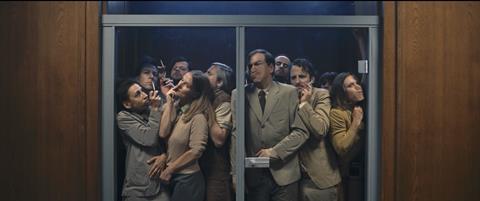
After years of cuts, consolidation and show cancellations, attendees at Cologne’s Seriencamp were starting to show signs of long-term collective trauma.
Threats from AI and vertical drama added to the sense that anyone making high-quality drama today has got used to bracing themselves for the worst. However, perhaps the fog of these prolonged and multifarious challenges is distorting the reality. Perhaps, things are not quite as bad as they seem?
Netflix, once considered the home of ground-breaking TV in Germany, now appears to be creating cheaper and more conservative programming in volume. This is most likely the result of a strategic decision to focus on reducing churn rather than creating attention-grabbing shows that attract new subscribers (now that it too has become an incumbent player).
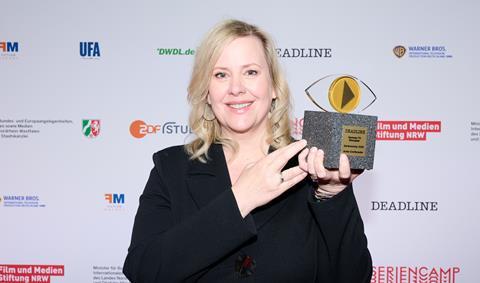
HBO Max’s shift into Germany may go some way to rebalancing this. Anke Greifender, vice president of local original productions, picked up the Disruptor Award at Seriencamp and is working with the talent behind some of Germany’s most groundbreaking hits of recent years.
A prequel to TNT’s cult hit 4 Blocks will drop this autumn, whilst an adaptation of the Tales of Struwwelpeter will be EP’d by Jantje Friese and Baran bo Odar, creators of Dark, one of Netflix’s first breakout non English-language originals. “We’re seeking the next Lena Dunham or Richard Gadd, but from Germany,” says Greifender.
Whilst drama series on Germany’s traditional public and private channels still perform well, Sebastian Lückel, head of acquisition & co-productions at local operator ARD Degeto conceded that “budgets are not necessarily getting bigger”. This is backed up by data from Ampere Analysis that shows the combined annual spend across both scripted and unscripted original content by local German players has plateaued at around $4.6bn-$4.7bn over the past three years.
Lückel’s panel that explored the re-boot of Wallander - a project that ARD is making with Sweden’s TV4, alongside Banijay-owned Jarowskij/Yellow Bird - was a nod to how both channels value premium scripted. Starring Gustaf Skarsgård (Vikings), it is a return to the slow burn, character-driven model of TV that was born by the Krister Henrikkson-starring original from the early 2000’s, which played such a key role in popularising non-English language TV around the world.
There are also signs that while risk aversity remains a powerful force in Germany - as it does in much of the world - some are pushing back.
One of those is ZDF, whose ZDF Quantum is a label within the broadcaster’s core drama slate with a specific remit to deliver creative risks.
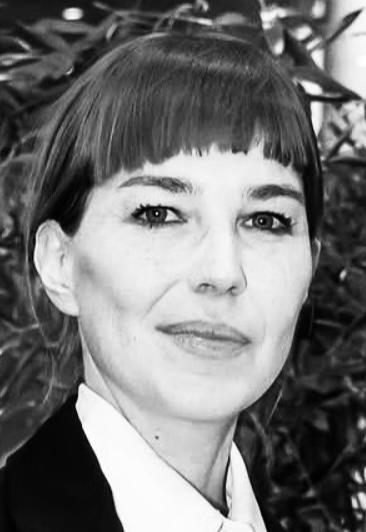
Quantum showcased two groundbreaking shows in Cologne: Das Manko (aka The Flaws) is a surreal workplace comedy that relies on strikingly well choreographed visual humour (think Buster Keaton meets Mr Bean); while Sheep (from Munich and Vienna-based production company Horse & Fruits) is a comedy about a group of sheep who have the ability to speak.
“If it’s a success, that’s nice, but if it’s not, its not,” says Jakob Zimmermann, commissioning editor at ZDF Quantum. Both shows are gaining international recognition precisely because of their experimental nature and high-quality production values. Sheep picked up an award in the best short form category at Seriencamp and has also won at Canneseries. The Flaws, which was made with support from regional funding body Medienboard Berlin-Brandenburg (MBB) and Creative Europe Media, picked up the best international series award at Seriencamp following a win at Series Mania earlier in the year for best director (Arne Feldhusen).
“While Quantum is not where the largest budgets sit, it is one of the very few culturally important spaces in German TV right now where ground-breaking, unconventional work can still find a first home,” says Flora Rumpler, creative producer and producer at The Flaws’ Razor Film Produktion. “And from there, it can build international reputation through festivals.”
That is the hope, at least, but it also reveals a broader point: cutting through frequently comes more easily with content that challenges and blows away assumptions and expectations. Despite the multiple challenges Germany faces, schemes such as Quantum ensure it remains relatively well-placed to create groundbreaking drama in risk-averse times.


No comments yet