

Latest state-backed venture to inject £85m into local production and distribution sector, writes Nick Edwards at Conecta Magaluf-Mallorca
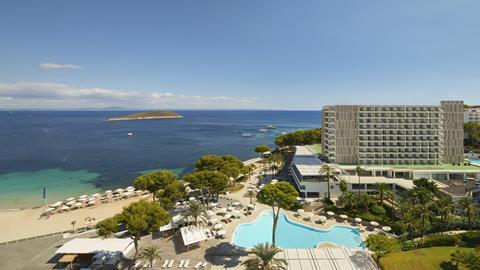
Like the sun and blue seas of Mallorca where the Conecta market took place this year, the Spanish content industry can sometimes seem like a haven in a global sector whose conditions are far from idyllic.
Underlining recent growth, Plum research’s director Jonathan Broughton highlighted that Spanish content consumption by international audiences has surged more than 70% over the past eight years.
Part of the reason for this is that Spain’s model of public-private investment initiatives have proven rather successful. During Conecta, the government announced a further €98m (£85m) injection to launch Aurora Media Inversiones, a newly created public-private entity that will be led by production giant Secuoya Content Group, with financiers such as Société Générale also involved.
The move is part of the government’s Sociedad Española para la Transformación Tecnológica (SETT) strategy, roughly translated as Spain’s Audiovisual Hub of Europe Plan. Aurora Media will invest in businesses specialising in the creation and production of content, as well as those involved in post and distribution.
The projected ’economic impact’ will stand at more than €2bn, according to government figures, alongside the creation of 3,600 jobs within six years. It is such incentives that lead Netflix to committing to spend €1.2bn here between 2025 and 2028.
Regional competition & challenges
Whilst formats, AI and microdramas all came under the microscope at Conecta, many at the intimate event were hoping to produce more traditional dramas - with international attendees eyeing substantial tax incentives, high quality crews, and a broad array of locations.
It was this combination that drew Iceland’s Glassriver to Spain, with the production firm presenting its series Hot Stuff to delegates. A co-production with Romania’s Idea Film for Iceland’s SYN, the show follows young Icelanders who get burnt in more ways than one when they seek sun, sea and sex in the late 1970s.
Producer and chief exec, Andri Omarsson, also underlined the regional competitiveness across Spain to attract productions, explaining how the shoot was moved to Tenerife rather than Magaluf (where the show is set) to save €500,000. That saving ensured the show’s financing got over the line and again highlighted the entrepreneurial mindset required to make co-productions work in today’s challenging climate.
However, Spain’s neighbours continue to find it challenging to leverage their geographical proximity to the country to co-produce.
In Portugal’s case, this is not a new phenomena because although the two countries share a border, their history and culture are different.
“Traditionally, co-productions between our two countries work when they involve stories that take place around the borders (because there the cultural and social differences are more blurred), but we want to come up with new ideas rather than simply repeat that model,” explained Margarida Pereira, head of acquisitions and sales at Portugal’s TVI.
Two heavyweight European commissioners also pointed out that though they would be keen to collaborate with Spain, the feeling is rarely mutual. Few co-productions involve Spain, unlike the frequent collaborations between other European and Nordic nations.
Spain, for example, is not part of the New8 commissioning group (made up of ZDF (Germany), NPO (The Netherlands), VRT (Belgium), SVT (Sweden), DR (Denmark), YLE (Finland), RÚV (Iceland), NRK (Norway)).
Part of the reason is that co-productions can easily take four years to get a show on screen and many feel that the success of private and government initiatives has driven large Spanish producers and outlets to become wholly preoccupied with global streamers, which have found success with Spanish programming and become dominant forces.
For some local producers, the concentration of power amongst the big streamers - those same streamers that were hugely influential in taking Spanish content around the world - is becoming a concern.
“Across Spain and its diverse regions, we have enjoyed a golden age of audiovisual production, particularly within television and cinematic fiction,” says Joan Carles Martorell, an independent executive producer and former commissioning editor at Balearic television station IB3TV.
“However, the industry is now entering a more conservative and less diverse phase, leaving a profound sense of uncertainty about what lies ahead,” he added. Spain’s TV industry might still be sheltered from the storms that have hit many parts of the world’s TV and streaming sector, but the local forecast is less clear for the coming years.





No comments yet