
Unpacking the behind-the-scenes developments that led to a new factual-focused event in Strasbourg, as curtain falls on La Rochelle
Few expected French cultural body the Centre National du Cinéma et de l’Image Animée - better known as the CNC - to choose the opening day of Sunny Side of the Doc to reveal a brand new documentary event in Strasbourg slated for 2027.
The move was couched as Sunny Side moving the best part of 600 miles due west from La Rochelle - its home of two decades - to the Franco-German border town. In reality, the news effectively brings the curtain down on the 37-year-old Sunny Side of the Doc, at least for now.
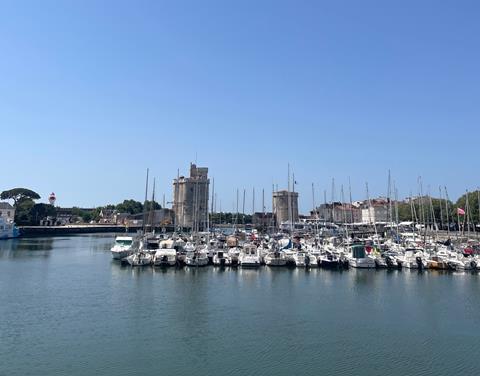
The new event will look to “reinvent” the conference and market that Sunny Side had developed in order “to fully meet the needs of a rapidly changing sector”, the CNC said.
For many French and international attendees, Strasbourg has better travel links and provides closer proximity to the German market. It is also home to pan-national broadcaster Arte and, perhaps most notably, the Council of Europe and the European Parliament.
The CNC said the shift would provide “unique visibility” of the challenges facing documentarians “to decision-makers and international partners,” words that echoed during a week in which the medium’s role in preserving democracy was regularly discussed.
The shift also points to European bodies’ ongoing attempts to better support independent European media against the growing dominance of US-based operators, something Council of Europe chief Alain Berset underlined to Broadcast International at Series Mania in March.
But it also looks like the move will bring the curtain down on Doc Services, the organisation that has delivered the event, and end a chapter that began when the late duo of Olivier Masson and Yves Jeanneau first launched the event in Marseille in 1989 before moving to La Rochelle 15 or so years later.
Factual funding crisis
While the CNC’s news on Monday came as a surprise to most, it was against the context of a Sunny Side that very nearly didn’t happen at all. European body Creative Europe had pulled funding for 2025 and 2026, and this year’s event’s cancellation late last year was only reversed after industry partners including the CNC, distributors and producers propped up the event to deliver a slimmer, three-day version.
But the scale of the task facing Aurélie Réman, managing director of Doc Services, was daunting: she told Broadcast International earlier this year that the 2026 edition had a total budget of €1.5m (£1.3m), with 32% of that coming from public funding. Commercial revenues deliver around 58% of the remainder, while industry partnerships - typically broadcasters - now account for just 10% of the total budget, down from around 33% in years gone by.
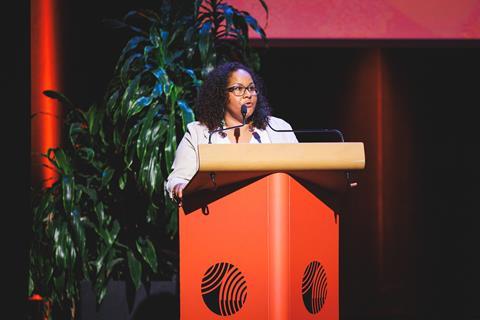
After losing the funding of Creative Europe, Réman had said that support for future iterations of Sunny Side was being sought from the CNC but clearly the proposals received from the Strasbourg bid – supported by the City of Strasbourg, the Strasbourg Eurometropolis and the Grand Est Region – were preferred to remaining in La Rochelle. As organisers of other factual-skewing events such as RealScreen can surely attest, running unscripted conferences and markets in the current climate is far from straightforward.
Speaking to Broadcast International earlier this week, Réman says she was proud of the event that her team had delivered and said it underlines “the relationship between the [documentary] community”, pointing to the “mobilisation” that occurred when the event was initially cancelled. “It has been a very difficult year for our industry,” she adds.
Much remains unclear about what to expect in Strasbourg but it is understood that Doc Services will not be involved and its supplementary events such as the Lat Am Content Meeting will come to a close.
The new event is expected to be held around the same time of year as Sunny Side has been, while it remains to be seen if Réman and her team will be attached to the Strasbourg event’s new organising committee. She points to her team’s “talent and expertise” as being good reasons to hire them.
What is clearer, she continues, is that Sunny Side’s cancellation and subsequent return has allowed the community to “be more conscious of how important it will be to move together in the right direction, ensuring we save the values behind the documentary genre. But it also underlines the importance of keeping an essential meeting place for documentaries. This is a marketplace, but it’s much more than that.”
While Doc Services, which holds the Sunny Side brand and databases (and is owned by Roman Jeanneau), will not be formally involved in the Strasbourg event, Réman said her aim was to provide “continuity” with the forthcoming event, whose name and format is under discussion.
“There are relevant questions to ask,” Réman says, pointing to Sunny Side’s Copro Hub as one way of evolving what the event could offer rather than traditional booth-style stands. “We’re also hearing from a lot of independent producers that they need to look very carefully at the budget in terms of travelling, choosing which events to go to and making sure it’s going to be relevant for the money they are spending,” she adds.
Réman adds that Strasbourg represents a “very strong political choice” and was supported by the French producer groups such as Union Syndicale de la Production Audiovisuelle (USPA), a highly influential force. They were vital in ensuring Sunny Side took place this year, helping to secure the support of the CNC to fill budget gaps as they did in 2025, and the focus is now on “ensuring the conditions are found to make this gathering last much longer.”
Streamer involvement
The overarching challenge facing Sunny Side and other events like it has been the turbulent unscripted sector in which they operate, and that will not change with a shift in location.
“We are very worried about the situation with the public broadcasters who remain central to the financing of documentary,” Réman admits. “What is clear is that the revenue streams from digital are not going to be replacing what came from the linear environment.”
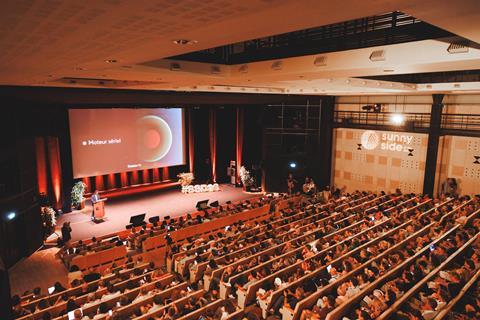
There has was also little buy-in from global streamers this year, with no execs from the major US operators taking to the stage at Sunny Side. “They should be here, this is certainly relevant to them,” she says, adding that some are more “discreet” in their attendance. “But yes, I really do think they need to be part of the conversation.”
While Sunny Side of the Doc may well have closed its doors for the final time this week, Réman is upbeat about the Strasbourg evolution and remains positive about the broader opportunities for docs.
“There’s a strong tradition of Sunny Side always being part of the good fight, that’s important,” she says. “And there’s no contradiction when you talk about the economic value and the democratic value of the documentary. It’s more than a genre, it’s a fight to ensure that our societies are well informed on all screens and from what I’ve heard here from the community is that they know they can adapt.
“It’s been happening for years and they are open to that change. They want to find a path to work together and to find audiences. They’re just not ready to sell their soul.”





No comments yet