
Aurélie Réman on battling back from cancellation, political momentum and what to expect at June’s event
It has been quite the year for those involved with Sunnyside of the Doc.
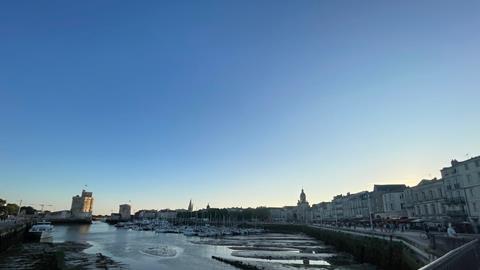
Barely six months ago, the internationally renowned factual festival and conference, that has run for more than three decades in the picturesque French town of La Rochelle, revealed its 2026 edition had been cancelled.
Sunnyside’s outlook was almost as bleak as the short, dark days that accompanied that December news, which caught many industry insiders by surprise.
But in most quarters, that surprise did not extend into a sense of great shock.
Docs, factual and the broader unscripted sector has been squeezed relentlessly over recent years, with producers around the world facing unprecedented budget cuts and commissioning freezes.
News in February that Canada’s Brunico was calling it quits on RealScreen - once North America’s flagship unscripted event - following its 2026 edition, further underlines the genre’s travails.
By then, however, a reversal was already at play in La Rochelle: Sunnyside organisers had been inundated with offers of support, and momentum to deliver a June event had built to a critical mass.
Confirmation of Sunnyside’s return in a slimmer, three-day format was revealed in late January after funding was secured from France’s National Centre du Cinema (CNC) and training group Documentary Campus, in addition to broader industry clamour.
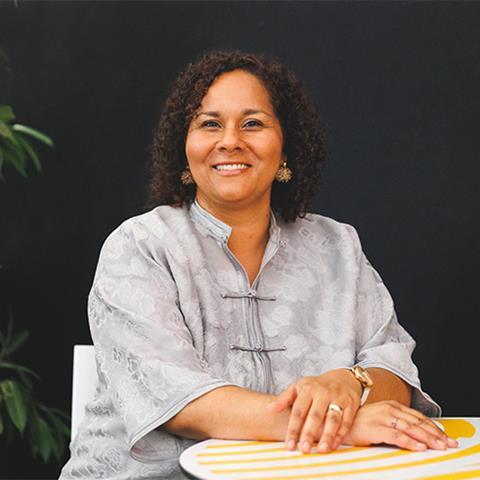
“Ever since the cancellation, there has been really strong mobilisation from mostly independent producers and distributors across Europe and beyond,” Aurélie Réman, managing director of Sunnyside organising group Doc Services, tells Broadcast International.
“It raised awareness of how useful and important it was to maintain an international marketplace for documentaries in Europe.”
For Réman, this had never been in doubt: even while discussing Sunnyside’s cancellation in December, the exec described docs as “a cultural, civic and democratic anchor”.
It was a not dissimilar message from that delivered a few months later at Series Mania by Alain Berset, secretary general of the Council of Europe.
Berset had talked about an increasing coalescing among European producers and commissioners to tell relevant stories, telling Broadcast International about the importance of “cultural diversity” and partnerships across the continent in a world being pushed ”deeper into rupture” by events such as the US-Iran war.
Finding funding & recalibrating
Yet the cause of Sunnyside’s initial cancellation was down to the loss of its main European grant, as well as a decline in what was termed as “key financial support” from partners. It is clear that the challenges facing Sunnyside are inextricably linked to broader industry travails.
This year’s three-day event, for example, must be delivered within a total budget of €1.5m (£1.3m), with 32% of that coming from public funding. Commercial revenues deliver around 58% of the remainder, while industry partnerships - typically broadcasters - now account for just 10% of the total budget, down from around 33% in years gone by.
Réman points to the “constraints” facing traditional broadcast partners, with streamers yet to step into the void. It is clear that the funding issues have put a huge strain on her and her team, but Réman is looking to events of the past six months as a reason to recalibrate Sunnyside.
“It’s a key moment to rethink the economic model of the event,” she says. “We know that we have a collective of people being more vocal about how useful and how important it is to maintain Sunnyside.
“It has also reinforced the positioning of Sunnyside as a standalone market for nonfiction, factual content and documentary, and I guess it also became a more political choice to support documentary storytelling in the world we’re living in.”
There is also a sense that the travails of the recent months have “renewed” the event’s partnerships with industry players, Réman says, and that is being translated into the offering for June’s event.
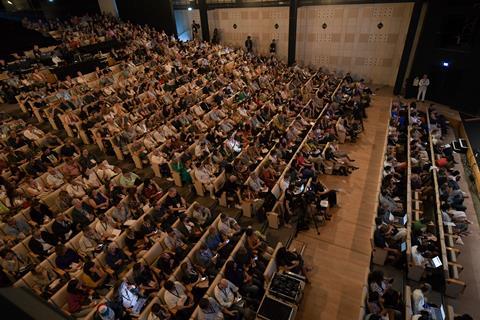
There will be increased focus on supporting indie producers with panels exploring financing opportunities and diving into the editorial strategies “of those who still have the power to commission original content,” Réman continues, while meet-and-match sessions will “ensure efficiency” for attendees.
The partnership with Documentary Campus is allowing the team to “do in five months what we usually do in 10”, Réman adds, with concentration on broadcaster’s “digital shifts” and what streamers want.
Reman adds: “We’re asking what does it all mean in terms of genre, thematics, in terms of volumes, in terms of budgets, how much room is left for international co-productions?
“We want to be concrete in what our sessions are offering - that means exploring new and alternative funding models, and gap financing. We also want to bring new players into the market, so maybe NGOs, impact funding, equity funds, that’s what we’re working on right now.
“But we’ve also briefed the broadcasters on the importance and urgency of avoiding promotional exercises and being more into details.”
The main marketplace will also return, while focuses on first nation and indigenous storytelling will be delivered alongside dives into archive docs and AI. Keynotes range from recent Oscar winner Helle Faber (Mr. Nobody Against Putin) to Ben Zand, chief exec at Zandland.
Momentum is building, then, but there is a longer term prize in Réman’s sights. Sunnyside’s CNC funding runs for two years, meaning organisers are keen to prove the event’s worth, while an application was made in January to secure support from Creative Europe MEDIA (which will be replaced by AgoraEU from 2028), with a decision due this summer.
Réman is clear that Sunnyside’s outlook is intrinsically tied to the EU’s funding strategy, and she supports regional film and TV bodies calling on the EU to ringfence at least €2.83bn (£2.46bn) to support the film and audiovisual sector via AgoraEU.
“Someone asked me recently, are you also impacted as event organisers? Yes, of course we are, and what happened to us proves that without a market, in person and as part of a community in dialogue with each other, this entire industry can’t run.”
She urges factual and documentary producers, distributors, financiers, commissioners and buyers to come together again in La Rochelle in June to ensure that “the chain” of relationships doesn’t break down. “We just cannot let that happen,” she says.




No comments yet