


Analysts unpack what the US studio’s deal to settle US states’ antitrust action means for the wider industry
Almost as soon as news of Paramount’s settlement with the 12 US states that had filed an antitrust case against its $111bn acquisition of Warner Bros Discovery emerged, eyes turned to the finer detail.
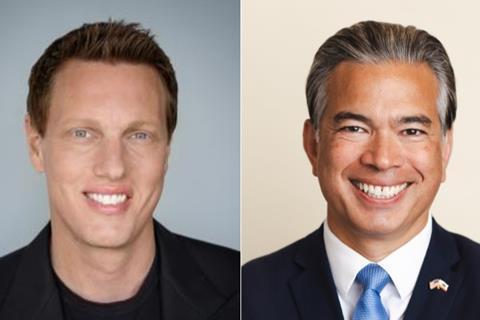
California’s attorney general, Rob Bonta, had provided fervent opposition to the deal from the outset, suggesting it would hit workers and impact his home state. So what did Paramount have to promise to get the deal through?
The answer for those on the TV and streaming side of the equation is remarkably little.
A balanced settlement?
Analysts were largely in agreement that Paramount’s team had secured a favourable deal, with the settlement not requiring any structural changes from the David Ellison-led entity.
Instead, it was the so-called “behavioural remedies” that took centre stage in the settlement and they were largely focused on the film side of the business, such as a focus on feature film output.
A key win for Bonta, of course, will be the fact that Paramount will remain in LA.
Ellison’s threat that the studio could relocate to other US states - Texas and Louisiana were both mooted, with both courting the company - provided plenty of pause for thought, it has been suggested.
Yet there was little else for TV and streaming to shout about at first look.
There are no protections around the merged company combining streamers HBO Max, Paramount+ and Discovery+, nor around its TV divisions such as Warner Bros. Television, Paramount TV Studios and CBS Studios.
The company must keep the two LA lots operational for the foreseeable future, while an independent editorial board will be created in a bid to support CNN and CBS, the latter the BBC’s US news partner.
Paramount and WBD cable carriage negotiations must be carried out separately too - although the agreed remedy if they are not again does not seem to bite too hard, given that the cable networks that would have to be sold - those across the BET stable, Comedy Central and VH1 - were already put on the block by Paramount several years ago.
Lightshed Partners’ Rich Greenfield described the settlement as a “huge win” and a “slam dunk” for Paramount, adding that “none of the behavioral remedies will have any meaningful impact.”
It was a similar if slightly less bombastic assessment from analysts on the European side of the industry, with Guy Bisson, executive director at Ampere Analysis, telling Broadcast International that the deal “has gone as well as could possibly be hoped for from Paramount’s perspective.”
He said the “punitive measures” in the event of breach - such as being forced to sell off those cablenets - “are not particularly onerous and clearly aimed simply at keeping the flow of investment going back into the industry.”
Enders Analysis’ head of TV, Tom Harrington, added that the concessions “appear quite palatable” for Paramount and “are mid, rather than long-term, meaning they may well have little impact on what was going to happen anyway.”
Paolo Pescatore, founder of PP Foresight, said the absence of “upfront asset sales is a significant victory for Ellison and, given the scale of the overlap, surprisingly accommodating.”
The settlement, he added, “restricts how the enlarged business operates while preserving the core assets and streaming ambitions that make the acquisition attractive.”
More broadly, Bisson described the concessions as “balanced and sensible”, pointing to the protections around editorial independence for CNN.
“Keeping both the studio lots and the base in California is really important as are the concessions around movie quotas and particularly independent movies,” he continued, highlighting that that part of the deal is “a real positive for Hollywood and the wider industry at what is a difficult time for the production sector….”
But Bisson also pointed to the “complete lack of mention of streaming in the concessions”, aside from the 90 day holdback on theatrical releases.
What happens next?
Ellison has already said he expects the deal to close in the next two weeks - no doubt aiming for just before the $7m-a-day ticking fee agreed with WBD shareholders kicks in on 1 October - and from then on changes at least on some levels could come relatively quickly.
Most industry insiders see a combination of HBO Max and Paramount+ as likely, but it won’t be apparent to subscribers any time soon.
Harrington says the focus on streamers will be on a “thoughtful transition” to reduce subscriber loss while Bisson adds that the lack of protections around the combination of HBO Max and Paramount+ is one area “where complete flexibility will have the most impact - and is actually key to the power of the merger.”
He added: “Paramount+ and the content of Discovery+ plus HBO Max (whether through combination in some markets or a bundle) makes for a powerful combination in a streaming market where competition and the importance of advertising need a strong mix of scripted and unscripted content, and the premium channel crown long held by HBO is increasingly being taken by Apple,” as evidenced at the Emmy’s earlier this month.

Instead, top of mind will likely be the $6bn synergy savings that were promised to investors when the deal was first struck more than six months ago.
“The immediate concentration will be on the quick rationalisation of back office roles where there is a lot of duplication, and targeting of overlap of tech costs, especially in streaming,” Harrington said.
Pescatore also expects staff - and suppliers - to feel the effects “within months of completion”, well before viewers see a fully combined streaming service.
“The commercial success of this deal depends heavily on delivering savings, with obvious duplication in management, marketing, technology and distribution across the US and international operations,” he suggests.
Harrington adds that the “immediate concentration” will be on “the quick rationalisation of back office roles where there is a lot of duplication, and targeting of overlap of tech costs, especially in streaming.” On the exec front, speculation began long before the settlement was agreed, underlined by the potential battle between Paramount supremo Cindy Holland and HBO veteran Casey Bloys.
For viewers, meanwhile, combining HBO Max and Paramount+ should create a more compelling service, Pescatore argues, but integrating platforms and unpicking country-specific rights and distribution agreements will take longer.
“In Europe and the UK, overlapping local teams and subscriber-acquisition spending will face scrutiny, while existing partnerships with operators such as Sky complicate any immediate overhaul.”
He points to TNT Sports as being a possible “jewel in the crown, with a strong, credible presence, given Paramount’s spending spree in sports.”
Viewers, meanwhile, could benefit from more content in one place, “but there is no guarantee that fewer subscriptions will mean a smaller bill.”
European broadcasters and telcos, meanwhile, will face a stronger negotiating partner, Pescatore says, while independent producers risk having fewer genuinely separate buyers for their programmes.
He underlines that US cable protections “should not be mistaken for equivalent safeguards” for European distributors or subscribers.
“In Europe, pressure to pursue further consolidation and closer distribution partnerships intensifies. At the same time, local commissioning budgets will have to compete for investment within an even larger US group focused on extracting savings.”






No comments yet