

Target Darts CEO James Tattersall speaks to Broadcast Sport about how the company is aiming to grow the sport of darts
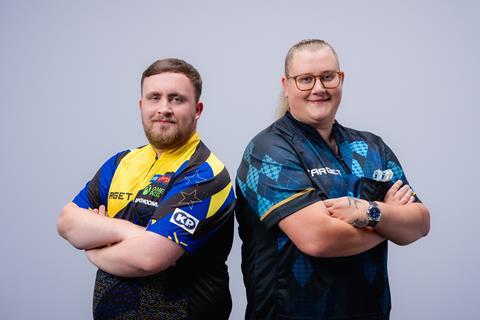
Target Darts CEO James Tattersall certainly doesn’t lack for ambition. At an event run by the company earlier this month, he revealed the ambition to have 100 million people play darts by 2030, tripling the number they believe are playing today.
Target Darts, which makes darts, dartboards and other darts accessories as well as managing many of the sport’s stars, including Luke Littler, also announced a partnership with sport league provider Powerleague as part of this drive, bringing darts to football players across the UK with its boards at Powerleague facilities.

This is part of darts’ meteoric rise in the UK recently, which has seen it break viewership records and achieve a new rights deal with Sky Sports – thanks in part to the arrival of Littler. However, while the sport continues to grow in the UK, it is international growth that Tattersall and others are looking for now, and it has already begun.
He told Broadcast Sport, “The international audience has grown immensely. Places like Holland, Germany with Gabriel Clemens and other darts players. When Gabriel Clemens got to the semi-final a few years ago, it just lit up the German market, which was fantastic. Even Belgium, Dimitri Van den Bergh comes along and it goes on TV in Belgium, the next thing you know, Belgium’s the fastest growing market in darts.”
Some of the challenge can be getting those international fans in the same room, “We’ve got those great darts communities in the UK, which traditionally have been centred around the pub. Today, a lot of those are online and around other venues like Power League. How do we create those in the US? How do we connect an aspiring and talented player from Idaho, who’s got to travel 300 miles in America to find someone that’s nearly as good as them, to a darts community in St. Helen’s?”
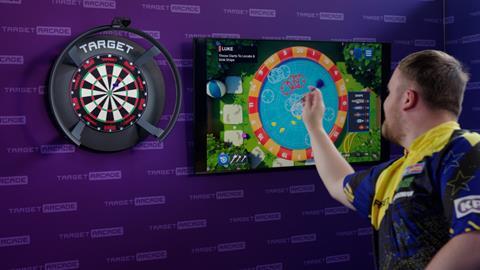
Target will hope its new platform, Target Live, will help this. It allows darts players to play anyone else in the world who has Target’s patented Omni auto-scoring technology, live, at traditional darts or a selection of arcade games, handling all scoring and connecting the players through Target’s online platform. It also aims to bring more ambition to the sporting aspect of darts, with it no longer being a pastime where people don’t mind how well they play.
For Tattersall, this change is already happening, “Darts has moved from a game to a sport. That’s all tied up in one word for me, which is aspiration. It’s now acceptable or normal for players to be driven to improve or to aspire to be a good darts player. A bit like in golf, where you’re thinking, ‘I’d love to hit that golf ball 10 yards further,’ and you train for it. You’re starting to see that come through in darts. That’s a big change.”
Content is a big part of this change to the sport, and Tattersall is keen to work with content creators and other parts of the media to give darts the surrounding conversation that sports like football have.
He said, “It’s not just hearing from us. It’s not just hearing from a professional player. It’s hearing from other stakeholders in the sport. Loads of other sports have got that. They’ve got a commentariat discussing what’s going on. The press obviously has their part, but creators bring a new perspective to darts.”
Ollie Howard, also known as TBD Darts and part of darts creator group Bullhitters, is one of these creators coming into the sport, and speaking at the same event, agreed with Tattersall, “Social media is becoming a huge part of the game. People like to feel part of something online, and you can bring people in from different backgrounds. Having that community space where people can be part of topics, have debates, discuss different parts of the sport, do challenges, competitions, is a really important piece to have.”
It could also be helped by more analysis, like that other sports receive, Tattersall said, “Darts is crying out for data and data science. The only data you’ve got at the moment is what your average is and what your checkout percentage is. How can that be? So it’s building the tools to be able to take darts to the next level.”
That isn’t all, as mentioned, Littler has been a big part of darts’ rise, but it isn’t new for the sport to rely on big personalities to drive interest. As Howard said, “You look back to the ’80s and ’90s when you had the likes of Eric Bristow, Jocky Wilson, Bobby George, to name a few. You come into this millennium where you’ve got Phil Taylor, Raymond van Barneveld, Adrian Lewis, Michael van Gerwen, and the list goes on. There are a lot of influential people, and they have brought the game up with them.”
Tattersall sees also thinks darts can piggyback off the personalities in other sports, helping to reach new audiences, “The great thing about darts is that is complements a lot of other sports. That’s why Luke [Littler] went to the England football camp and was playing darts with Jude Bellingham. He also went around Silverstone with Lando Norris. It’s taking darts and mixing it with other sports. It’s got that prestige now.”
Bringing in new audiences isn’t easy, as any sport would tell you, but Tattersall thinks darts’ simplicity gives it an advantage: “[Events] play a huge part because darts has always been bringing people together to have a really great time. Also, as a sport to spectate, it’s two people up there duelling it out with the momentum shifts and the psychology. The audience can really see that. You can really see an important moment in darts, which you might miss in an 11-a-side match. Once people see it and understand it, it resonates.”
For Howard, the content around this live sport, still needs to be adapted, “You have to treat it as if they’ve never seen darts before. It’s got to be easy to watch, easy to follow, high energy, quick pace, and, above all else, fun.”
The next frontier for Target is the US, and it could have a headstart, Tattersall thinks. “In the US they already have dartboards up. It’s set dressing for Hollywood. It’s in bars. All the ingredients are there. It just needs something to bring it together.”
Part of the push will just be getting the sport in front of people, and letting them see what a day at the darts can be, “I’ve played darts in different states around the US on research, and they all play different versions of it. They would have no idea that it’s even on TV and that people watch it. They wouldn’t believe it.”



No comments yet