

Brave Bison’s Martin Ruffell looks at where the electric racing series is different to its inspiration
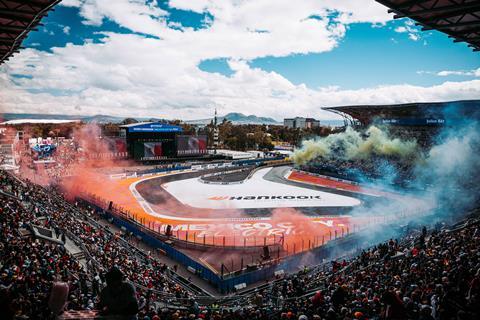
Formula E began with a deal scribbled on a napkin in a Paris restaurant.
There was no archive of famous races or family tradition of watching it on a Sunday afternoon. The first race did not take place until 2014. The battery technology was so limited that drivers had to jump out of one car halfway through and climb into another.
Even by motorsport standards, it was a slightly mad way to start.
Twelve years later, Formula E is preparing to launch a car with 71% more power than the previous generation. Its current GEN3 Evo can already accelerate 30% faster than a Formula 1 car. Its audience has an unusual 50/50 gender split.
During a recent recording of The Commentary Box podcast, Formula E CMO Ellie Norman described the championship as being in its teenage years. That sounds like a disadvantage next to Formula 1 and its history stretching back to 1950. I’m beginning to think it might be the most useful thing about it.
A sport without inherited habits
Established sports carry generations of emotional attachment. They also carry habits that have become difficult to question.
Broadcast schedules are fixed. Race formats feel sacred. Even worthwhile changes can become a fight with people who see tradition as part of the product. Formula E has less furniture to rearrange.
Sustainability was written into its foundations, so it does not have to explain why an environmental commitment has suddenly appeared in a strategy deck. Its races were designed to last around 45 minutes, which fits neatly with modern viewing habits. From the 2026/27 season, double-header weekends will include a 30-minute E-Prix Unleashed sprint designed to let the GEN4 cars loose.
There will be purists who dislike it. Formula E is young enough that its purists have not had decades to organise.
That freedom also affects how the championship approaches growth. It can listen to conversations on Reddit and place Formula E inside games its audience already plays. It does not assume every fan needs to arrive through a dedicated Formula E product.
Plenty of brands still build an app or community platform and then wonder why nobody changes their behaviour to visit it. People already have somewhere to watch, talk and play.
Speed gets you in pole position
When Formula E’s first race took place, global electric car sales were still a fraction of today’s market. The championship had to explain the technology before it could persuade people to care about the racing.
By 2025, electric cars accounted for almost 55% of new car sales in China. At the Shanghai E-Prix, Norman saw grandstands that had contained empty seats two years earlier packed out despite the rain.
Formula E now has greater credibility as a glimpse of what is coming. Soon, the old joke about electric motorsport lacking speed will be difficult to make with a straight face.
A faster car helps Formula E look like a serious racing championship, but very few people are rearranging their Saturday because a lap time has dropped by two seconds. They come back when the racing gives them someone to root for, complain about or argue with afterwards.
Find the side door
Formula E’s audience tends to be younger, urban and comfortable trying unfamiliar technology. Many come through gaming. Others find the championship through creators whose content has little connection to traditional motorsport coverage.
The interesting part is how that audience changes where the product appears and how it explains itself.
Its Evo Sessions placed creators inside real championship cars after a proper training programme. The line-up has stretched from Khaby Lame to former Manchester City striker Sergio Agüero. MrBeast also had a go, although his second lap ended in the barrier. According to Norman, the resulting livestream attracted 5.8 million viewers, while 94% of the accounts reached were new to Formula E. The creators helped people understand the physical strain and technical complexity of racing through an experience their communities could follow.
That creator territory has already been well covered. The broader lesson sits underneath it. Formula E is finding several side doors into the sport rather than polishing the main entrance and waiting for people to arrive.
There is still plenty to prove. A young audience can be curious without becoming loyal, and social views do not automatically turn into ticket sales.
Formula E at least has the freedom to keep adjusting. It can change the format, enter an existing community and let the audience tell it what is working. Its teenage years may occasionally be awkward, but that is preferable to becoming set in its ways too early.

Martin Ruffell is director of audience development at Brave Bison



No comments yet