

Joan Creative London’s Annabel Cave looks at why this year could prove telling for women’s sport
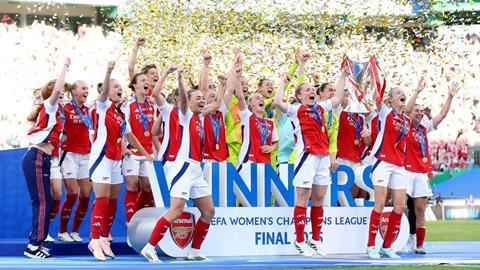
2025 was huge for women’s sport. The Women’s Euros gave us two of the year’s most-watched UK broadcast moments (with a peak audience of 16.2 million for the final). In rugby, the Women’s World Cup final attracted 5.8 million viewers – the most-watched rugby match of the year.
Women’s sport was one of the most talked-about spaces in marketing. Agencies wanted in. Brands wanted in.
But this year is going to look very different.
While the men’s FIFA World Cup returns this summer, there are no major international women’s football or rugby tournaments in the 2026 calendar. So, it wouldn’t be unexpected for brands to put their women’s sport strategies on hold until 2027.
However, that would be a mistake.
Women’s sport needs the year-round backing it deserves, and, in that, brands have a critical role to play.
Consistency matters
Before I worked in advertising, I was an athlete. I started sailing at eight years old, and by 19, I’d qualified for six World Championships, was crowned the 2017 New Zealand national champion in the 420 racing class, and was selected for the NZ Pathway to Podium programme designed to prepare youth athletes for the Olympics.
At that point, I had a choice to make: pursue sailing professionally, or step away to focus on education and a career.
The decision I made had nothing to do with lack of ambition. It was about the lack of visible opportunity. The space at the top of sailing felt very small for women back in 2017. Funding and sponsorship were limited and inconsistent. My role models were (and are) incredibly inspiring, but the path to follow felt too precarious.
I took a year out, intending to return to the sport. But the more space I took, the less opportunity I saw for myself. Eventually, I stepped away altogether.
My story isn’t unusual. It’s systemic. Across all sports, women fall out of the system at every level – from elite pathways to grassroots – not because the talent isn’t there, but because support is patchy and visibility limited. In fact, the latest Women in Sport report ‘Let Her Dream’ shows that only 23% of girls now aspire to reach the top of sport (down from 38% in 2024), compared with 53% of boys, highlighting a persistent and growing gap in perceived opportunity.
This is where brands can make a real difference. Year-round investment creates stability. It supports athletes and teams beyond the headline moments. And it expands the space, so more women can realistically imagine a future in sport – as professionals, participants or fans.
It’s not about charity. For brands, it’s about realising the full commercial value women’s sport can offer.
According to the Women’s Sport Trust, 86% of sponsors say their investments in women’s sport have met or exceeded ROI expectations. The audience is engaged, loyal and commercially valuable, and the brands that help grow the category now stand to benefit most as it continues to scale.
There’s also a credibility play here that brands shouldn’t underestimate. Fans of women’s sport notice who shows up consistently and who only appears when the spotlight is on.
When brands invest beyond the big moments, they stop looking like opportunists and become part of the ecosystem. Over time, that commitment builds real affinity, trust and long-term brand equity, all of which can massively boost the impact a brand has when the next major tournament rolls around.
The opportunity is bigger than sponsorships
So, what does meaningful involvement look like?
Long-term sponsorships with teams, competitions and athletes are undoubtedly crucial, but they’re out of reach for some. In that case, backing grassroots sport and local communities can be a powerful alternative.
Beyond sponsorships, brands can pursue product innovation that serves women athletes, like Ida Sports’ football boots designed for female bodies. They can represent athletic, muscular bodies in fashion and beauty campaigns, and use their platforms to share athlete stories.
There are also opportunities for brands to help shift the culture around women’s sport. Funding safer running routes. Improving access to facilities. Creating initiatives that visibly claim space for women in sporting environments. Our US office worked with the WNBA on a social initiative that saw public basketball courts across the country painted with an orange three-point line – a visual statement that women belong in those spaces too.
For marketers, you need to stay on, stay constant, understand the audience and show up. That doesn’t necessarily mean big campaigns, but a continuous drumbeat that drives engagement, talkability and relevancy.
Of course, attention on women’s sport will always spike around major competitions. But the athletes, teams and fans are there all year, every year. Brands shouldn’t underestimate the opportunity they represent.
This year may not be a big tournament year, but it could be a defining one. The brands that keep banging the drum won’t just benefit commercially; they’ll help shape the future of women’s sport and secure a lasting place within it.

Annabel Cave is senior account manager at Joan Creative London and a former competitive sailor



No comments yet