David Abraham is the latest industry leader to reveal what matters most to them about the corporation ahead of the charter review

The government’s BBC charter consultation is a key moment for the future of the corporation, with the results dictating how it is funded, what it stands for and how it operates. Over the coming weeks, Broadcast is running a series of thought pieces in which industry leaders who don’t work for the corporation explain why it is more crucial than ever.

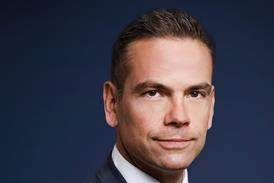
David Abraham, chief executive of Wonderhood Studios and former chief executive of Channel 4

I don’t work for the BBC but… 

David Abraham

David Abraham

…I would not want to live in a Britain without it. In an increasingly fractious and fragmented world, it is our best bet for preserving a shared version of the truth.

The current BBC Charter Review process is undoubtedly the most consequential in generations. Many will rightly be focussed on issues of funding, governance, and editorial direction. But I have got a nagging sense that we need to use this as an opportunity to also encourage the BBC to rediscover its historic role as a catalyst for world-class technical innovation. The UK urgently needs to formulate a new backbone for public service media ahead of a second digital switchover in 2035, when DTT will be replaced by IPTV and the impact of AI will be fully felt.

Britain has always had the brains to be world-leading not just in creativity but also in the science that supports media production and distribution. We are good at this stuff but in recent years our politicians have tended to believe that all the answers come from Silicon Valley and besides, we can’t compete with their R&D budgets. It’s as if the game is already over and technical breakthroughs are no longer possible. This is not the kind of thinking that got Britain through the Second World War. We need to shift our mindset and decide that we are now, in effect, on a war footing.

Britain needs a UK-originated media moonshot that resets the system for how UK-originated content is stored, labelled, discovered, distributed and measured. One fit for the age of sovereign clouds and AI. We have the brains here (look at the impact of DeepMind at Google), but we lack a sense of mission for how we can put our talents to work in service of the things we care about. It is a mission which politicians who worry about epistemic risks, media literacy and democratic engagement can also understand and get behind.

The BBC has always been a technical catalyst for Britain as well as an informative and creative one. From the invention of radio and live TV broadcasting through to colour, DTT, streaming and UHD, the BBC has helped to raise and set the bar for everyone and supports a plural ecology of quality players.

But the competition that the BBC now faces from the hyper-scalers is faced by all the PSB’s and the likelihood of the BBC surviving on its own is much reduced. We need solutions focussed on the whole broadcast system, not just on marginal gains between legacy players evolving incrementally to towards a second digital switchover. The success of Freeview, Freely and Everyone TV shows that the BBC can be a catalyst for effective collaboration at national scale – but we need to raise our ambition to a whole new level if we are to avoid ceding control of the entire distribution, measurement and monetisation ecology to Big Tech by 2035.

In the 1930s, the BBC was a radio broadcaster trying to figure out how to scale Logie Baird’s new invention into a live national television ecosystem. Sir Isaac Shoenberg was the engineer who led the Marconi-EMI team that created the 405-line-all-electronic television system which in effect was the world’s first live national TV network. He did so in 1936, just three years before the start of the Second World War. We should take inspiration for how he transformed a single breakthrough into a layered ecosystem of new technologies. We should remind ourselves that the BBC iPlayer launched while Netflix was still posting DVDs through people’s letterboxes. Acting in real unison, the UK PSB’s are still a formidable force. The window to act together is now - but will not remain open forever.

  • The government has launched a consultation asking the public for views on how the BBC should evolve, alongside a green paper setting out its proposals for reform around funding, independence, governance and culture. The consultation asks 32 questions about these issues as well as the best ways in which the corporation can continue to entertainment and educate in a rapidly changing media landscape. It will close on 10 March.