









ITV’s live broadcast of the classic musical won’t shy away from drawing political parallels with today’s global crises, discovers Emily Norval
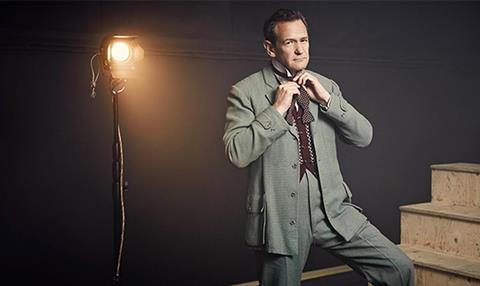
The Sound of Music Live
Production company ITV Studios
Commissioner Elaine Bedell; Victoria Fea
TX 7.30pm, 20 December, ITV
Executive producers Andre Ptaszynski; Lee Connolly; Fiona Clark
Director Coky Giedroyc
Musical supervisor Martin Koch
Live television director Richard Valentine
Studio 3 Mills
Few films are more entrenched in the collective British psyche at Christmas than The Sound of Music. Often heralded as the only film it’s impossible to argue over, even in the tensest of familial situations, it has become a staple part of the season despite having no festive references in itself.
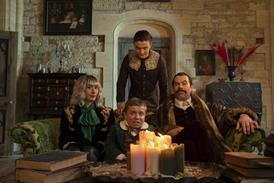
Playing on this popularity, ITV has commissioned a live production of the Sound of Music as an anchor part of its Christmas schedule, set to air on the last Sunday before Christmas. TKara Tointon (Mr Selfridge, Eastenders) and Julian Ovenden (Downton Abbey, Smash) lead a cast of 56 including the extras and, of course, the children.
Live productions are nothing new; in America, NBC aired its own live version just two years ago in 2013. However, unlike traditional methods of broadcasting essentially a live stage version, ITV’s production will be filmed like a period drama.
3 Mills Studio in Bromley by Bow is currently home to an impressive array of sets, from the Abbey to the Von Trapp Villa (to scale on the outside) and even the ubiquitous hills, which are indeed alive with real trees and grass against a backdrop of the Austrian mountains, shot in Salzberg by set designer Tom Burton.
The sets took roughly nine weeks to assemble before the rehearsal period in the studios. In all, 17 cameras will be in the sets with the actors, moving around with them on the night.
“Director Coky Giedroyc and I approached it like a drama,” says Burton. “But there are other considerations: how to get the cast in and out quickly, or having more doorways, wider corridors and flooring surfaces that you can roll cameras on.”
In the Abbey, flagstones have been incorporated into the central area, although some have been replaced with painted lino, so that the cameras can move silently through, as well as actors racing to move between sets.
“It’s an incredible technical challenge that’s never been done on UK television before,” says Elaine Bedell, ITV’s director of entertainment and comedy. “We’re shooting it like a TV drama, not a stage play, but big ambitious live television events is what ITV does well.”
Eventualities have been prepared for; the crew laughs off questions about “what if it all goes wrong on the night?” The 42-piece orchestra has been pre-recorded, given the impossibility of moving such an ensemble from set to set, so although all singing will be live, it will be to track. These are doubled up in case one should fail, while all cast members will be set up with two microphones and back-up mics have been installed within the set.
The confidence of the cast and crew at this stage is inspiring, with a tangible sense that they are thriving off the challenges. “People want to see if it’s going to work, it’s kind of scary,” says Giedroyc, acknowledging that some viewers will watch just for the mistakes. In one nail-biting scene swap, a costume and makeup change takes literally seconds.
Perhaps the biggest challenge, however, is offering something different for such a well-known, well-loved story. This version of will be taken from the original Rogers and Hammerstein musical, which differs considerably from the MGM film. “There’s more in the original to be looked at,” says Giedroyc. “The inspiration for this version is the truth of the story.”
This means more focus on the political context of the story – the Nazi occupation of Austria - as well as some variations on characters and who sings what. From the costumes to the props, every department is keen to emphasise the “authenticity” of the production, with phrases such as “less folksy” and “slightly darker” cropping up several times.

This return to a “darker” Sound of Music, or at least a more grounded version brings an awareness of the current political climate in which it is being broadcast. In rehearsal, the cast have mused over the notion of “climbing every mountain” to escape persecution and although Giedroyc is keen to emphasise this forms only a “textural backdrop” that won’t distract from the all-singing, all-dancing familiarity, it’s interesting to see how quickly the cast bring up the topic during questions.
“The story is so relevant, with people fleeing to find safety,” says Maria Freedman, aka Mother Abbess. “With everything happening on the news at the moment, this version seems politically aware,” adds Katherine Kelly, who plays Baroness Elsa Schraeder.
Whether viewers pick up on all the political subtleties of the production, the sheer scale and ambition of it all is an assured crowd-pull. “When you make something live, it becomes an event,” says executive producer Lee Connolly. “People won’t record it, they will want to watch it live, that’s the idea.”
He’s undoubtedly right, even if it is just to see whether a 34 second wig change can indeed be pulled off on live television, before the singing and dancing resumes…




No comments yet