

It’s using Unreal Engine to create a real-time digital twin of E1 Series races, enabling AR broadcast graphics, live multiplayer gaming experiences and digital branding
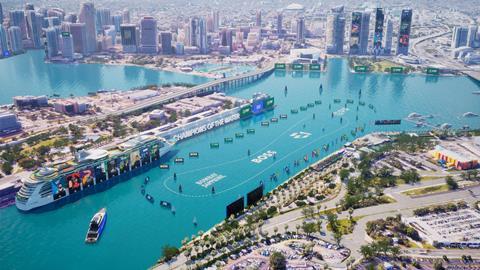
Badass Studios is using Unreal Engine to bring immersive AR graphics and experiences to the E1 Series.
Broadcast to over 230 territories around the world, all-electric raceboat championship E1 races in a series of iconic global locations, including Lake Como, Miami and Monaco.
Each team has two pilots, one male and one female, who compete in genre races throughout the season. The boats “fly” above the water on hydrofoils.
The team behind E1 is keen to engage younger audiences, with immersive digital experiences being key to that engagement.
Badass Studios work involves creating a digital copy of the race environment, including the sponsor and partner assets, in Unreal Engine.
As the real race starts, CG versions of the E1 boats – called RaceBirds – in the digital environment track the exact position as the boats on the water through mapping of live telemetry data onto the virtual track. The result is a real-time digital twin of the race, which is utilised in a variety of ways during the race.
“The race is going absolutely in parallel, with just 0.0018 seconds lag,” explains Rosemary Lokhorst, co-founder and CEO of Badass Studios. “Using our BadassXR platform, we now have a live platform and environment to use in multiple ways, from broadcasting to live gaming.”
“With Unreal Engine, we can really get a nice clear CG scene but still meet our constant 50 frames per second in broadcast,” adds Alexander Sangwin-Skillen, CCO and co-founder of Badass Studios.
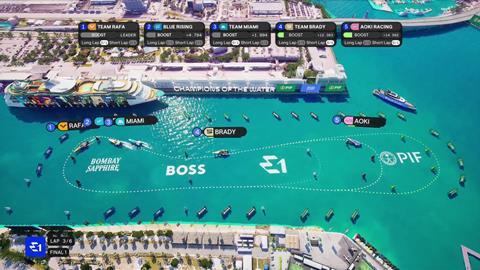
The digital twin enables a variety of broadcast perspectives – top-down views, real-time boat positions, and seamless integration with real footage captured by E1 Studios who produce the global feed shown on CBS, ITV and DAZN..
By masking out the virtual track, the team is left with everything else—the branding, sponsorships, and tracking of the boats. This produces a ready-made augmented reality broadcast layer without the need for any additional setup.
“We’re trying to be a sustainable series, so we don’t want to be floating huge, inflatable bits of advertising on the water,” says Laurence Boyd, chief content and product officer at E1.
Using AR, the team can avoid large physical advertisements in favour of digital branding integrated directly into the broadcast.
That also enables them to get creative in ways that would not be possible in the real world—using AR to place logos on buildings or dynamic objects in the race scene, for example.
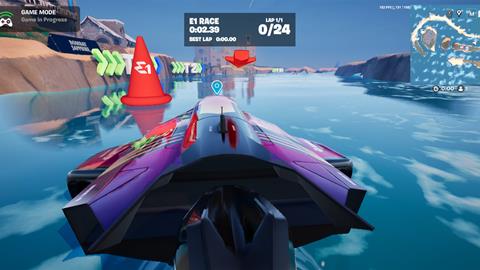
The digital twin lends itself to many other use cases beyond the AR layer and broadcast. At the event, the same digital twin is loaded onto on-site simulators with added game mechanics that enable fans to race in the E1 Championship against each other in multiplayer mode.
Using the live telemetry data that’s fed into Unreal Engine via sensors on the boats, the players in the simulators can even race against the pilots competing on the water, live as the real event is unfolding.
“It’s such an incredibly cool experience to be taking part virtually in the race,” says Boyd. “You see the smile on people’s faces when they can compete with the athletes.”
As well as preparing to evolve the E1 experience into a fully fledged video game, Badass has started to integrate E1 content into Fortnite, enabling players to pilot E1 RaceBirds around Fortnite islands.



No comments yet