

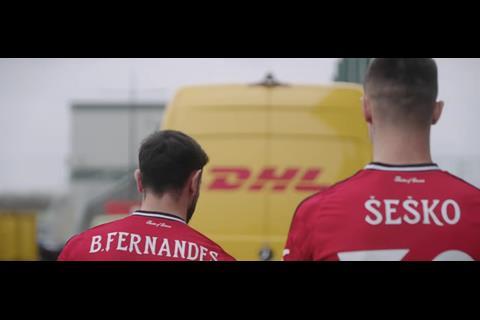

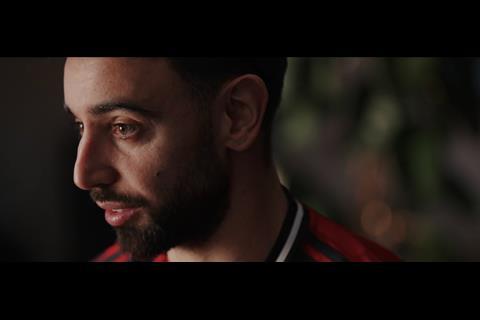

Sarah Essoof of 50 Sport Studios details how she delivered DHL Express’s ambitious Manchester Utd campaign – building a pro football pitch in remote Thailand
In an industry that prides itself on storytelling, the phrase “bringing ideas to life” is often used with ease. More often than not, it refers to the craft of filmmaking, the ability to shape narrative and create something that resonates on screen. This project demanded something far more literal.
The ambition was to create a campaign for DHL Express that would cut through and stand apart. It needed to feel worthy of a global partnership with Manchester United, and it needed to give people something to talk about. At its core sat a simple but powerful truth. Football is universal. It connects people across cultures, languages and borders in a way few things can. You can find yourself in the most unfamiliar place in the world and still share a meaningful exchange about the game. It is a common language.
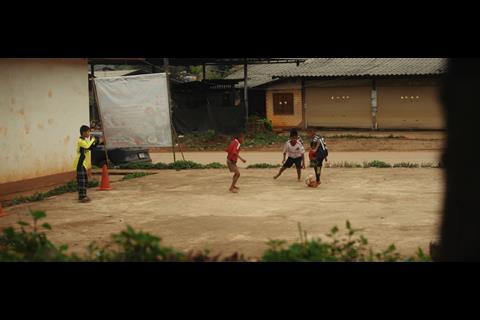
However, while passion for football is universal, access to it is not. In many remote and rural communities, the opportunity to play the game on a proper pitch does not exist. For many, football is something experienced from a distance rather than something lived.
The idea that followed sought to address that imbalance in a direct and tangible way. Rather than telling a story about football’s ability to connect, the aim was to create that connection in the real world. DHL Express’s global reach and logistical expertise, combined with its partnership with Manchester United, would be used to build a football pitch in a remote community that did not have one. The campaign would then tell the story of that transformation.
What appeared at first to be a creative brief quickly evolved into a far more complex undertaking. This was not simply a production challenge. It was an exercise in global location scouting, land negotiation, infrastructure delivery and filmmaking, all operating within a tightly constrained budget and a five month timeline.
From the outset, the responsibility for delivering this sat with a single producer. Every stage of development and pre-production was handled independently, from identifying potential locations to assessing feasibility, managing risk and shaping the approach that would ultimately make the idea possible. There was no large producing team to distribute the load. Each decision, each trade-off, each breakthrough sat in one place. The scale of the task did not change, only the structure around it.
The first challenge lay in finding a location that could support the idea, and this proved to be one of the hardest parts of the entire project. The criteria were not just demanding, they were almost contradictory. The setting needed to be remote enough to feel undiscovered, yet visually striking enough to carry a global campaign. It needed to be logistically viable to build on, despite its isolation. And most critically, it had to be home to a genuine Manchester United fanbase. Without that final element, the entire idea would lose its authenticity.
In reality, this meant trying to solve multiple complex problems at once, from thousands of miles away.
Locations that looked perfect visually would quickly fall apart when tested against reality. Some were inaccessible, requiring days of travel with no viable way to transport construction materials. Others had land ownership structures that were impossible to navigate within the timeframe, with no clear decision-maker or legal pathway to secure use. In several cases, promising locations simply had no meaningful connection to Manchester United, which immediately disqualified them regardless of how strong they looked on screen.
There were also moments where locations appeared to meet all criteria initially, only for one detail to unravel everything. A site might have the right landscape and community, but sit on protected land where building was prohibited. Another might be viable from a construction perspective, but too close to urban areas, losing the sense of remoteness that the story required. Even when a location ticked multiple boxes, the question of whether it could realistically be delivered within budget and in under five months often proved to be the breaking point.
All of this was being assessed remotely, from London, requiring constant research, outreach and instinct-led decision making. Every potential location had to be pressure-tested against build feasibility, access to materials, cultural fit and narrative strength, often with limited information and no margin for error.
Many options fell away under that pressure.
Eventually, a location emerged that aligned with all requirements, not just on the surface, but in a way that could genuinely hold the weight of the idea.
That place was Jericho Farm.
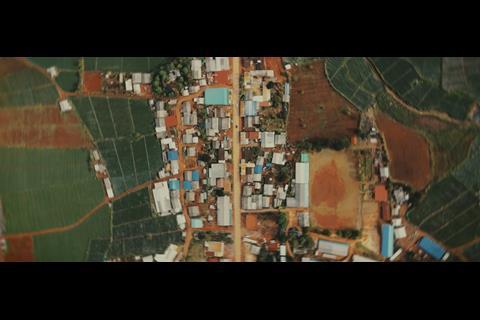
Hidden deep in the mountains, four hours from Chiang Mai, it brought together everything the project demanded. It was visually striking in a way that gave the story scale, remote enough to feel disconnected, yet just accessible enough to make a build possible with the right planning.
At the centre of it was Mr V, who owned the land and had built his life from the ground up. From growing strawberries to hosting football tournaments on a rough patch of grass, his connection to the game was real and deeply rooted in the community. There was no formal pitch, no facilities, and no investment in the game beyond what the community had created themselves.
And within that community, there was a genuine and passionate following of Manchester United. It was not something introduced or staged. It already existed. For the first time, everything aligned.
Securing the land was the next challenge, and it required more than a straightforward agreement. It demanded trust. With the support of an exceptional fixer in Thailand handling permits and navigating local processes, alongside a translator and community liaison who became essential to building relationships, conversations gradually turned into belief. Belief turned into permission, and permission turned into responsibility.
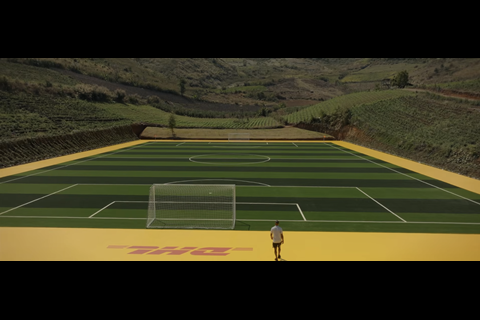
The build itself introduced a new level of complexity. Constructing a professional 4G football pitch in a remote mountain environment required careful coordination at every stage. Materials had to be sourced and transported across difficult terrain. Local builders needed to be aligned to strict timelines and quality standards. The budget had to stretch without breaking. Every decision carried weight, and every delay had consequences.
At the same time, the production was unfolding.
The film was captured across 13 locations, from intimate moments inside homes to expansive landscape shots that established the scale of the environment. The shot list ran to over 300 individual shots, each one contributing to a detailed and layered narrative.
Despite this scale, the crew remained intentionally small. A single director of photography led the visual execution while also handling the final grade and sound mix. This was supported by a camera operator, a drone operator, a gaffer and a spark. On the ground, a translator and community liaison, a fixer and a production assistant ensured the shoot could operate effectively within the local context.
It was a compact team taking on a production that, in many cases, would require something far larger.
Alongside this sat a focused campaign team made up of a creative director, a graphic designer and an account director. While they ensured the creative and brand output remained strong, the responsibility for turning the idea into something tangible sat firmly within production.
And within that, with me.
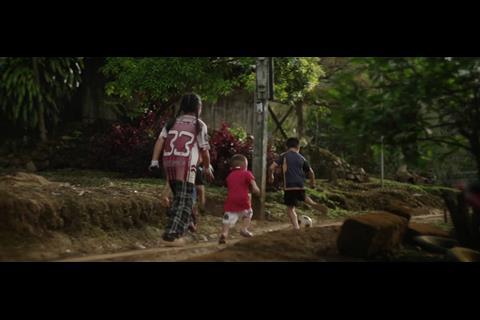
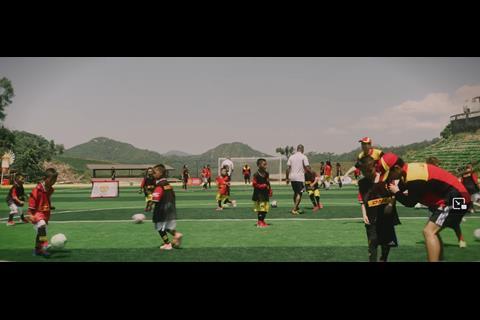
As the build progressed, the community became central to the story. Families opened their homes, shared their experiences and welcomed us into their lives. Children who had never played on a real pitch before became the heart of the narrative. The presence of a genuine Manchester United fanbase added authenticity that could not be manufactured.
When the pitch was completed, it became more than just a construction project. People travelled from surrounding villages and across the region to be there. What began as an isolated build became a shared moment.
To mark the opening, a Manchester United legend was brought in, creating a powerful connection between the global club and the local community. But the lasting impact was not the moment itself. It was what remained afterwards.
A permanent, high quality football pitch now exists where there was none before.
From the outside, the project is seen as a film. From the inside, it represents something far more complex. It is the result of global location scouting, land negotiation, infrastructure delivery and a multi-location production, all executed under significant constraints.
On a personal level, it was the most demanding project I have ever undertaken. Leading every stage, carrying every decision, and solving challenges that extended far beyond traditional production required resilience, adaptability and constant focus. Minimal budget, a more than scaled back team and huge time pressures.
The scale of the task was immense. The margin for error was minimal, but the result is something tangible.
A place where children can play. A space that belongs to a community. Something that continues long after the campaign ends.
In an industry that often measures success through views and engagement, this project demonstrates a different kind of impact. Not just something people watch, but something people use.

Sarah Essoof is head of 50 Sport Studios



No comments yet