

The Broadcast Sport Podcast looks at the production of Invisible Wounds, a documentary about the life of former England football captain Terry Butcher
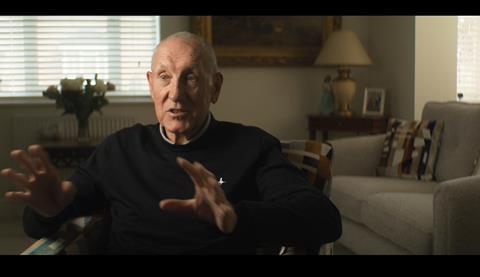
It took more than one attempt for writer and director Stuart Burley to convince former England football captain Terry Butcher to make a documentary.
Burley told the Broadcast Sport Podcast, speaking alongside Butcher, “It was around the end of the summer in 2024 when I first approached Terry and said would he be interested in doing a documentary about his life, about his career, about his journey. Terry straight away said, ‘Talking about myself on camera? No thanks, see you later.”
However, eventually Burley was able to convince his fellow Suffolk local to make a film, and not just any film. Rather than concentrate purely on Butcher’s playing career, Butcher: Invisible Wounds also goes into the story of the tragic loss of his son, Chris, a British Army veteran who suffered from severe PTSD.
Invisible Wounds, now available on ITVX, follows Butcher’s story alongside that of his son, who Burley knew as a child, before looking at the footballing hero’s work subsequent work with charities helping military veterans such as Combat2Coffee.
You can hear the full conversation with Burley and Butcher in the player below or by searching for the Broadcast Sport Podcast on any major podcast platform.
Speaking about such subjects is difficult even without a camera, and Burley and Butcher explained how they developed the trust that allowed the film to be produced. Burley said, “Terry slowly came round to it and it took about a year of back and forth discussing how we could make it work, how the story could unfold, and how we would make things work with taking it to the present day, to what Terry does now with Combat2Coffee, which I think is what was important to Terry. Getting to there was really the key to the story.”
For Butcher, “I thought I wasn’t never going to do it, but I spoke to the family and I think my family were the ones that really pushed me forward. Obviously with losing Chris, we wanted to remember him in a nice way, but also being a high profile footballer of many years ago, that gave me the platform to put it out there [about the issues at hand].”
Once they were underway, Butcher, “Wanted to be really open because it had to be. You owe it that much to everybody that you can’t contain anything. You can’t do what I used to do on interviews and not really answer the question or just be elusive or something like that. You had to tell it as it is. You had to say this happened, and there’s no getting around that.”
It was a learning experience for Burley too, who has extensive experience in sport but “The other side of it, when we were retelling Chris’ story in the military and how that affected Terry, how that has affected his life, and will always affect his life. That, to me, was a step into the unknown. It was a new challenge for me and a really big responsibility, I felt, for that side of things.”
He added that Butcher’s willingness was a big help, “It was that made it something that we could really bring to life, because Terry was so on board.”
You can hear the full conversation with Burley and Butcher below, as well as other recent Broadcast Sport Podcast episodes. The pair also talk in more detail about why they decided to make the film, the experience of discussing tough subjects on camera and being part of a production covering them, the message of hope they want it to give people, and more.



No comments yet